
Agedashi Tofu Ramen
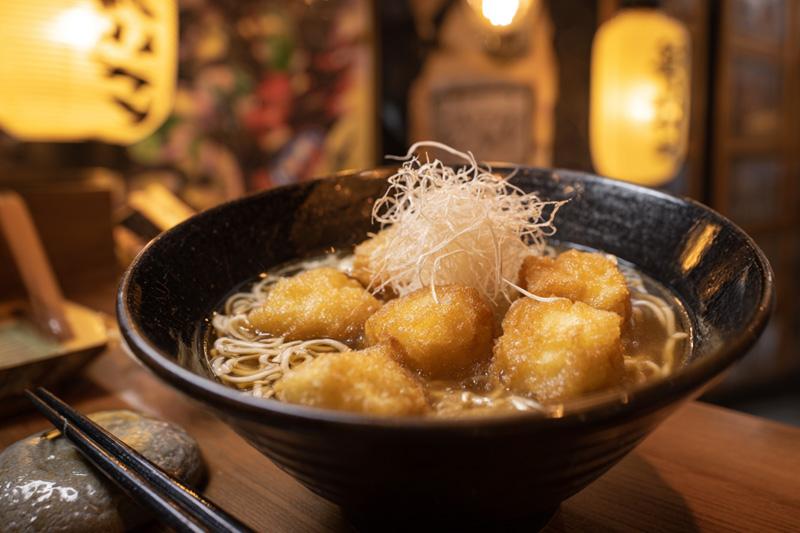
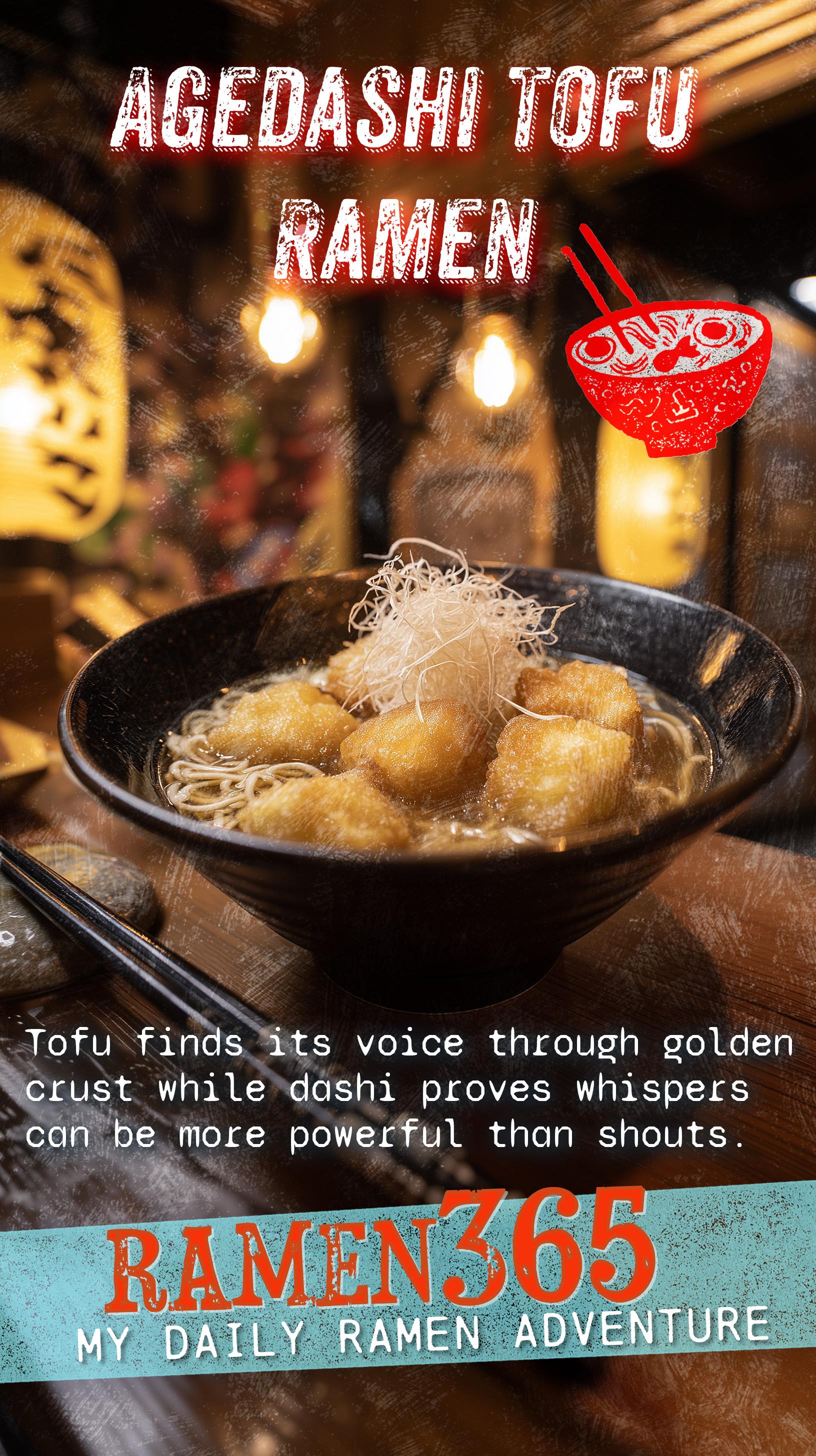
So this is Agedashi Tofu Ramen. Silken tofu that's been dusted with potato starch and fried until it develops this impossibly crispy exterior while staying custardy inside, floating in dashi so clear and delicate you can see through it, all over noodles that somehow don't overpower the subtle flavors. You know how tofu usually gets treated like it's apologizing for existing, like it needs aggressive seasoning and heavy sauce to be worth eating? This is the opposite. The tofu is the star, lightly fried to create textural contrast, served in a broth that enhances instead of masks. The dashi is fundamental Japanese cooking at its finest—kombu and bonito creating this umami base that's simultaneously light and deeply savory. It's the kind of bowl that makes you understand why Japanese cuisine values subtlety and restraint, why sometimes the best food is about precision and respect for ingredients rather than throwing everything at the pot hoping it works.
Tofu wears gold lace—dashi whispers soft secrets—crisp yields to the silk
Let Me Tell You...
I first had real agedashi tofu at an izakaya in Kyoto where they made it to order and brought it to the table still crackling from the fryer.
The exterior was golden and crispy like tempura, but when I bit through, the inside was so soft and silken it was almost liquid.
The dashi it sat in was clear as water but tasted like concentrated ocean, and the grated daikon on top added this sharp freshness that cut through the fried richness.
It was one of the most perfectly balanced things I'd ever eaten, and I spent the rest of the trip trying to find agedashi that came close.
Getting agedashi right at home required understanding the difference between silken and firm tofu.
Most Western recipes call for firm tofu because it's easier to handle and less likely to fall apart, but that's missing the point.
Real agedashi uses silken tofu, that delicate stuff that's basically tofu pudding, because the contrast between crispy coating and custardy interior is what makes the dish special.
The key is pressing it gently to remove some moisture, dusting it carefully with potato starch, and frying it hot enough that the exterior sets before the tofu has time to fall apart.
The dashi can't be faked or shortcutted with dashi powder, though I've tried because I'm lazy.
Real dashi from kombu and bonito flakes tastes completely different—lighter, more complex, with this clean umami that powder can't replicate.
You steep kombu in water just below boiling to extract its glutamates, add bonito flakes off heat, then strain it all out leaving behind liquid that looks like nothing but tastes like everything.
Seasoned lightly with soy sauce and mirin, it becomes the perfect vehicle for the fried tofu, providing flavor without overwhelming the delicate protein.
Now this has become my go-to when I want something refined and traditional, when I need a break from heavy flavors and aggressive seasoning.
The agedashi tofu provides that satisfying crunch-to-silk contrast, the dashi keeps everything light and clean, and the whole bowl tastes like you're eating at a restaurant that actually respects Japanese technique.
Every bite reminds me that simple doesn't mean boring, that restraint and precision can create something more memorable than throwing everything at the pot.
Ingredients
- 8 ounces dried ramen noodles (2 bricks, seasoning packets discarded)
- 14 ounces silken tofu, drained
- 1/2 cup potato starch (or cornstarch)
- Vegetable oil, for deep frying
- 4 cups dashi stock (homemade preferred)
- 1/4 cup soy sauce
- 1/4 cup mirin
- 1 tablespoon sake
- 1 teaspoon sugar
- 1/2 cup grated daikon radish
- 2 tablespoons grated fresh ginger
- 4 scallions, thinly sliced
- Bonito flakes (katsuobushi), for garnish
- 2 sheets nori, cut into thin strips
- 1 teaspoon toasted sesame seeds
Preparation
- Gently press silken tofu between paper towels for 15 minutes to remove excess moisture. Cut tofu into 6-8 rectangular pieces about 1.5 inches thick.
- Place potato starch in a shallow dish. Carefully coat each tofu piece on all sides with starch, shaking off excess. Let sit for 5 minutes to allow coating to set.
- Heat 2-3 inches of vegetable oil in a deep pot or wok to 350°F. Gently lower tofu pieces into hot oil, working in batches to avoid crowding. Fry for 3-4 minutes, turning once, until golden brown and crispy on all sides. Drain on paper towels.
- In a pot, combine dashi stock, soy sauce, mirin, sake, and sugar. Bring to a gentle simmer and cook for 3-4 minutes to blend flavors. Keep warm.
- Bring a large pot of salted water to a boil. Cook ramen noodles for 2-3 minutes until just tender, then drain.
- Divide noodles among bowls. Ladle hot dashi broth over noodles.
- Gently place 2-3 pieces of crispy agedashi tofu on top of noodles in each bowl.
- Top each tofu piece with a small mound of grated daikon and grated ginger. Garnish with sliced scallions, bonito flakes (they'll dance from the heat), nori strips, and sesame seeds. Serve immediately while tofu is still crispy.