
Al Pastor Ramen
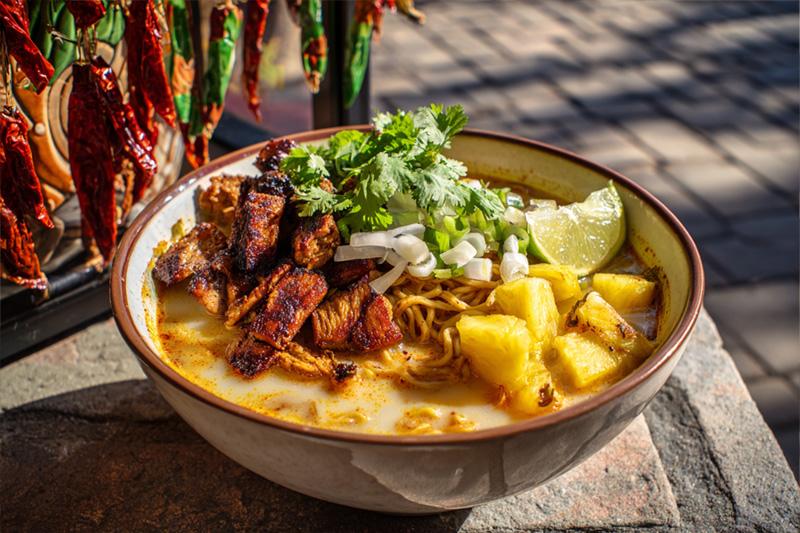
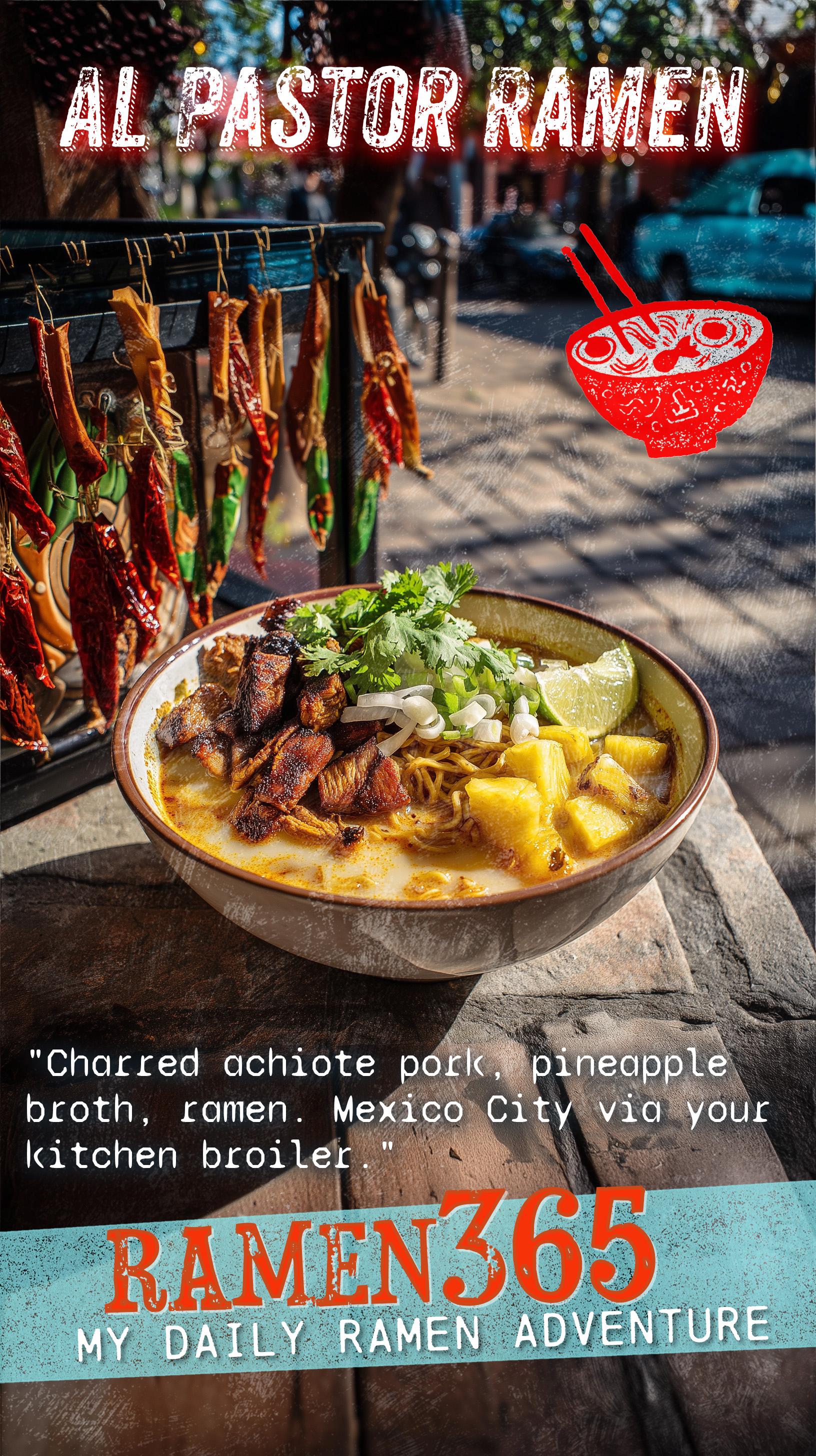
There is something almost theatrical about al pastor that I never got over. The whole thing: a spinning trompo, dripping fat, the taquero slicing thin curls of pork straight into a waiting tortilla and crowning it with a pineapple chunk in one confident flick. It is a dish that was designed to perform. Mexican al pastor has its roots in Lebanese shawarma, which makes it one of the great quiet fusions in culinary history, and most people eating it at 2 a.m. from a street cart have absolutely no idea. This version skips the tortilla and drops all that charred, chile-stained pork straight into a bowl of ramen, which sounds like a stretch but honestly makes more sense than you would expect. The tomatillo-pineapple broth is lighter than most ramen broths, bright and tangy with just enough heat, and it does not fight the pork so much as frame it. You could eat this on a Tuesday and feel like you did something.
Char on the trompo—Pineapple cuts through the smoke—Ramen takes it home
Let Me Tell You...
The first time I tried making al pastor at home I thought I was being bold and practical at the same time, which is how a lot of my worst ideas begin.
No trompo, obviously.
I had a sheet pan and a broiler and a marinade I had cobbled together from a bag of dried guajillo chiles I found at the back of a cabinet, plus achiote paste I had to drive to a third grocery store to locate.
The whole apartment smelled like charred chile and cumin for two days and I considered that a complete success.
The fat drips away and you get better char than flat on a baking sheet.
The marinade is the real work here, and it is not that much work.
You soak the dried chiles until soft, blend them with achiote paste, pineapple juice, cumin, oregano, and a little vinegar, and it becomes this deeply red, slightly sweet, aggressively fragrant paste that stains everything it touches.
Your cutting board, your hands, your optimism about keeping the kitchen clean.
Coat the pork shoulder slices in it and let them sit while you pull everything else together.
The pineapple juice is not optional.
It tenderizes the meat and it carries that brightness all the way into the finished broth.
Thick pieces steam instead of char under the broiler and you lose the whole point.
The broth is where this dish becomes a ramen and not just a taco without a tortilla.
You build it from tomatillos, the leftover marinade, chicken stock, and a hit of pineapple juice, and you simmer it just long enough for the tomatillos to break down and give up their tartness.
It is not a heavy tonkotsu situation.
It is lighter and brighter and it has this green-gold color that looks almost luminous in a bowl.
The noodles soak up the broth without disappearing into it, which is what you want.
You want to be able to taste every layer separately and also all at once.
Five minutes.
It adds smokiness that the pork alone cannot carry.
When you put the bowl together, the charred pork slices go on last, arranged so they fan out over the noodles rather than sinking into the broth like they gave up.
Fresh pineapple chunks, torn cilantro, and a scatter of finely diced white onion on top, and suddenly the whole thing looks like it came from somewhere with a line out the door.
Whether you did it for a weeknight dinner or because you had a bag of dried chiles calling to you from the pantry makes absolutely no difference once the bowl is in front of you and smells like a street corner in Oaxaca.
Ingredients
- 1.5 lbs boneless pork shoulder, sliced into 1/4-inch strips
- 3 dried guajillo chiles, stemmed and seeded
- 2 tablespoons achiote paste
- 1/2 cup pineapple juice, divided
- 2 tablespoons apple cider vinegar
- 1 teaspoon ground cumin
- 1 teaspoon dried Mexican oregano
- 3 cloves garlic, minced
- 8 ounces dried ramen noodles (2 bricks, seasoning packets discarded)
- 8 tomatillos, husked and halved
- 3 cups low-sodium chicken broth
- 1 tablespoon neutral oil
- Kosher salt, to taste
- 1/2 cup fresh pineapple, cut into small cubes (plus more for serving)
- 1/4 cup white onion, finely diced
- 1/4 cup fresh cilantro leaves
Preparation
- Place dried guajillo chiles in a heatproof bowl and cover with boiling water. Let soak 15 minutes until softened, then drain.
- Combine soaked guajillos, achiote paste, 1/4 cup pineapple juice, apple cider vinegar, cumin, oregano, and garlic in a blender. Blend until smooth. Season with salt.
- Place pork strips in a bowl and coat thoroughly with the marinade. Set aside to marinate at room temperature for 15-20 minutes while you prepare the broth.
- Heat a dry cast-iron or heavy skillet over medium-high heat. Add tomatillos cut-side down and cook without moving for 4-5 minutes until charred and softened. Remove and set aside.
- In a medium saucepan, heat neutral oil over medium heat. Add the charred tomatillos and cook 1-2 minutes, pressing them lightly to break them down. Add chicken broth, remaining 1/4 cup pineapple juice, and 2 tablespoons of the pork marinade. Simmer uncovered for 15 minutes. Season with salt.
- Set oven broiler to high. Arrange marinated pork strips in a single layer on a wire rack set over a foil-lined baking sheet. Broil 6-8 inches from the heating element for 6-8 minutes, flipping once halfway, until lightly charred at the edges and cooked through. Let rest 2 minutes, then slice thinly across the grain.
- Bring a large pot of salted water to a boil. Cook ramen noodles 2-3 minutes until just tender. Drain and divide between bowls.
- Ladle hot tomatillo-pineapple broth over the noodles. Arrange al pastor pork slices over the top. Scatter fresh pineapple cubes, diced white onion, and cilantro over each bowl. Serve immediately.