
Black Bean Beef Ramen
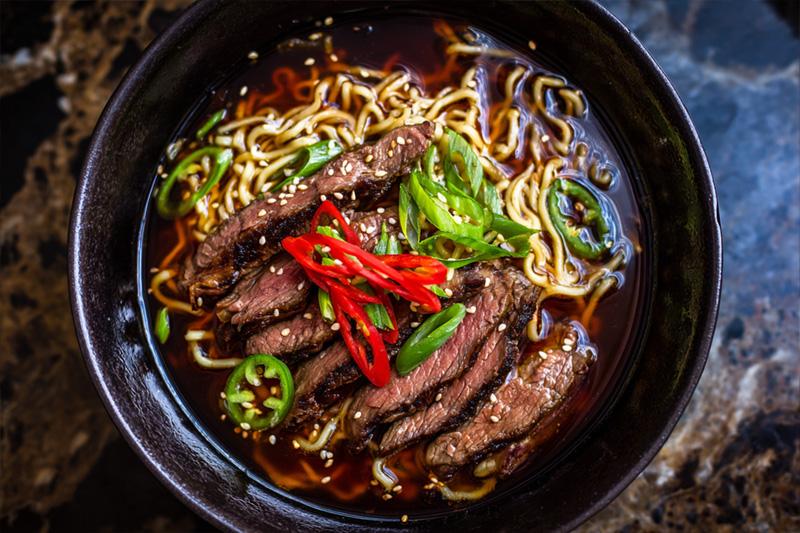
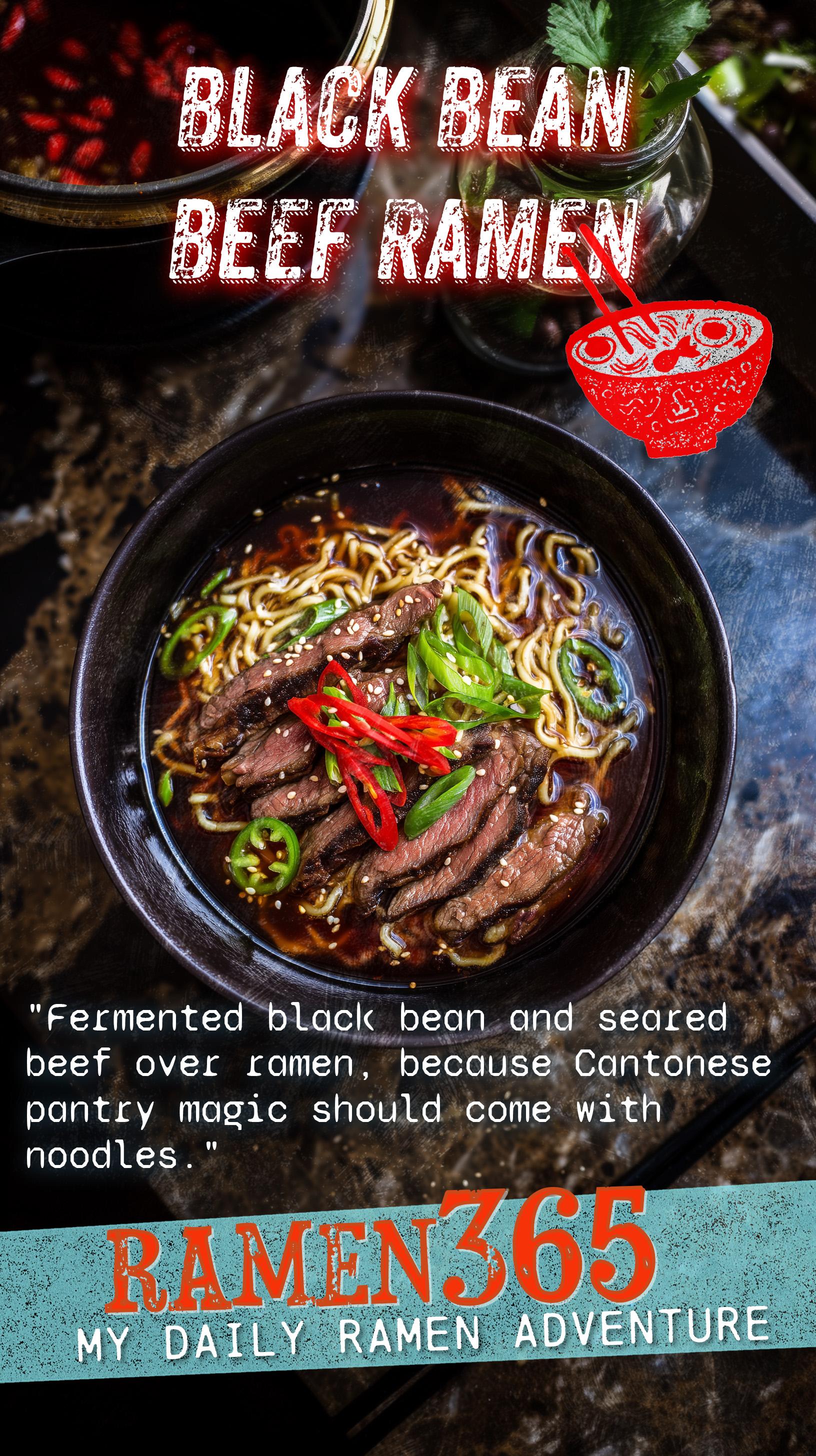
Cantonese cooking has a category of flavors that doesn't travel well, which is probably why fermented black beans still feel like a revelation to people who've been eating black bean sauce at Chinese-American restaurants for years without understanding what's actually in it. The beans are called douchi, soybeans fermented with salt until they turn dark and deeply savory with a funky complexity that no fresh ingredient can replicate, and they're the thing that makes black bean sauce taste like itself rather than just soy sauce with vegetables. This bowl takes that Cantonese flavor profile and builds it into a ramen broth instead of a stir-fry sauce, a small conceptual shift that changes the format entirely. Thinly sliced beef is velveted in cornstarch before searing, a technique that sounds more complicated than it is, and the dark, glossy broth that comes together from fermented beans, oyster sauce, and aromatics has a depth that seems like it took longer than it actually did. This is weeknight Cantonese, which is the kind of cooking that gets more interesting the closer you pay attention.
Black beans in hot oil—beef sears dark in the wok smoke—noodles take it all
Let Me Tell You...
Black bean sauce is one of those things in Chinese cooking that shows up so often on takeout menus that people stop noticing it's actually interesting, ordering it by default rather than by choice and never spending time thinking about what the fermented black beans are doing beneath the oyster sauce and the aromatics.
The beans are douchi, soybeans fermented with salt until they turn dark and intensely savory with a specific funky depth that has no real equivalent in Western cooking, and the sauce built on them can carry beef or clams or bitter melon or tofu through an entire dish on its own authority.
What this recipe does is take that Cantonese sauce tradition and extend it into a broth format, which is the move that turns a stir-fry side dish into something that ramen noodles can actually swim through.
Straight from the jar they can overwhelm everything else with salt, and this is one of those cases where starting with a controlled base is better than importing someone else's seasoning decisions.
The key to getting any real depth from this broth is treating the fermented beans and the aromatics like the base they actually are, frying them hard in oil until the kitchen smells like a Cantonese restaurant near a harbor, before any liquid goes in at all.
The oyster sauce and dark soy sauce layer in color and the specific thick, sweet-savory weight that Cantonese cooking does better than anyone, and the beef broth ties everything together into something that reads as a complete idea rather than a list of ingredients sharing a pot.
The result has a dark, glossy quality that makes it look like you spent considerably more time on it than you did, which is either a feature or a mild deception depending on who you're feeding.
You want color and crust, not gray steamed beef, and that initial contact with a screaming-hot pan is where all the flavor development happens.
Thinly sliced beef against the grain is the right call here because it picks up the marinade quickly and cooks in seconds rather than minutes, staying tender in a broth where longer cooking would turn it chewy and resistant.
The cornstarch in the marinade seals the surface of each slice before it hits the pan and creates a barrier that holds the juices in while the exterior browns, a technique called velveting that Cantonese cooks have used for centuries because it works and nothing else produces the same result with thin-cut meat.
You cook the beef separately and add it back to the bowl at the end, so it's exactly as tender as it should be rather than whatever the broth decided to do with it.
Shorter and the cornstarch hasn't fully adhered; longer is fine and you can prep it earlier in the day without any drawback.
This is one of those bowls that comes together faster than it has any right to given how complex the flavors end up being, and the explanation is that fermented black beans and Cantonese aromatics do most of the heavy lifting before the broth even comes together.
The noodles go in separately, then the broth goes over them, then the beef goes on top, and if you have someone at the table who claims not to like Chinese food you can watch them quietly revise that position over the course of the meal.
Serve with sliced fresh chili alongside for anyone who wants to push the heat further, because the douchi warmth is the kind that builds rather than shocks and a little fresh chili running parallel to it is exactly what you'd ask for.
Ingredients
- 8 oz beef sirloin or flank steak, thinly sliced against the grain into 1/8-inch pieces
- 6 oz dried ramen noodles (2 bricks, seasoning packets discarded)
- 3 tablespoons fermented black beans (douchi), rinsed and roughly chopped
- 1 medium green bell pepper, julienned
- 4 garlic cloves, minced
- 1-inch piece fresh ginger, peeled and minced
- 3 cups low-sodium beef broth
- 2 tablespoons oyster sauce
- 1 tablespoon low-sodium soy sauce
- 1 teaspoon dark soy sauce
- 1 tablespoon Shaoxing rice wine (or dry sherry)
- 1 tablespoon neutral oil, divided
- 1 teaspoon toasted sesame oil
- 1 teaspoon cornstarch (for the beef marinade)
- 1/2 teaspoon ground white pepper
- Kosher salt, to taste
Preparation
- In a medium bowl, combine the sliced beef with the cornstarch, Shaoxing wine, 1/2 teaspoon of the soy sauce, and white pepper. Toss well to coat evenly and let marinate for at least 10 minutes.
- Heat 1/2 tablespoon of the neutral oil in a large wok or skillet over high heat until smoking. Add the beef in a single layer and cook without moving for 90 seconds until well seared. Flip and cook 30 seconds more. Remove and set aside.
- Reduce heat to medium. Add the remaining neutral oil to the wok. Add the rinsed and chopped fermented black beans, garlic, and ginger and stir-fry for 1-2 minutes until fragrant and the beans begin to sizzle in the oil. Add the julienned green pepper and stir-fry for 1 minute more.
- Pour in the beef broth, oyster sauce, remaining soy sauce, and dark soy sauce. Bring to a simmer over medium heat and cook uncovered for 8-10 minutes to meld the flavors. Stir in the sesame oil. Taste and adjust with salt if needed.
- Bring a separate pot of salted water to a boil. Cook the ramen noodles for 2-3 minutes until just tender. Drain.
- Divide the noodles between bowls. Ladle the hot black bean broth over the noodles. Top with the seared beef, dividing it evenly. Serve immediately with any optional toppings alongside.