
Braised Pork Cheek Ramen
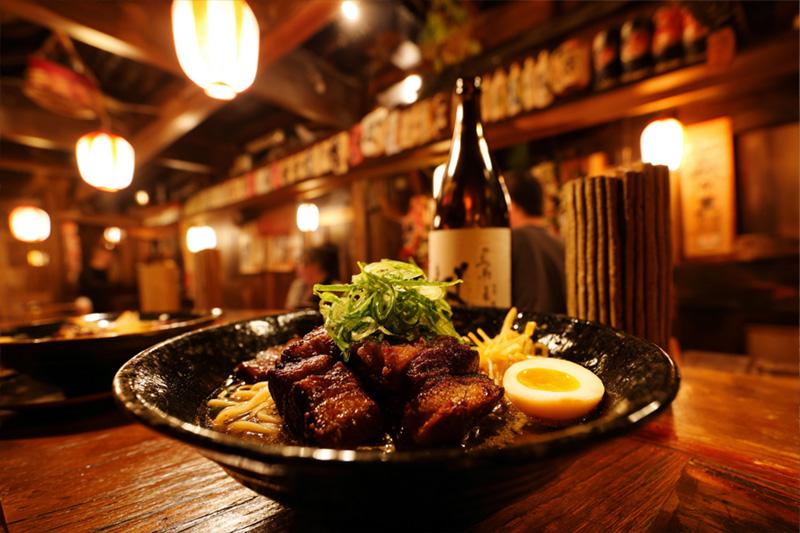

Pork cheek is one of those cuts that sounds weird until you taste it and realize it's basically the holy grail of pork. It's fatty, it's rich, and when you braise it low and slow, it turns into these tender, melt-in-your-mouth chunks that are so good they make you question why anyone bothers with pork loin. The cheeks come from the pig's face, which sounds grim but also makes sense when you think about how much work those muscles do. All that movement means tons of collagen, and when you cook it long enough, that collagen breaks down into silky, gelatinous richness that coats everything it touches. Serving it over ramen in a deep, savory broth is the kind of traditional move that feels respectful to the craft while also being absolutely delicious. This is the bowl you make when you have time, when you want something that feels special, and when you're ready to commit to the kind of cooking that fills your kitchen with smells that make your neighbors jealous.
Fat melts to the bone—cheek surrenders to the heat—time dissolves the flesh.
Let Me Tell You...
I'd never even heard of pork cheek until I saw it at a butcher shop tucked between the pork belly and the oxtail, looking unassuming and slightly weird. The butcher noticed me staring at it and said, "You gotta braise it.
Low and slow.
Trust me." I bought a pound because I trust anyone who sells meat for a living more than I trust most people, and took it home with no real plan beyond "braise it low and slow." I looked up a few recipes online, which all basically said the same thing: sear it, add liquid, cover it, and walk away for a few hours.
That sounded easy enough.
The caramelization adds depth to the braising liquid.
I seasoned the pork cheeks with salt and pepper, seared them in a heavy pot until they were brown on all sides, and then added onions, garlic, soy sauce, sake, and enough chicken stock to cover them halfway.
I put the lid on, stuck it in the oven, and forgot about it for two hours.
When I came back, the whole apartment smelled like a Japanese restaurant, and the pork cheeks had turned so tender that they practically fell apart when I poked them with a fork.
The braising liquid had reduced into this thick, glossy sauce that tasted like pure umami.
The longer they cook, the more tender they get.
I had ramen noodles in the pantry because I always have ramen noodles, and I figured they'd work perfectly for this.
I cooked the noodles, ladled some of the braising liquid over them as broth, and placed the pork cheeks on top like little nuggets of fat and flavor.
I added a soft-boiled egg because that's what you do with ramen, some bamboo shoots for texture, and a handful of scallions to make it look like I knew what I was doing.
The first bite was ridiculous.
The pork cheek melted on my tongue, releasing all that rich, fatty flavor, and the noodles soaked up the braising liquid until they were glossy and dark.
It's already packed with flavor and doesn't need much else.
The egg added creaminess, the bamboo shoots added crunch, and the scallions gave it a fresh bite that balanced out all that richness.
It was the kind of bowl that made me sit down and eat slowly, savoring every bite, because I knew I'd put in the time and it deserved my full attention.
Pork cheek isn't something you cook on a Tuesday night when you're tired.
It's something you cook when you want to remind yourself that good food is worth waiting for, and that sometimes the best meals are the ones that take all afternoon.
Ingredients
- 2 packages ramen noodles (discard seasoning packets)
- 1.5 lbs pork cheeks, trimmed
- 3 cups chicken broth (preferably low-sodium)
- 1/4 cup soy sauce
- 1/4 cup sake (or dry sherry)
- 2 tablespoons mirin
- 1 medium yellow onion, sliced
- 4 cloves garlic, smashed
- 1-inch piece fresh ginger, sliced
- 2 tablespoons brown sugar
- 1 tablespoon vegetable oil
- 2 soft-boiled eggs, halved
- 1/2 cup bamboo shoots, sliced
- 3 green onions, thinly sliced
- Salt and black pepper, to taste
Preparation
- Preheat the oven to 325°F (160°C). Season the pork cheeks generously with salt and black pepper.
- Heat the vegetable oil in a large Dutch oven or oven-safe pot over medium-high heat. Sear the pork cheeks for 3-4 minutes per side until browned on all sides. Remove the pork and set aside.
- In the same pot, reduce heat to medium and add the sliced onion, smashed garlic, and sliced ginger. Sauté for 3-4 minutes until softened and fragrant.
- Return the pork cheeks to the pot. Add the chicken broth, soy sauce, sake, mirin, and brown sugar. Stir to combine. Bring the liquid to a simmer.
- Cover the pot with a tight-fitting lid and transfer to the preheated oven. Braise for 2.5 to 3 hours, until the pork cheeks are fork-tender and falling apart.
- Remove the pot from the oven. Transfer the pork cheeks to a cutting board and cut into large chunks. Strain the braising liquid through a fine-mesh sieve into a clean pot, discarding the solids. Skim off any excess fat if desired. Bring the braising liquid to a simmer on the stovetop. Taste and adjust seasoning with salt and black pepper as needed.
- While the liquid simmers, cook the ramen noodles according to package instructions until just tender. Drain and set aside.
- Divide the cooked ramen noodles between two serving bowls. Ladle the hot braising liquid over the noodles. Top each bowl with chunks of braised pork cheek, a soft-boiled egg half, bamboo shoots, and sliced green onions.
- Serve immediately while hot.