
Brown Butter Egg Ramen
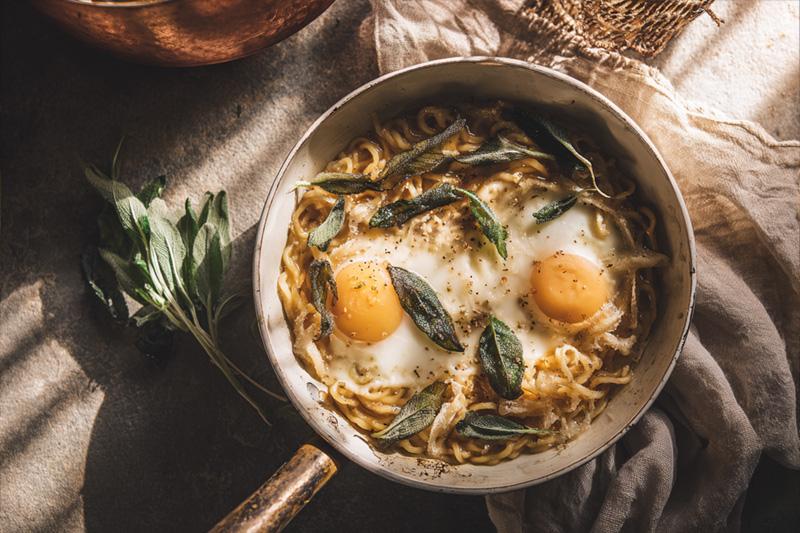

There's a version of elegant that doesn't require a reservation or a sauce with a name you can't pronounce. Brown butter is really just patience applied to dairy, and what comes out the other side is something that smells like a Parisian brasserie and a mountain cabin at the same time. This recipe leans into that. The sage goes in after the butter turns hazelnut-colored, and it crisps up in about thirty seconds like it's been waiting its whole life for this moment. The eggs get pan-fried in that same butter, so the whites stay tender and the edges go lacy and golden. Then it all goes into a simple, light chicken broth with ramen noodles, and you shave some gruyere over the top because you're not a monster. The whole thing is Alpine French without being fussy about it, which is honestly my favorite kind of French.
Butter turns to gold—Sage crisps in the hissing pan—Eggs know what they're worth
Let Me Tell You...
There's a cooking trick that French people treat like it's obvious and Americans treat like they invented it, and that trick is just burning butter a little on purpose.
The French call it beurre noisette, which translates to hazelnut butter, not because hazelnuts are involved but because that's what it smells like when the milk solids toast in the fat.
I found this out the hard way once when I was trying to make something fancy and ended up making something that smelled so good I stood at the stove eating it with a spoon directly from the pan.
It goes from nutty to burnt in under thirty seconds.
Pull the pan if you're unsure.
The sage is the part that makes people tilt their heads.
You drop the leaves into the brown butter right after it hits that hazelnut moment, and they shatter into crispness almost instantly, going from soft and herbal to something almost savory and lacquered.
I once left them in too long because I was checking my phone and they turned black and bitter and I had to start over, which felt like a punishment I deserved.
The eggs go in right after the sage comes out, and you baste them with the butter by tipping the pan, which is a move that feels a lot more skilled than it actually is.
Dropping them straight from the shell into hot butter is how you break yolks and ruin the whole mood.
The broth here is deliberately quiet.
You don't want it fighting with the butter for attention.
A good low-sodium chicken broth, warmed through with a little white pepper and maybe a shaved knob of gruyere stirred in at the end, is all you need.
The gruyere melts in half-threads into the broth in a way that looks accidental but is deeply intentional.
This is the kind of ramen that someone in Haute-Savoie would make on a Tuesday when it was cold and they had eggs and a nub of cheese and not a lot of patience for anything complicated.
The difference in nuttiness is significant and this dish is built around that flavor.
When you put it all together, the bowl has this layered thing going on where the lacy egg sits on top of the noodles, the broth is underneath doing its quiet job, the sage leaves stick up like tiny flags, and the gruyere is melting into everything around the edges.
It's the kind of dish that looks like you planned it, which you did, but it also looks like it happened naturally, which it kind of did too.
Brown butter has a way of making you look like you know what you're doing even when you're just standing there waiting for the foam to settle.
Ingredients
- 8 ounces dried ramen noodles (2 bricks, seasoning packets discarded)
- 4 large eggs
- 3 tablespoons unsalted butter, divided
- 8 fresh sage leaves
- 3 cups low-sodium chicken broth (or vegetable broth)
- 2 ounces gruyere cheese, finely shaved or grated (plus more for serving)
- 1/4 teaspoon white pepper
- Kosher salt, to taste
- 1 teaspoon olive oil
Preparation
- Bring a medium pot of salted water to a boil. Cook ramen noodles for 2-3 minutes until just tender. Drain and rinse under cool water to stop cooking. Divide evenly between two serving bowls.
- In a small saucepan, bring the chicken broth to a gentle simmer over medium-low heat. Stir in white pepper and half of the grated gruyere. Let the cheese melt into the broth, whisking lightly. Keep warm on low heat.
- In a medium skillet (preferably stainless steel or cast iron), melt 2 tablespoons of butter over medium heat. Once the foam subsides and the butter turns golden-amber with a nutty aroma (about 3-4 minutes), add the sage leaves in a single layer. Fry for 20-30 seconds until crisp and deep green. Remove the sage leaves with a slotted spoon and set aside on paper towels. Season lightly with salt.
- Add the remaining 1 tablespoon of butter and the olive oil to the same skillet over medium heat. Gently crack two eggs at a time into the pan. Tilt the pan slightly and spoon the brown butter repeatedly over the egg whites to baste them. Cook 2-3 minutes until whites are just set with lacy, golden edges but yolks are still runny. Remove from pan and repeat with remaining two eggs.
- Ladle the warm gruyere-infused broth over the noodles in each bowl. Place two pan-fried eggs on top of the noodles in each bowl. Arrange 3-4 crispy sage leaves over the eggs. Scatter the remaining shaved gruyere over the top and finish with a pinch of white pepper.