
Bulgur Pomegranate Ramen Bowl
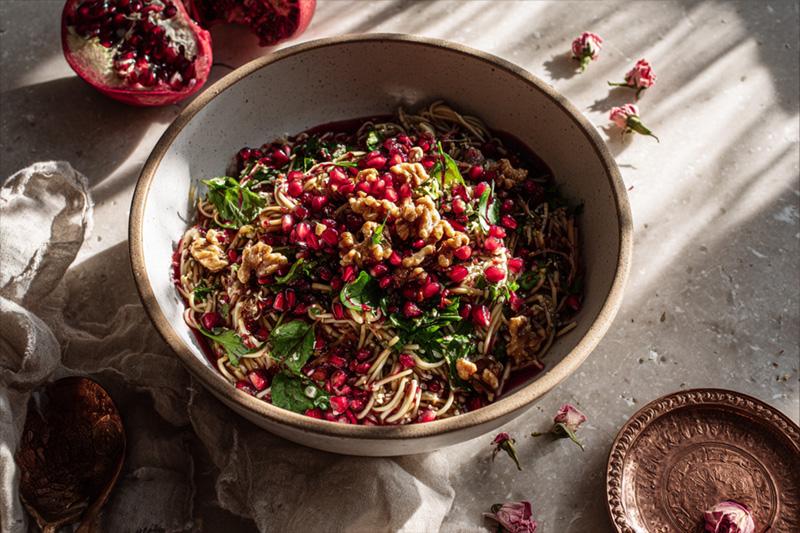
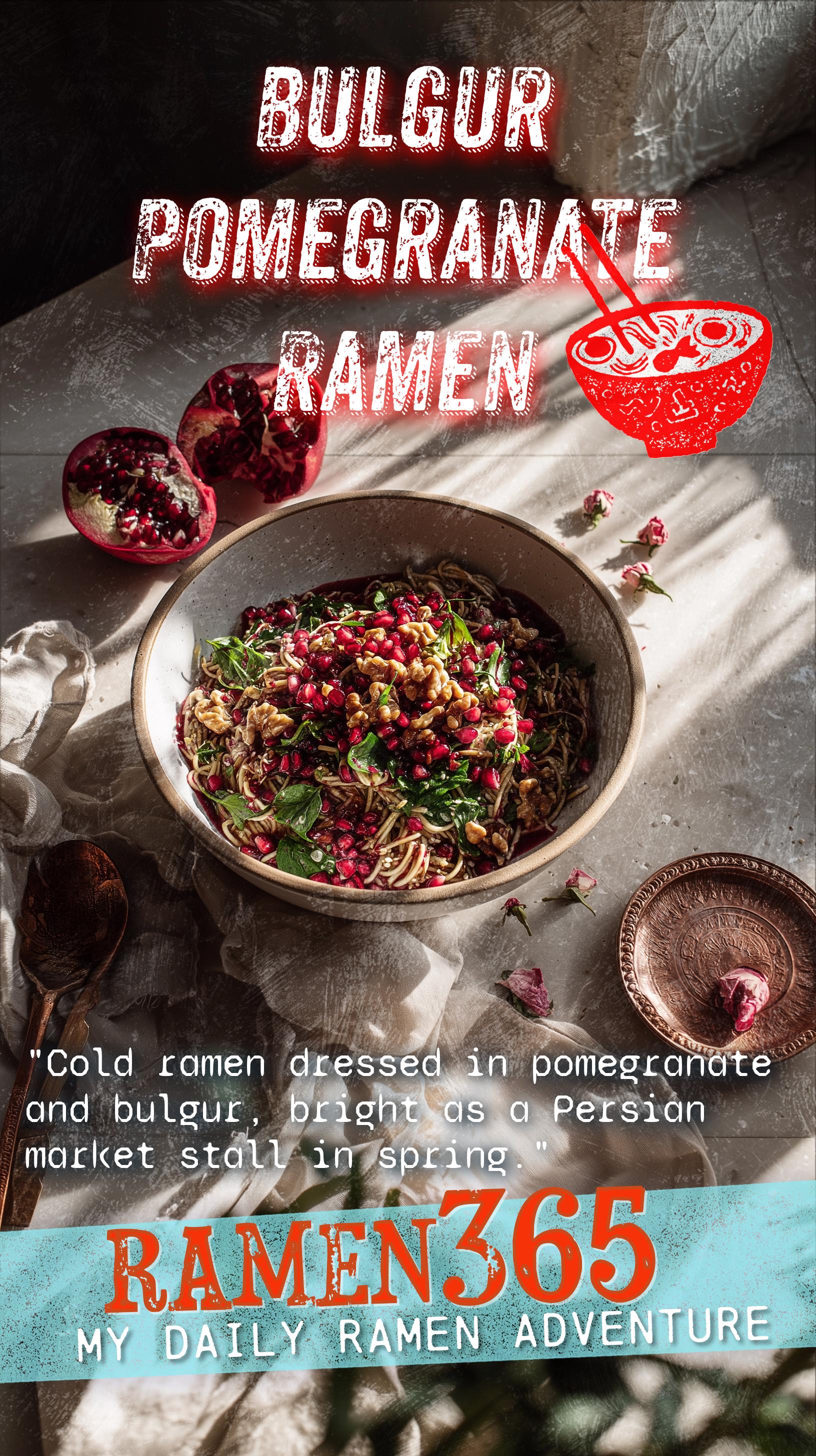
There's this particular kind of food that looks like it was assembled by someone who actually cared, little red seeds scattered around like they meant it, fresh herbs piled up like a garden fell into your bowl. This is that food. Persian cuisine has a way of making brightness feel almost architectural, and this bowl borrows that idea shamelessly. The pomegranate molasses does something you have to taste to believe: it's sweet and tart at the same time, and it coats the noodles in a way that makes you wonder why you'd ever bother with hot soup in the first place. The bulgur brings this chewy, nutty thing to the texture that ramen alone just can't do. And the walnuts, well, they show up like they own the place. You can make this whole thing on a Tuesday night without breaking a sweat, and it holds up for lunch the next day too, which honestly might be the best argument for it.
Pomegranate jewels—Bulgur soaks up every drop—Ramen runs cold, free
Let Me Tell You...
My aunt made something like this once, though she'd never have called it ramen, and she'd probably look at me sideways for that particular creative choice.
She lived in a small apartment that always smelled like dried roses and olive oil, and she'd put pomegranate seeds on everything like punctuation, little red periods and commas scattered across rice, over salads, next to meat she'd been simmering since before I woke up.
The point was always the same: make it beautiful, make it bright, make it mean something.
I thought about her when I was standing at the stove watching bulgur absorb water, thinking about how a Persian grain bowl and a Japanese noodle tradition ended up in the same container, and how that probably would have confused her and maybe charmed her too.
The dressing is the thing that makes this work or doesn't, and I will be honest that my first attempt went sideways because I was heavy-handed with the molasses and the whole bowl tasted like candy.
The ratio matters: two tablespoons of pomegranate molasses to one tablespoon of lemon juice to two tablespoons of olive oil, whisked until it looks glossy and smells almost aggressively bright.
Taste it before you pour it.
If it makes you wince slightly, that's right.
The noodles will tame it.
The herbs will tame it.
The bulgur will absorb what it needs and leave the rest where it belongs.
There is something genuinely weird about cold ramen that I keep coming back to, in the good way, the way you keep poking at something strange because it keeps surprising you.
The noodles lose their softness and develop this slightly springy resistance that actually works better with the chewy bulgur beside it.
The pomegranate arils pop when you bite them, which is a texture no other fruit really delivers on, and the walnuts add this bitter crunch that cuts through the sweet-tart dressing before the mint hits and the whole thing gets a little herbal and cool.
It's layered in a way that feels almost accidental, which is maybe the most Persian thing about it, all these elements brought together with an uncomplicated certainty that of course they belong next to each other.
I ended up eating the whole thing standing over the kitchen counter the first time I made it properly, which is maybe not the glamorous Persian dining experience I had in mind, but it felt right.
Sometimes food that looks like it took effort actually didn't, and that gap between appearance and reality is where this bowl lives.
The arils catch the light and the herbs go a little wild at the edges of the bowl and the walnut pieces pile up at odd angles, and it looks like someone arranged it carefully, but you just dumped it in.
That's the version I keep making, the one that looks intentional but is really just honest.
Ingredients
- 8 ounces dried ramen noodles (2 bricks, seasoning packets discarded)
- 1 cup dry bulgur wheat
- 2 cups low-sodium vegetable broth
- 3 tablespoons pomegranate molasses
- 2 tablespoons fresh lemon juice (from about 1 lemon)
- 3 tablespoons extra-virgin olive oil, divided
- 1/2 cup pomegranate arils (from about 1 medium pomegranate, or store-bought)
- 1/2 cup raw walnuts, roughly chopped
- 1/2 cup fresh flat-leaf parsley, coarsely chopped
- 1/4 cup fresh mint leaves, torn
- 2 tablespoons fresh dill, chopped
- 2 green onions, thinly sliced
- Kosher salt and freshly ground black pepper, to taste
Preparation
- Bring vegetable broth and a pinch of salt to a boil in a small saucepan. Add bulgur, stir once, then reduce heat to low, cover, and cook for 12-15 minutes until broth is absorbed and bulgur is tender. Remove from heat, fluff with a fork, and spread onto a plate to cool to room temperature, about 10 minutes.
- While bulgur cooks, bring a large pot of salted water to a boil. Add ramen noodles and cook for 2-3 minutes until just tender. Drain and rinse thoroughly under cold running water until the noodles are fully cooled. Toss with 1 tablespoon of the olive oil to prevent sticking, and set aside.
- In a small bowl, whisk together the pomegranate molasses, lemon juice, and remaining 2 tablespoons olive oil until smooth and emulsified. Season with salt and pepper. Taste and adjust: it should be brightly tart with a sweet finish.
- In a large mixing bowl, toss the cooled ramen noodles with half the dressing. In a separate bowl, toss the cooled bulgur with the remaining dressing. Let both sit for 2-3 minutes to absorb.
- Divide the dressed noodles between two or three bowls. Spoon the bulgur alongside or over the noodles. Top with pomegranate arils, chopped walnuts, parsley, mint, dill, and sliced green onions.
- Finish with a final small drizzle of olive oil if desired, and a few cracks of black pepper. Serve immediately at room temperature or slightly chilled.