
Char Siu Pork Ramen
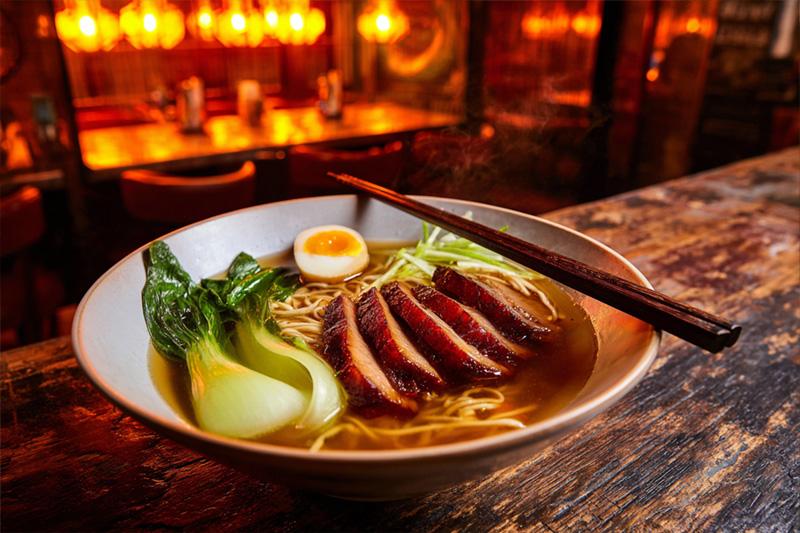
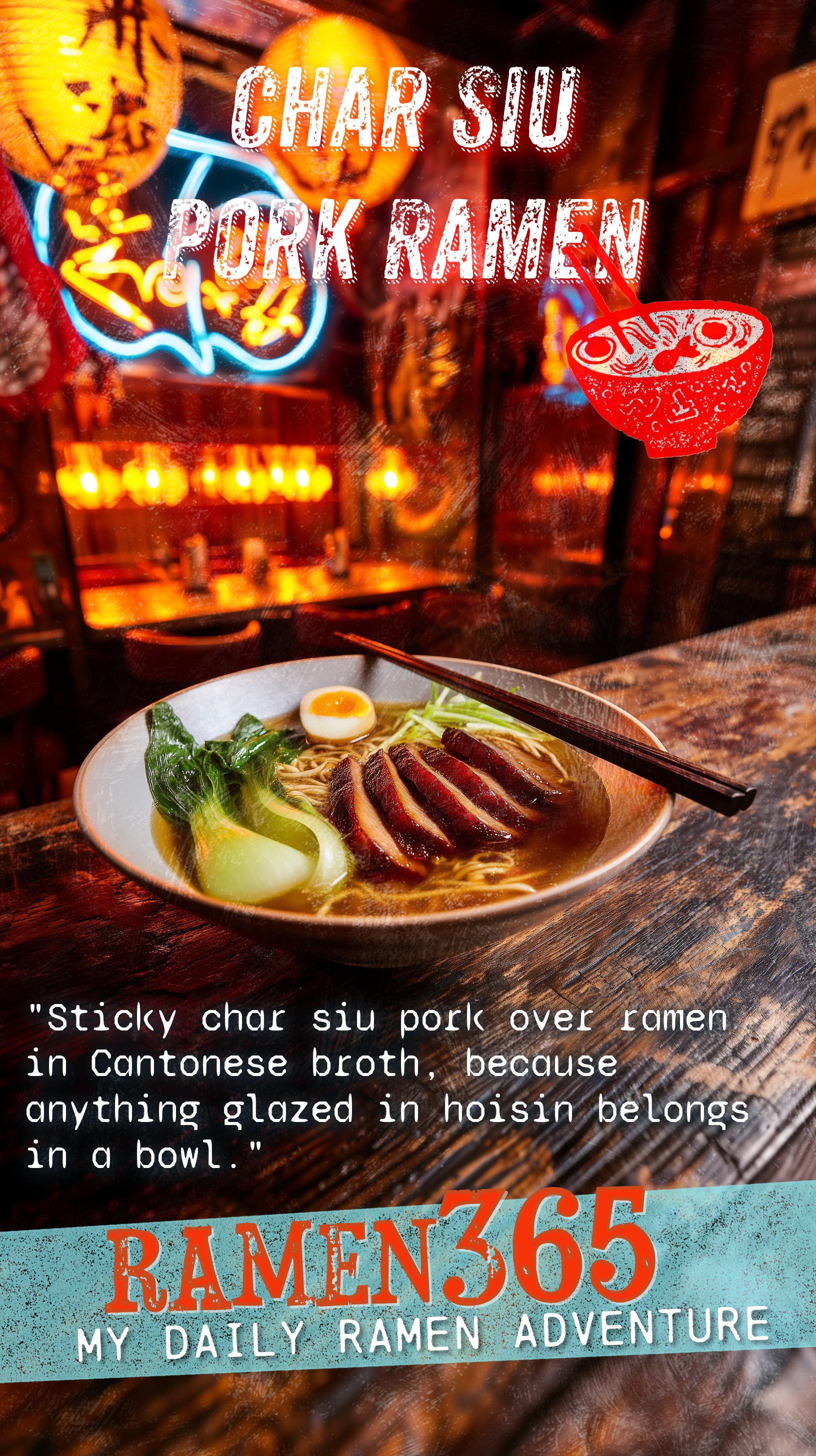
There is a window in the front of every Cantonese BBQ shop, whether it's in Kowloon or Chinatown or somewhere off an unmarked street in Richmond, where whole roast ducks and lacquered strips of char siu hang on hooks behind glass like the most beautiful display case that ever existed. Char siu means fork-roasted in Cantonese, a reference to how the marinated pork was historically suspended over fire, and the glaze that forms on the surface during roasting, all hoisin and soy and honey caramelized into something dark and sticky and deeply savory, is one of the defining flavors of Cantonese cooking. You can buy it by the pound at any deli that knows what it's doing, or you can make it at home, which means the apartment smells like something worth staying in for. The ramen broth for this bowl is intentionally clean and simple, a clear golden base that supports the char siu rather than competes with it, because the pork has already decided to be the main character and the broth's job is to let it. This is the bowl you make when you want something that feels like a proper restaurant meal on a Tuesday night with no particular reason.
Hoisin chars the skin—sweet glaze blooms in the oven—pork falls on the broth
Let Me Tell You...
There is a specific smell that Cantonese barbecue produces when the glaze hits the heat of a hot oven, this combination of hoisin caramelizing and five-spice releasing and the pork fat starting to render, and it's one of those kitchen smells that brings people from adjacent rooms without being asked.
I first made char siu at home after years of buying it from a deli window and feeling slightly embarrassed that I'd never tried, and the gap between the effort it requires and the result it produces is one of the more pleasant kitchen surprises I've encountered.
The marinade takes five minutes to mix and the oven does everything after that, and the apartment smells like something serious is happening for the better part of an hour.
The hoisin and five-spice need time to penetrate past the surface, and overnight marination produces a color and depth of flavor that a 30-minute soak can't match.
The char siu glaze is built on hoisin sauce, which manages to be sweet, salty, and savory simultaneously through fermented soybeans and aromatics, and the five-spice underneath it is the spice profile that makes Chinese roasted pork taste definitively itself rather than just glazed meat.
The honey in the marinade is what creates the lacquered exterior, caramelizing into that deep reddish-brown crust that you see in the deli window and that does not come from any shortcut.
Basting the pork halfway through roasting is the step that builds a properly lacquered surface rather than just a glazed one, and the difference in texture and sheen between basted and unbasted char siu is visible from across the room.
Air circulating underneath caramelizes all sides evenly and prevents the bottom from steaming in its own fat, which is the enemy of a good crust. The broth for this bowl is deliberately simple: clean chicken or pork stock seasoned with soy sauce, sesame oil, and aromatics, brought to a simmer and kept there while the pork does its thing in the oven.
An overcomplicated broth fights with the sweet, lacquered pork rather than framing it, and the goal is a clear, savory liquid that the noodles can swim through without the flavors arguing.
This is one of those cases where restraint in the broth is what lets the protein be the point, and resisting the temptation to add more to the broth is a form of culinary discipline worth practicing.
The cut angle matters for tenderness and the visual arrangement matters for the way the bowl reads before the first bite.
What this bowl delivers is the full char siu experience in a format that makes it a complete meal rather than a protein over rice, and the ramen noodles distribute the pork and its sticky glaze through every bite in a way that rice, which absorbs and holds, never quite does.
The bowl smells like a Cantonese BBQ window and tastes like someone's grandmother made dinner without being asked, and if that sounds like an endorsement then it is, because it is exactly that.
Ingredients
- 1 lb boneless pork shoulder, cut into 2 long strips about 2 inches wide
- 6 oz dried ramen noodles (2 bricks, seasoning packets discarded)
- 3 tablespoons hoisin sauce
- 2 tablespoons low-sodium soy sauce, divided
- 1 tablespoon honey
- 1 tablespoon Shaoxing rice wine (or dry sherry)
- 1 teaspoon five-spice powder
- 2 garlic cloves, minced (for the marinade)
- 4 cups low-sodium chicken broth
- 1 tablespoon toasted sesame oil
- 1-inch piece fresh ginger, thinly sliced (for the broth)
- 2 green onions, thinly sliced, divided (white parts for broth, green parts for garnish)
- Kosher salt and freshly ground black pepper, to taste
Preparation
- In a bowl, whisk together the hoisin sauce, 1 tablespoon of the soy sauce, honey, Shaoxing wine, five-spice powder, and minced garlic to form the marinade. Add the pork shoulder strips and turn to coat thoroughly. Marinate at room temperature for at least 30 minutes, or cover and refrigerate overnight.
- Preheat the oven to 425°F. Place a wire rack over a foil-lined baking sheet and arrange the marinated pork strips on the rack. Roast for 20 minutes.
- While the pork roasts, combine the chicken broth, remaining 1 tablespoon of soy sauce, sliced ginger, and the white parts of the green onions in a saucepan over medium heat. Bring to a gentle simmer and cook for 10 minutes to meld the aromatics. Remove the ginger and green onion pieces with a slotted spoon. Stir in the sesame oil. Keep warm over low heat.
- After 20 minutes, brush the pork with any remaining marinade and return to the oven for 10-15 minutes more, until deeply caramelized, slightly charred at the edges, and cooked through to an internal temperature of 145°F. Rest on the rack for 5 minutes, then slice crosswise on a slight diagonal into 1/4-inch pieces.
- Bring a separate pot of salted water to a boil. Cook the ramen noodles for 2-3 minutes until just tender. Drain.
- Divide the noodles between bowls. Ladle the hot broth generously over the noodles. Fan the sliced char siu over the top, overlapping slightly. Garnish with the green parts of the green onions and serve immediately with any optional toppings alongside.