
Char Siu Pork Shoulder Ramen
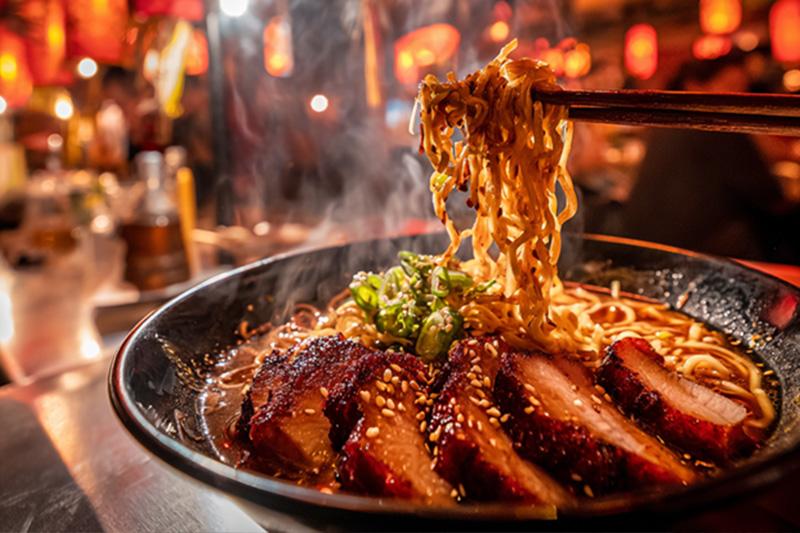
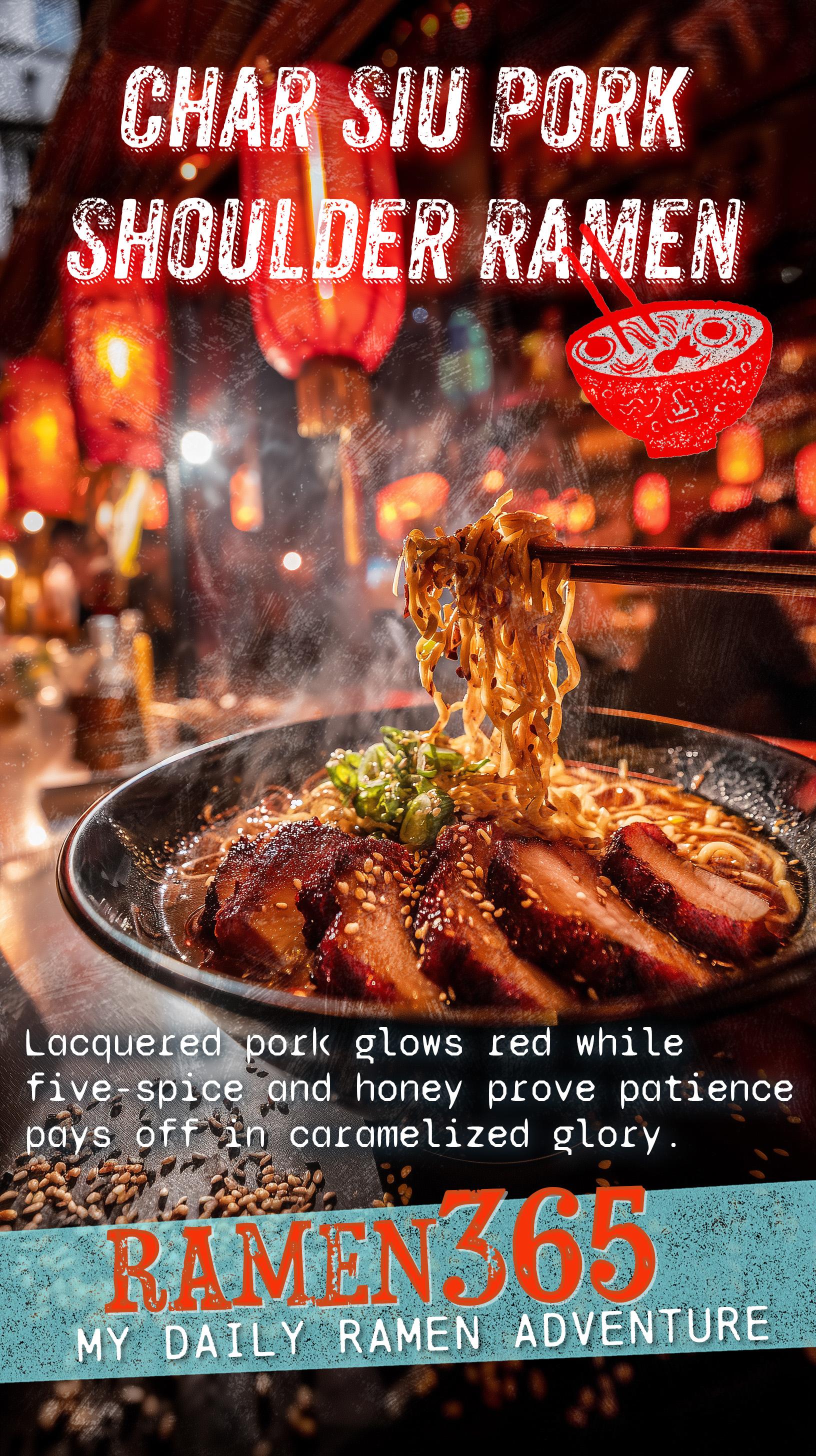
So this is Char Siu Pork Shoulder Ramen. Pork that's been marinated in a sauce so red it looks like it belongs in a Chinese apothecary, roasted until the edges caramelize into this sweet-savory crust that's basically edible candy, all sitting on noodles in a broth that knows its place is to support greatness. You know how some barbecue is all smoke and no substance? This is the opposite. The char siu glaze builds layers of flavor through honey, hoisin, and five-spice powder, creating this mahogany lacquer that catches the light and makes you want to take a picture before you eat it. Except you won't, because the smell is already making you impatient and your chopsticks are basically moving on their own. The pork shoulder breaks down during the long roast, staying tender inside while the outside develops that characteristic char siu edge, slightly burnt in the best possible way. It's the kind of dish that makes you understand why Chinatown restaurants have whole ducks and slabs of pork hanging in their windows, because when food looks this good, it advertises itself.
Red lacquer gleams bright—five-spice whispers through pork fat—sweetness earned by fire
Let Me Tell You...
My introduction to real char siu happened in a Cantonese restaurant in San Francisco's Chinatown, where an elderly woman was chopping roasted pork with a cleaver that looked older than I was.
The pork had this deep red color that seemed impossible, like someone had painted it, and when she handed me a sample on a toothpick, the combination of sweet, savory, and slightly burnt hit me like a flavor truck.
I went home that night determined to figure out how to make it, armed with nothing but confidence and a complete lack of understanding about what I was getting into.
The marinade is where char siu either succeeds or becomes sad, sticky pork.
You need the trifecta: hoisin for depth, honey for sweetness and glaze, and Chinese five-spice for that distinctive aromatic hit that makes char siu taste like char siu and not just sweet pork.
I add red fermented bean curd because that's what gives it the traditional red color and adds this funky umami depth that you can't get anywhere else.
Shaoxing wine goes in for complexity, soy sauce for salt and color, and enough garlic to make your kitchen smell like a Chinese restaurant for three days.
The pork shoulder marinates overnight, soaking up all those flavors until it's completely transformed.
Roasting char siu is an exercise in patience and timing.
You start low and slow to render the fat and cook the pork through, then crank up the heat at the end to caramelize that glaze into a sticky, lacquered crust. Every fifteen minutes, you baste it with more marinade, building up layers like you're painting a masterpiece except the masterpiece is made of pork and will be eaten.
The smell that fills your kitchen during this process is intoxicating, that sweet-savory aroma that makes neighbors knock on your door asking what you're cooking.
When it's done, when that pork comes out of the oven glistening and dark red with caramelized edges, you've created something that belongs in a restaurant window.
Now I make this whenever I need to remind myself that good food takes time and that some recipes are worth the effort.
The pork sits on top of simple ramen noodles in a light broth, because char siu is the star and everything else is supporting cast. Each slice has that perfect combination of tender meat and crispy, sweet edges, and when you bite through it with the noodles, the glaze mixes with the broth and creates this sauce that makes you want to drink it straight from the bowl.
Every bite tastes like you accomplished something, like you didn't just make dinner but created an actual experience.
Ingredients
- 8 ounces dried ramen noodles (2 bricks, seasoning packets discarded)
- 2 pounds pork shoulder, with fat cap intact
- 1/4 cup hoisin sauce
- 1/4 cup honey
- 3 tablespoons soy sauce
- 2 tablespoons Shaoxing wine
- 2 tablespoons red fermented bean curd (or red food coloring as substitute)
- 1 tablespoon Chinese five-spice powder
- 6 cloves garlic, minced
- 1 tablespoon fresh ginger, minced
- 2 tablespoons brown sugar
- 1 tablespoon sesame oil
- 1/2 teaspoon white pepper
- 4 cups chicken stock
- 2 tablespoons soy sauce (for broth)
- 1 tablespoon rice vinegar
- 4 scallions, thinly sliced
- 1 tablespoon toasted sesame seeds
- 1 teaspoon chili oil (optional)
Preparation
- Score the fat cap of the pork shoulder in a crosshatch pattern, cutting about 1/4-inch deep. Cut pork into 2-inch thick slabs for faster cooking and more surface area.
- In a bowl, whisk together hoisin sauce, honey, 3 tablespoons soy sauce, Shaoxing wine, red fermented bean curd, five-spice powder, garlic, ginger, brown sugar, sesame oil, and white pepper until smooth. Reserve half of this marinade in a separate container and refrigerate.
- Place pork slabs in a large zip-top bag or shallow dish. Pour the remaining marinade over the pork, turning to coat completely. Marinate in the refrigerator for at least 4 hours, preferably overnight.
- Preheat oven to 300°F. Remove pork from marinade (discard used marinade) and place on a wire rack set over a foil-lined baking sheet. Roast for 1 hour and 30 minutes.
- Increase oven temperature to 400°F. Brush pork with some of the reserved marinade. Roast for 15 minutes, then brush with more marinade. Repeat this process 2-3 more times (about 45-60 minutes total at high heat) until pork is deeply caramelized and lacquered, with internal temperature of 190°F.
- While pork is finishing, bring the remaining reserved marinade to a boil in a small saucepan. Simmer for 5 minutes to reduce and thicken into a glaze. Set aside.
- Remove pork from oven and let rest for 10 minutes. Slice against the grain into 1/4-inch thick slices.
- Bring a large pot of salted water to a boil. Cook ramen noodles for 2-3 minutes until just tender, then drain and set aside.
- In a pot, heat chicken stock with 2 tablespoons soy sauce and rice vinegar. Bring to a simmer and season with salt to taste.
- Divide noodles among bowls and ladle hot broth over them. Arrange char siu pork slices on top. Drizzle with the reduced glaze, then garnish with sliced scallions, sesame seeds, and chili oil if desired. Serve immediately.