
Chicken Katsu Curry Ramen
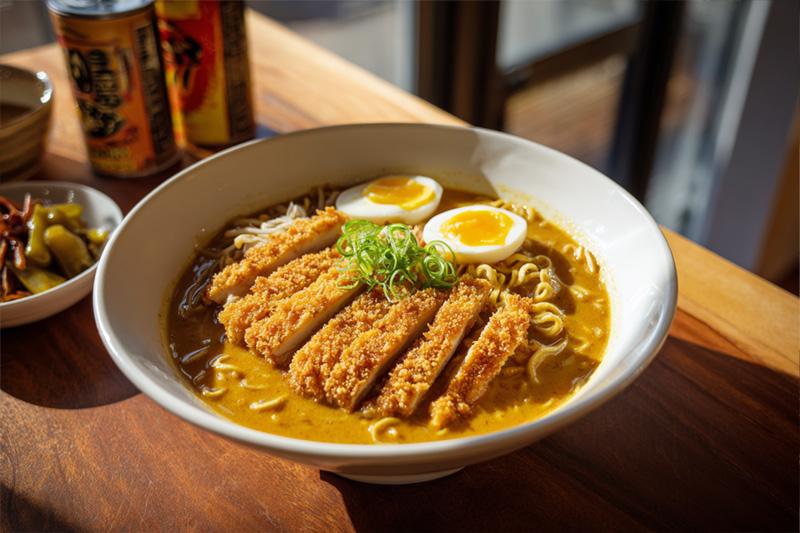
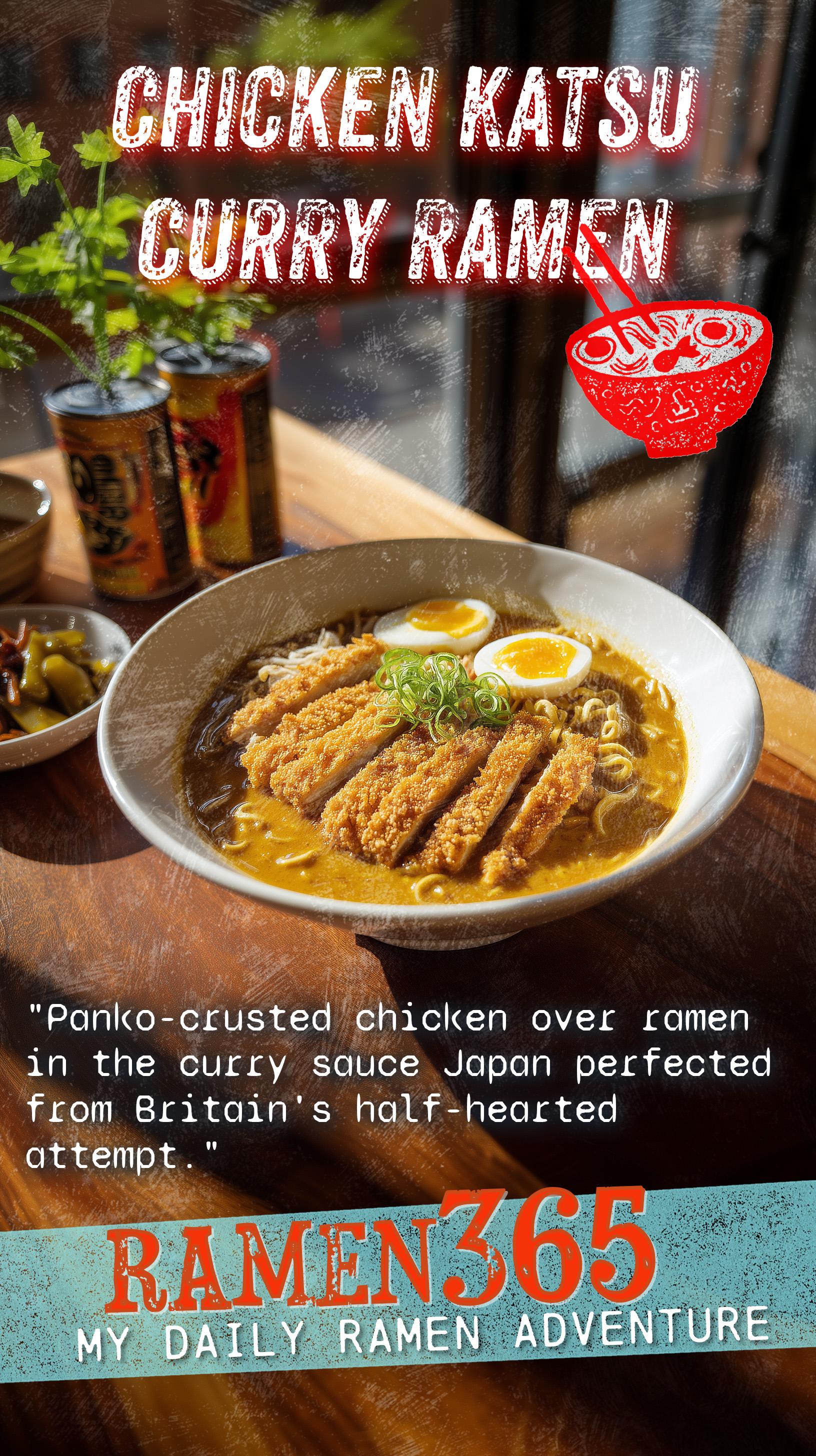
Japanese curry is one of the more fascinating things that happens when one country adopts another's cuisine and quietly improves it past the point where the original country can object. The British carried their colonial approximation of South Asian curry to Japan during the Meiji era and the Japanese spent the next century perfecting it into something thicker, sweeter, and entirely their own. Katsu curry, that golden sauce over rice with a panko-breaded fried cutlet on top, became one of the essential comfort foods of Japanese home cooking, the kind of thing you want on a cold Tuesday after a commute that went long. What happens when you replace the rice with ramen noodles is surprisingly obvious in retrospect: the noodles get coated in the sauce in a way that rice never does, carrying it into every strand instead of just absorbing it and disappearing. The panko crust has to stay separate and crisp until the last possible moment, which is why assembly order matters here, and a properly fried chicken katsu laid over a bowl of hot curry broth earns its own category of good.
Crisp panko cracks first—curry pulls the noodles down—bowl catches the gold
Let Me Tell You...
There is a specific kind of restaurant that exists in every Japanese city and most of the suburban train station food courts where the menu is three items and two of them are variations on katsu curry and the third is probably cold soba for people who've given up on decisions.
I found one in Osaka on a trip that was supposed to be about the food markets and ended up being mostly about ducking into warm places because it was November and I'd packed poorly, which is a failure of planning I've repeated enough times that it clearly isn't an accident.
The curry that came out was this thick, rust-colored sauce over a mound of sticky rice with a slab of panko chicken that had stayed miraculously crispy despite sharing a plate with a wet sauce for long enough to be carried from the kitchen, and I sat there thinking about how the Japanese had taken something the British barely understood and turned it into a national comfort food with its own entire culture of preferences and opinions about the right thickness and the correct sweet-to-spice ratio.
Pouring it hot over the ramen at the table prevents the katsu crust from softening before the first bite.
The Japanese curry sauce is the part of this recipe that deserves real attention, because it's not the same thing as Indian or Thai curry or any curry that people who haven't had Japanese curry might assume it resembles.
It's sweeter and thicker and has this almost stew-like quality from the roux base, and the flavor is warmer and more rounded than any sharp or citrusy Southeast Asian curry would produce.
The grated apple and sauteed onion that go into traditional versions break down completely during cooking and add a natural sweetness that balances the spice in a way that makes the finished sauce taste almost caramelized, which is the difference between a curry that's fine and one you'd order twice at the same restaurant in a week.
This is the step that makes Japanese curry taste unlike every other curry, and skipping it produces something flatter you'll notice immediately.
Panko exists in a different category from regular breadcrumbs and the distinction matters here more than in most recipes.
The flakes are drier and coarser and create a crust with more air in it, which means more crunch per bite, which means better texture against a thick curry sauce that would turn a fine breadcrumb coating into paste within thirty seconds of contact. The chicken has to be pounded to an even thickness and go into oil that's hot enough to form the crust immediately rather than absorb the fat and go pale, and the window between perfectly golden and overdone is measured in seconds rather than minutes once the color starts to change.
It should sizzle hard and brown in about 20 seconds.
Too cool and the crust absorbs oil; too hot and the exterior burns before the chicken cooks through.
What makes this a real bowl rather than a deconstructed katsu curry plate is the order of assembly: noodles first, then curry broth, then the sliced katsu fanned over the top with the crust pointing up so it doesn't get submerged until you're ready.
The noodles pull the curry sauce through every strand and the chicken adds structural crunch to each mouthful in a way that rice, which absorbs the curry and slowly disappears into it, never quite manages.
Make it on a weeknight when you need the kind of dinner that occupies your full attention while you eat it, and lean into the absurdity of British curry filtered through a century of Japanese refinement and served over noodles in a bowl that didn't exist until someone decided it should.
Ingredients
- 2 boneless, skinless chicken breasts (about 6 oz each), pounded to 1/2-inch thickness
- 6 oz dried ramen noodles (2 bricks, seasoning packets discarded)
- 1/2 cup all-purpose flour, for dredging
- 2 large eggs, lightly beaten
- 1 cup panko breadcrumbs
- 1/2 teaspoon kosher salt, plus more to taste
- 1/4 teaspoon freshly ground black pepper
- 1 cup neutral oil, for shallow-frying
- 1 medium yellow onion, finely diced
- 1 small Fuji or Gala apple, peeled and grated
- 2 tablespoons unsalted butter
- 2 tablespoons Japanese curry powder (such as S&B brand)
- 1 tablespoon all-purpose flour (for the curry roux)
- 3 cups low-sodium chicken broth
- 1 tablespoon low-sodium soy sauce
- 1 teaspoon honey
- 1 teaspoon Worcestershire sauce
Preparation
- Season the pounded chicken breasts with salt and pepper on both sides. Set up a breading station with the flour in a shallow bowl, beaten eggs in a second bowl, and panko in a third. Dredge each breast in flour, shaking off the excess, then coat in the egg, then press firmly into the panko to form an even crust on both sides.
- In a medium saucepan, melt the butter over medium heat. Add the diced onion and cook, stirring occasionally, for 6-7 minutes until golden and soft. Add the grated apple and stir for 2 minutes until it cooks down into the onion mixture.
- Add the curry powder and 1 tablespoon of flour to the pan and stir constantly for 1-2 minutes to toast the spices and form a roux. Slowly pour in the chicken broth a little at a time, whisking to prevent lumps. Add the soy sauce, honey, and Worcestershire sauce. Simmer uncovered over medium-low heat for 10-12 minutes, stirring occasionally, until the sauce thickens to a consistency that coats the back of a spoon. Keep warm over low heat.
- Heat the neutral oil in a large skillet over medium-high heat until shimmering. Test with a single panko flake. Working in batches if needed, add the breaded chicken and cook for 3-4 minutes per side until deep golden-brown and cooked through to an internal temperature of 165°F. Transfer to a wire rack or paper towel-lined plate and rest for 2 minutes. Slice crosswise into 1/2-inch strips.
- Bring a separate pot of salted water to a boil. Cook the ramen noodles for 2-3 minutes until just tender. Drain.
- Divide the noodles between bowls. Ladle the hot curry broth generously over the noodles. Fan the sliced katsu strips over the top, crust-side up. Serve immediately with any optional toppings alongside.