
Chili Crisp Tofu Ramen
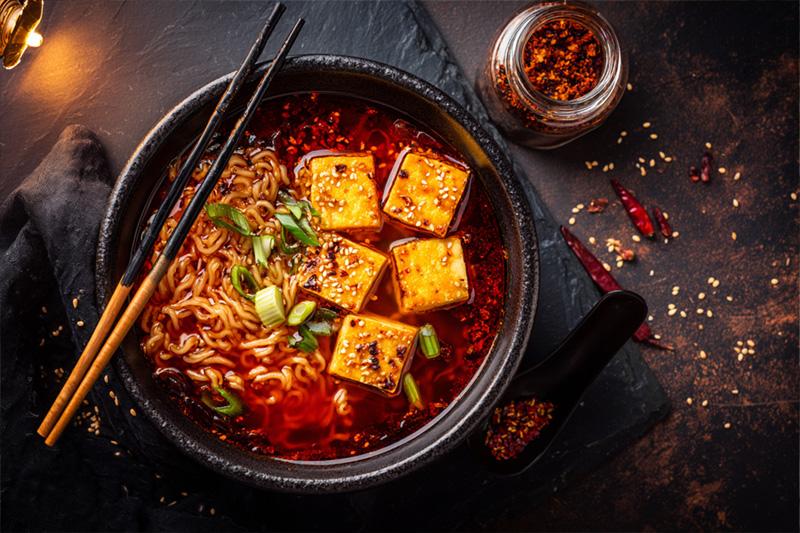
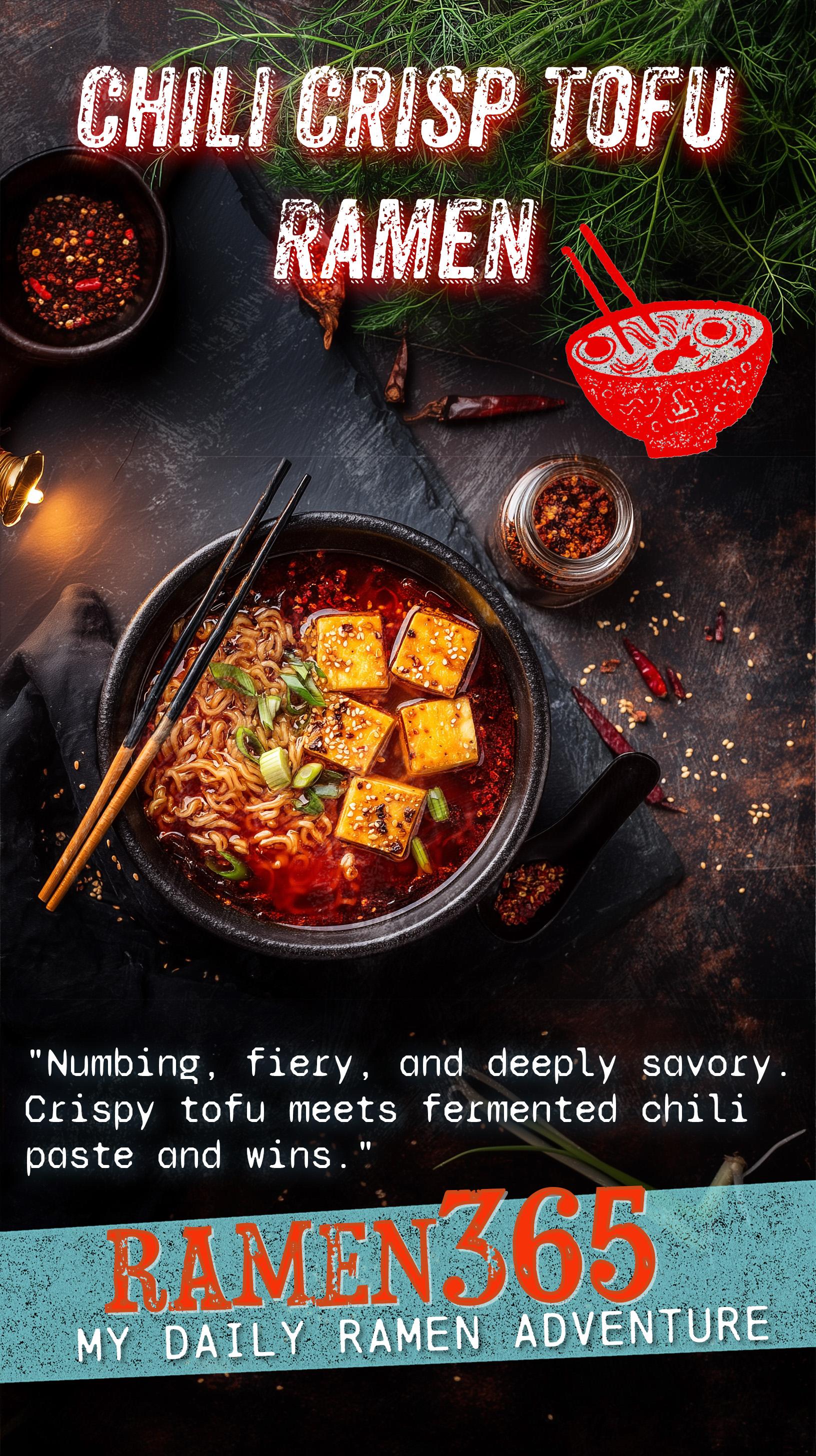
There's a jar of chili crisp in most serious kitchens now, and if yours doesn't have one, I'm not going to judge you out loud. This bowl is built around that stuff, specifically around the idea that it deserves more than just being spooned onto eggs. The broth starts with doubanjiang, that deep rust-colored fermented chili bean paste from Sichuan that smells like something between a sauce and a dare. Garlic, ginger, a hit of Sichuan peppercorn, and suddenly the kitchen is doing something interesting. The tofu gets deep-fried until the outside turns this satisfying shade of amber, and the contrast between the crispy shell and the soft inside is genuinely one of the better textural situations in ramen. You finish the bowl with a pour of chili crisp oil right before eating, which is both practical and a little theatrical. It's a fiery, numbing, deeply savory bowl, and the kind of thing you make once and then immediately start thinking about making again.
Red oil hits the bowl—Peppercorn sparks on the tongue—Tofu holds its ground
Let Me Tell You...
The thing about Sichuan food that nobody tells you upfront is that the heat is only half the story, because the peppercorn is doing something completely different in your mouth that has nothing to do with burning.
It goes numb, electric almost, and then the chili heat rolls in behind it like a second wave you didn't see coming.
I first ran into that combination in a bowl of mapo tofu at a place in San Francisco's Richmond district where the menu had exactly one photo and the photo was blurry, and I've been chasing that particular sensation ever since.
That step is not optional.
It turns the paste from sharp and raw into something round and deep.
The tofu situation here is worth taking seriously.
Extra-firm pressed dry means almost no moisture left before it hits the oil, which means the fry actually does what you want it to do instead of steaming itself into a soggy situation in the pan.
I made the mistake once of skipping the pressing because I was impatient, and the tofu basically fell apart in the wok and turned into a sad scramble, which is not a bowl you want to serve to anyone.
The fried exterior holds up in the broth longer than you'd expect, staying crisp through most of the eating experience, which is the whole point.
More time is better.
Wet tofu will not fry, it will suffer.
Building the broth is fast once the aromatics hit the wok, which is one of the things that makes this recipe feel manageable despite all its components.
The doubanjiang goes in first, then garlic and ginger, then the broth and soy sauce and a little rice vinegar to sharpen the edges.
Sichuan peppercorn gets toasted separately in a dry pan until fragrant, then cracked and added late so the aroma doesn't cook off entirely.
The whole broth comes together in maybe fifteen minutes and smells like it took far longer, which is the kind of cooking shortcut I have genuine affection for.
Crack with the bottom of a heavy glass before adding to broth.
Assembly is where the drama happens, and you should not skip the ceremony of it.
Noodles go in first, tofu cubes get stacked on top, the broth gets ladled over carefully, and then the chili crisp comes last, a generous pour right in the center of the bowl where it pools and shimmers before you stir it in.
Some people garnish with sesame seeds and green onions, which I recommend, and some people add a soft-boiled egg, which I also recommend.
What you end up with is a bowl that looks like it took real effort and tastes like Chengdu in the best possible way, which is a place you don't have to have been to in order to understand.
Ingredients
- 8 ounces dried ramen noodles (2 bricks, seasoning packets discarded)
- 14 ounces extra-firm tofu, pressed dry and cut into 1-inch cubes
- Neutral oil, for frying (about 2 cups, such as vegetable or canola)
- 2 tablespoons doubanjiang (fermented chili bean paste)
- 4 cloves garlic, minced
- 1 tablespoon fresh ginger, minced
- 1 teaspoon whole Sichuan peppercorns
- 4 cups low-sodium vegetable broth
- 2 tablespoons soy sauce
- 1 tablespoon rice vinegar
- 1 teaspoon toasted sesame oil
- 2 tablespoons chili crisp oil (plus more for serving)
- 2 green onions, thinly sliced (plus more for topping)
- 1 tablespoon toasted sesame seeds (plus more for topping)
- Kosher salt, to taste
Preparation
- Press the tofu: Wrap the tofu block in a clean towel and set a heavy skillet on top. Press for at least 20 minutes to remove excess moisture. Once pressed, cut into 1-inch cubes and pat dry with paper towels.
- Toast the peppercorns: In a small dry skillet over medium heat, toast the Sichuan peppercorns for about 90 seconds, stirring, until fragrant. Transfer to a cutting board and crack them coarsely using the bottom of a heavy glass or a mortar and pestle. Set aside.
- Fry the tofu: In a wok or deep skillet, heat about 2 cups neutral oil over medium-high heat to 350°F (175°C). Working in batches, fry the tofu cubes for 3-4 minutes per batch, turning occasionally, until golden and crispy on all sides. Transfer to a paper towel-lined plate and season lightly with kosher salt.
- Build the broth: Carefully pour off all but 1 tablespoon of the frying oil. Return the wok to medium heat and add the doubanjiang. Stir and fry the paste for 60 seconds until darkened and fragrant. Add the garlic and ginger and cook for another 60 seconds, stirring constantly.
- Simmer the broth: Add the vegetable broth, soy sauce, and rice vinegar to the wok. Stir to combine, scraping up any paste from the bottom. Add the cracked Sichuan peppercorns. Bring to a simmer and cook uncovered for 10 minutes. Stir in the sesame oil. Taste and adjust salt as needed.
- Cook the noodles: While the broth simmers, bring a separate pot of salted water to a boil. Cook the ramen noodles according to package directions, usually 2-3 minutes, until just tender. Drain and rinse briefly under warm water. Divide between two bowls.
- Assemble the bowls: Ladle the hot broth over the noodles. Arrange the fried tofu cubes on top. Pour 1 tablespoon of chili crisp oil into the center of each bowl. Garnish with sliced green onions and toasted sesame seeds. Serve immediately with extra chili crisp on the side.