
Curry Okra Rice Noodle
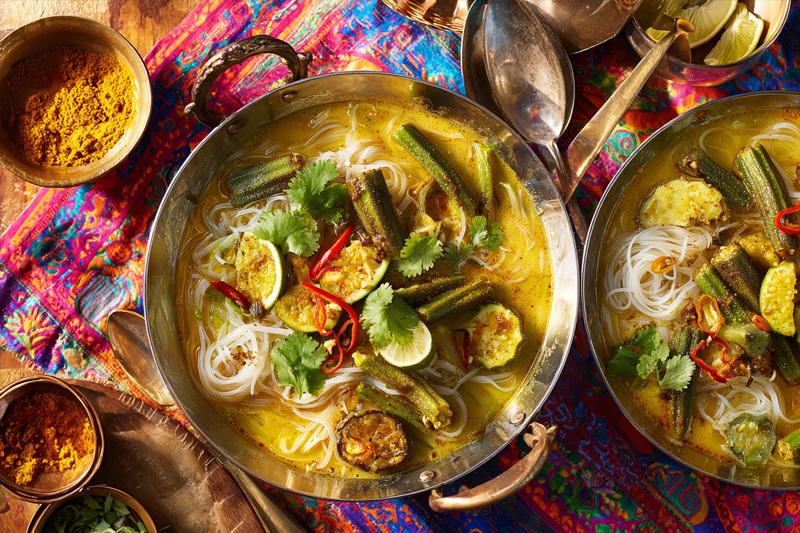
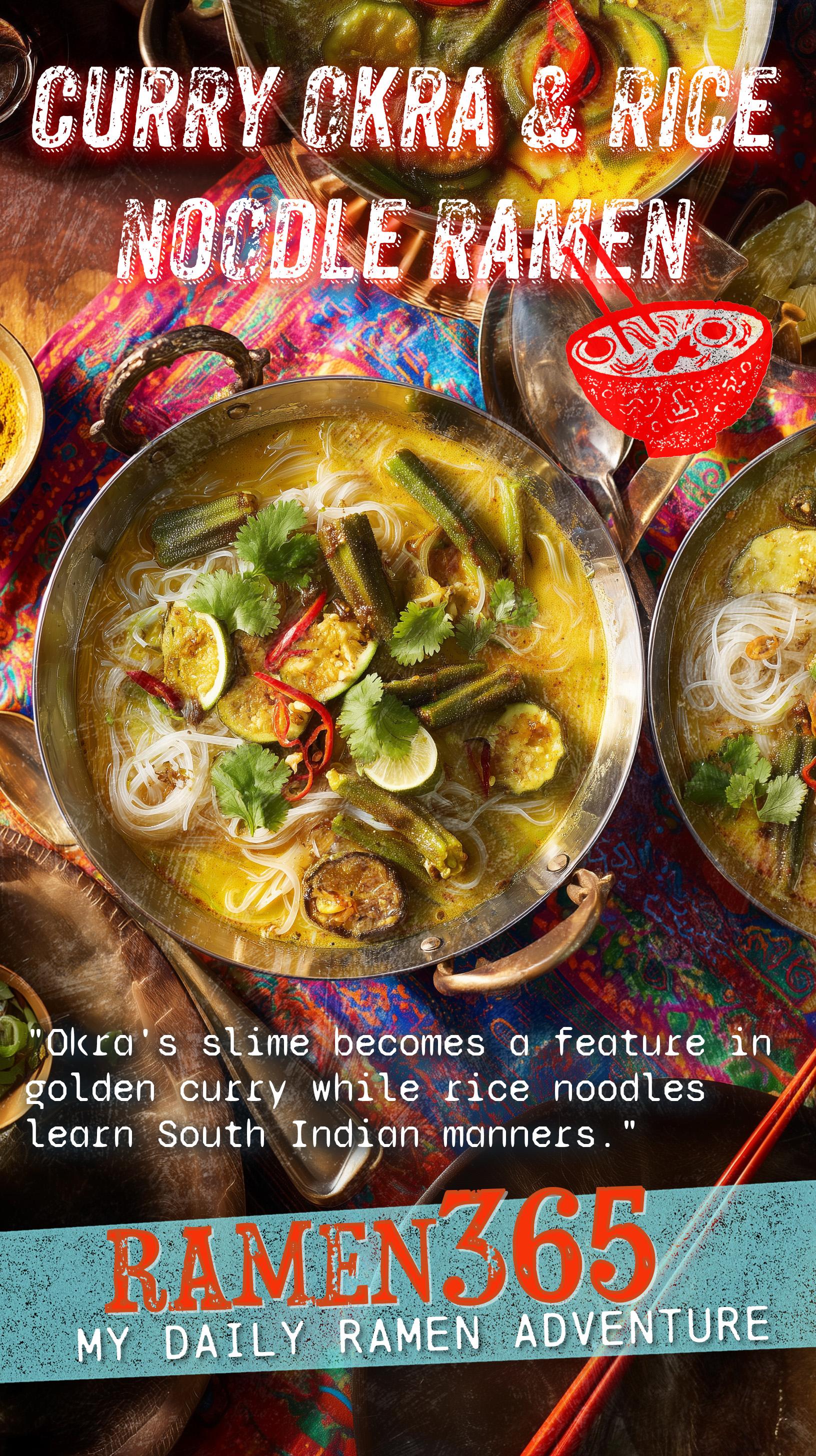
Okra gets absolutely disrespected in American cooking, relegated to gumbo or fried into submission because people are terrified of that natural sliminess that is actually a feature, not a bug. In Indian and Southeast Asian cuisines, they understand that okra's mucilaginous quality is what makes it perfect for curries, thickening the sauce naturally while staying tender and absorbing all those spices. When you combine okra with curry spices and rice noodles instead of wheat-based ramen, you get this gluten-free situation that tastes like South India and Japan had a conversation and decided to make something delicious together. The curry is earthy and complex, not just hot but layered with turmeric, cumin, coriander, and curry leaves that taste like nothing else on earth. This is fusion food that actually makes sense, where ingredients from different cuisines share common ground and create something that feels inevitable rather than forced.
Green pods split open—curry gold runs through their core—slime becomes virtue.
Let Me Tell You...
My relationship with okra changed completely when I stayed with a family in Kerala who cooked it almost every day in different forms, always with curry spices and always without apology for its texture.
The grandmother showed me how to cut okra into thick pieces and sauté them with mustard seeds and curry leaves until they got slightly charred, creating this contrast between crispy edges and tender, silky interior.
She laughed at my concern about the sliminess, explaining through her daughter's translation that the viscosity was what made okra special, what helped the curry cling to rice or noodles or whatever you served it with.
I started experimenting with okra when I got back home, trying to recreate those Kerala flavors in different contexts.
The breakthrough came when I realized that the same qualities that make okra perfect for curry also make it ideal for noodle soups, where that natural thickening ability creates body in the broth without needing to add cream or cornstarch.
I started making curry broths with toasted spices, coconut milk, and tamarind, then adding whole or halved okra pods that would simmer until tender while releasing their silky texture into the liquid.
The rice noodle component came from wanting to make the dish accessible to people who avoid gluten but also because rice noodles have this delicate, slippery quality that works differently than wheat ramen.
They soak up the curry without getting heavy, staying light and translucent even in rich broth.
When you combine them with okra and curry, you get this textural harmony where everything is smooth and silky instead of having competing consistencies.
The curry itself needs to be bold enough to stand up to the okra and rice noodles without overwhelming them, which means building layers of flavor through technique rather than just dumping in curry powder.
I toast whole cumin, coriander, and mustard seeds, bloom them in oil with fresh curry leaves, then add ground turmeric and chili for heat.
The coconut milk comes in at the end to add richness without dulling the spices, creating this balance between heat and cream that makes every spoonful interesting.
This bowl has become my answer to people who claim they do not like okra, my proof that the problem is not the vegetable but how it is typically prepared.
There is something satisfying about rehabilitating misunderstood ingredients, about showing people that what they thought they hated is actually delicious when treated with respect and paired with the right flavors.
Every time I make this, I think about that grandmother in Kerala and her patient insistence that okra's sliminess was a gift, not a flaw.
Ingredients
- 8 ounces dried flat rice noodles (pad thai-style) or rice vermicelli
- 12 ounces fresh okra, ends trimmed, halved lengthwise
- 3 tablespoons coconut oil or neutral oil, divided
- 1 can (14 ounces) coconut milk
- 3 cups vegetable stock
- 1 tablespoon whole cumin seeds
- 1 tablespoon whole coriander seeds
- 1 teaspoon black mustard seeds
- 2 teaspoons ground turmeric
- 1 teaspoon ground cumin
- 1 teaspoon Kashmiri chili powder or paprika
- 1/2 teaspoon cayenne pepper (adjust to taste)
- 4 cloves garlic, minced
- 1 tablespoon fresh ginger, grated
- 2 small shallots, thinly sliced
- 12-15 fresh curry leaves
- 2 tablespoons tamarind paste or lime juice
- 1 tablespoon brown sugar or jaggery
- 2 medium tomatoes, diced
- 3 scallions, sliced
- 1/4 cup fresh cilantro, chopped
- Fresh Thai basil or regular basil (optional)
- Lime wedges, for serving
- Kosher salt, to taste
Preparation
- Soak the rice noodles in warm water for 15-20 minutes until softened but not fully cooked. Drain and set aside.
- Pat the halved okra pieces completely dry with paper towels to minimize sliminess.
- In a dry skillet, toast the whole cumin seeds, coriander seeds, and mustard seeds over medium heat for 2-3 minutes until fragrant and popping. Remove and grind coarsely in a spice grinder or mortar and pestle.
- Heat 2 tablespoons of coconut oil in a large pot or Dutch oven over medium-high heat. Add the okra pieces and cook for 5-6 minutes, stirring occasionally, until slightly charred and the sliminess is reduced. Remove and set aside.
- In the same pot, add the remaining 1 tablespoon of oil. Add the sliced shallots and cook for 2-3 minutes until softened.
- Add the garlic, ginger, and curry leaves. Cook for 1 minute until fragrant, stirring constantly.
- Add the toasted ground spices, turmeric, ground cumin, chili powder, and cayenne. Stir for 30 seconds to bloom the spices.
- Add the diced tomatoes and cook for 3-4 minutes until they start to break down.
- Pour in the vegetable stock and bring to a boil. Reduce heat and simmer for 5 minutes.
- Add the coconut milk, tamarind paste, and brown sugar. Stir well and simmer for another 5 minutes. Taste and adjust seasoning with salt.
- Return the cooked okra to the pot and add the drained rice noodles. Simmer gently for 2-3 minutes until the noodles are tender and have absorbed some of the curry broth.
- Divide among serving bowls. Garnish with sliced scallions, fresh cilantro, and Thai basil if using. Serve immediately with lime wedges and any optional toppings on the side.