
Doenjang Ramen
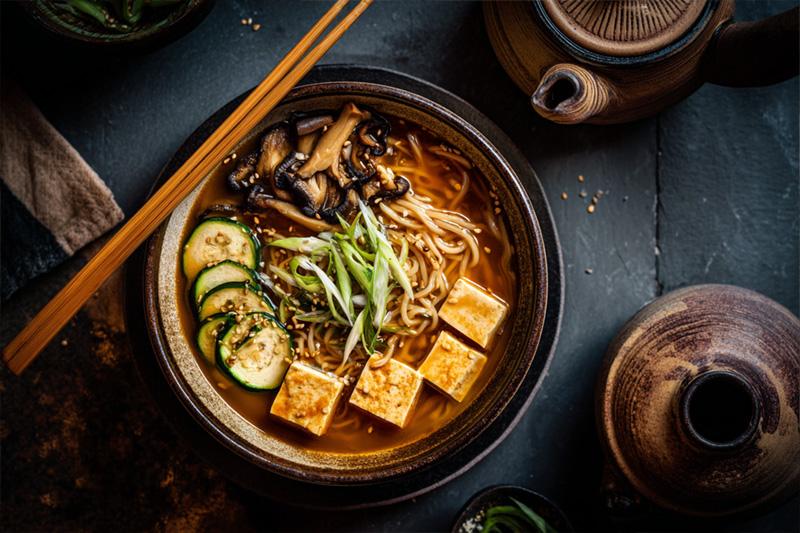
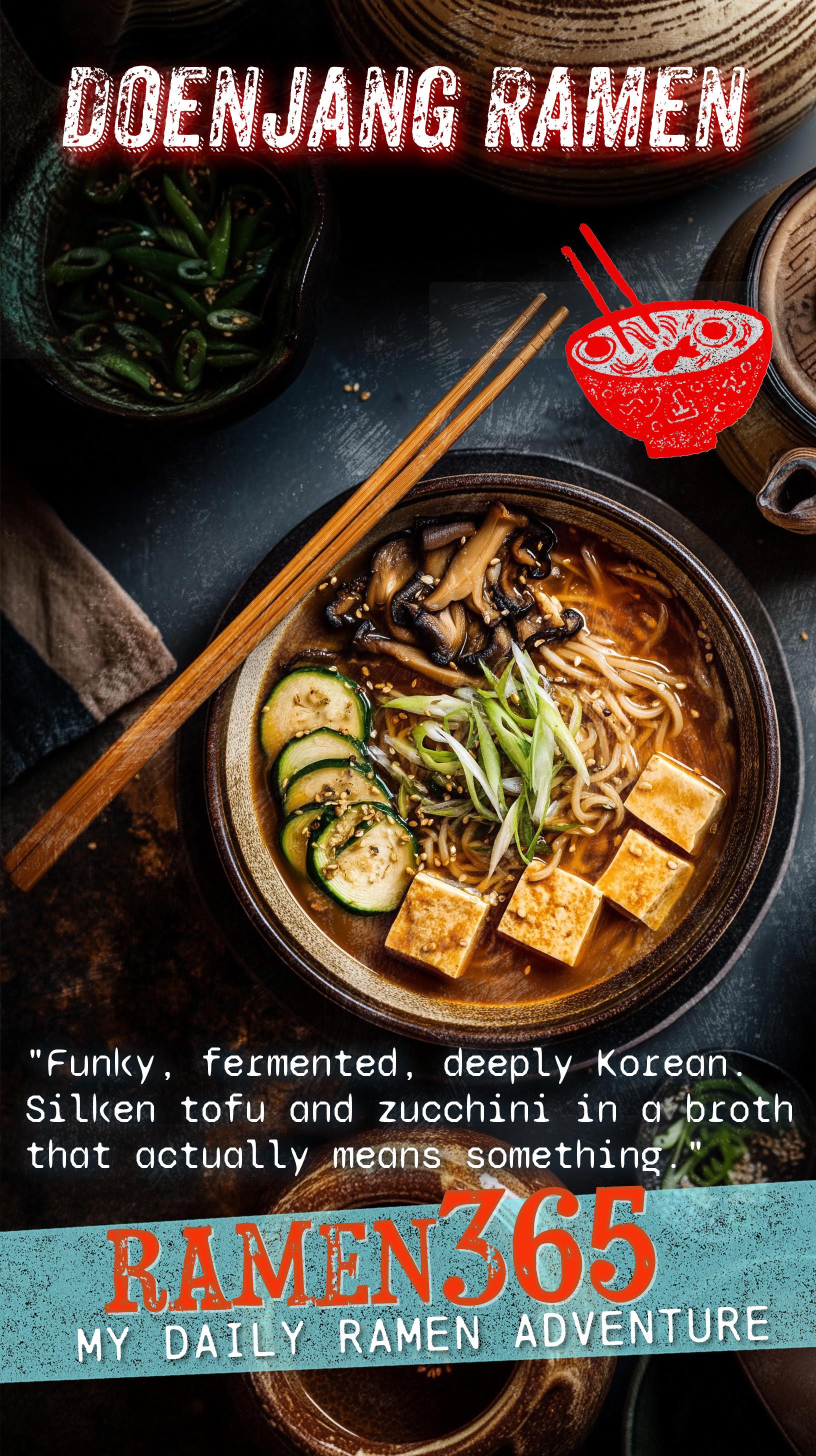
There is a smell you get when doenjang hits a hot pot of dashi, and it is one of those smells that makes you feel like you are about six years old again and someone else is doing the cooking. It is pungent, funky, a little alarming if you have never been near it before, and then all at once it starts to make perfect sense. Doenjang jjigae is basically the Korean answer to every comfort stew tradition in the world, the kind of dish that generations of Korean grandmothers made without measuring a single thing. This version drags it into ramen territory, which I realize sounds a little audacious, but the anchovy-kelp dashi broth is already doing half the heavy lifting, and the silken tofu has a way of just dissolving into the warmth in the most satisfying way. The zucchini gets a little silky too, and the shiitakes soak up all that fermented depth and refuse to let go of it. You can eat this on a Tuesday night in about thirty minutes and feel like someone cared about the meal, which is not always a given.
Paste thick as dark earth—Soybean and time in the pot—Silence fills the bowl
Let Me Tell You...
You buy doenjang the first time kind of cautiously, because the container smells like something that has been sitting in a cave for two years, which is basically what it is, and you are not entirely sure how it is going to behave. Korean fermented soybean paste is not miso, even though people compare them constantly, and I understand the instinct but it undersells what doenjang is doing.
Miso is elegant.
Doenjang is blunt and old and a little aggressive, which is exactly what you want when you are making a broth that should actually taste like something.
One tablespoon gets you nowhere.
You are building a broth, not hinting at one.
The anchovy-kelp dashi is the part most people skip because it sounds like extra work, but you simmer dried anchovies and a piece of kombu for about ten minutes and then you have a broth with more backbone than most stock you have ever bought in a carton.
The kombu brings a gentle ocean depth and the anchovies bring something savory and almost briny underneath everything, and when you whisk the doenjang into it the whole thing turns this deep murky amber that looks like it could have been cooking all day.
I accidentally let mine go a little too long once and the anchovies got bitter, which was a lesson in paying attention.
Overcooked anchovies will drag the broth somewhere you do not want to go.
The silken tofu goes in near the end because it does not need cooking so much as it needs warming, and if you stir too aggressively it just falls apart into ribbons, which is actually fine texturally but looks a little chaotic in the bowl.
Zucchini takes maybe four minutes to get tender without going mushy, and the shiitakes need to go in before that because they want to absorb the broth and get soft all the way through.
When it all comes together in the bowl with the noodles underneath and a thin drizzle of sesame oil over the top, it looks like a version of something someone has been making for a long time.
They cook evenly and look like you thought about it.
There is something about eating a bowl of doenjang ramen alone on a quiet night that feels appropriate in a way that is hard to explain without sounding like you are performing solitude.
The fermented paste does this thing where it is just present in every sip, not loud, not showing off, just there in a way that feels like it has been there before.
You finish the bowl and the broth is still good enough to drink, which is how you know the whole project worked.
Ingredients
- 8 ounces dried ramen noodles (2 bricks, seasoning packets discarded)
- 14 ounces silken tofu, drained and cut into 3/4-inch cubes
- 1 medium zucchini, halved lengthwise and sliced 1/4-inch thick on a slight bias
- 6 dried shiitake mushrooms, rehydrated in warm water 20 minutes, stems trimmed, caps sliced
- 2 1/2 tablespoons doenjang (Korean fermented soybean paste)
- 4 cups water
- 10 medium dried anchovies (myeolchi), heads and guts removed
- 1 piece dried kelp (kombu), about 4 inches square
- 3 cloves garlic, minced
- 1 teaspoon gochugaru (Korean red pepper flakes), or more to taste
- 2 teaspoons toasted sesame oil (plus more for finishing)
- 3 green onions, thinly sliced (whites and greens separated)
- Kosher salt, to taste
Preparation
- Make the anchovy-kelp dashi: Add 4 cups water, the dried anchovies, and the kombu to a medium saucepan. Bring to a gentle simmer over medium heat and cook for 10 minutes. Remove and discard the anchovies and kombu. Keep the dashi warm over low heat.
- Rehydrate the shiitakes (if not already done): Soak dried shiitake mushrooms in warm water for 20 minutes. Squeeze out excess liquid, trim the stems, and slice the caps. Reserve the soaking liquid and set aside.
- Build the broth: In a large pot or deep saucepan over medium heat, warm 1 teaspoon of sesame oil. Add the green onion whites and garlic and cook, stirring, for 1 minute until fragrant. Add the sliced shiitakes and stir for another minute. Pour in the anchovy-kelp dashi and 1/2 cup of the mushroom soaking liquid. Bring to a gentle simmer.
- Add the doenjang: Place the doenjang in a small fine-mesh strainer and lower it into the broth. Use the back of a spoon to press and dissolve the paste through the strainer into the broth, stirring until fully incorporated. Stir in the gochugaru. Taste and adjust salt as needed.
- Add the zucchini: Add the sliced zucchini to the simmering broth and cook for 3-4 minutes until just tender. Gently add the silken tofu cubes and reduce heat to low. Let the tofu warm through for 2 minutes without stirring vigorously. Drizzle in 1 teaspoon sesame oil.
- Cook the noodles: While the broth simmers, bring a separate pot of unsalted water to a boil. Cook the ramen noodles for 2-3 minutes until just tender. Drain and divide between two bowls.
- Assemble: Ladle the hot doenjang broth with tofu, zucchini, and shiitakes over the noodles in each bowl. Finish with a thin drizzle of sesame oil and the sliced green onion greens. Serve immediately.