
Halibut Saffron Ramen

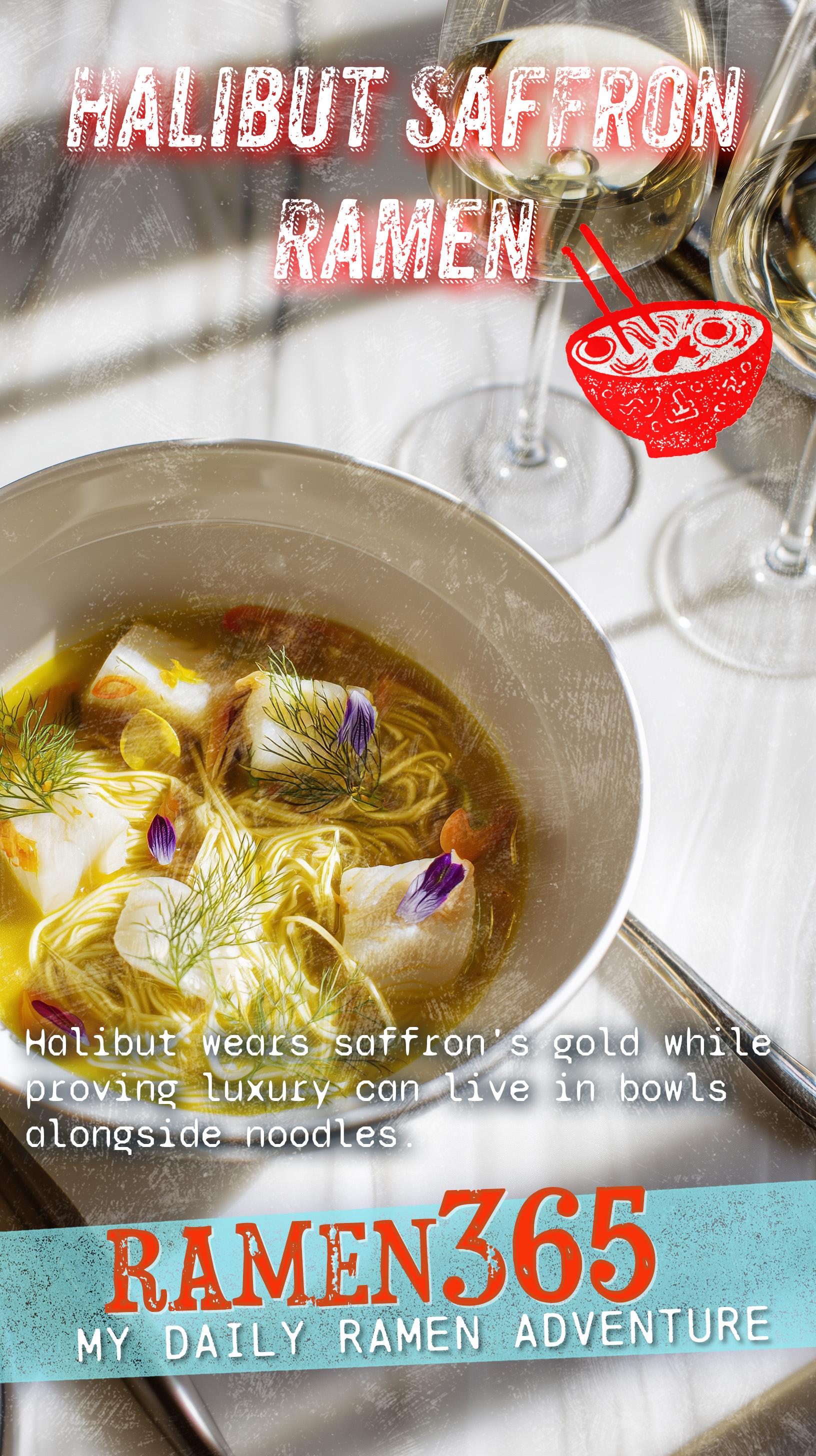
So this is Halibut Saffron Ramen. Halibut so pristine and white it looks like it was carved from marble, poached in a saffron broth that costs more per ounce than the fish and turns everything the color of liquid gold, all sitting on noodles that somehow make sense in this French-Japanese conversation about elegance. You know how some fancy food feels like it's trying too hard, like it's more about impressing people than actually tasting good? This manages to be both refined and satisfying, expensive without being pretentious. The saffron isn't just there for color, though the golden hue does make every bowl look like it should cost forty dollars—it brings this earthy, slightly floral flavor that's impossible to replicate with anything else. The halibut stays delicate and flaky, poached gently so it doesn't overcook into sad, dry fish. It's the kind of bowl you'd order at a restaurant with cloth napkins but can actually make at home if you're willing to spend fifteen bucks on a tiny container of saffron threads.
Saffron threads bleed gold—halibut swims through silk—luxury finds bowls
Let Me Tell You...
My saffron education happened at a Provençal restaurant in Paris where the waiter brought out bouillabaisse in a ritual that felt almost religious.
The broth was this luminous gold color, perfumed with saffron and fennel, and when he ladled it over the fish at the table, the whole room smelled like the Mediterranean coast. I asked him what made it so special, and he held up a tiny pinch of saffron threads between his fingers and said "This.
Only this." Then he quoted me a price that made me understand why saffron costs more than gold by weight.
Getting good halibut requires a relationship with your fishmonger or enough money to not care about prices.
The fish needs to be impeccably fresh, thick enough to poach without falling apart, white and pristine without any brown spots or that fishy smell that means it's past its prime.
I cut it into large chunks that can handle gentle poaching, seasoning them lightly with salt because saffron is delicate and doesn't need competition.
The poaching liquid becomes the broth base, infused with saffron, fennel, white wine, and enough aromatics to make it taste French without being heavy.
The saffron technique matters more than you'd think.
You can't just throw the threads into hot liquid and hope for the best—they need to bloom first, steeped in warm stock or wine until they release their color and aroma.
I use enough saffron to make my wallet cry but not so much that it tastes medicinal, finding that balance where you get the characteristic flavor without overpowering the delicate fish.
Fennel adds anise notes that complement the saffron, white wine provides acidity, and a touch of cream at the end enriches the broth without making it heavy.
Now this has become my special occasion bowl, the thing I make when I want to feel fancy or impress someone without resorting to steak.
The halibut provides clean, delicate protein, the saffron adds that unmistakable luxury, and the whole bowl tastes like you're dining in a restaurant that actually deserves its prices.
Every spoonful reminds me that some ingredients are worth their cost, that saffron isn't just expensive spice but an experience that can't be replicated.
Ingredients
- 8 ounces dried ramen noodles (2 bricks, seasoning packets discarded)
- 1.5 pounds halibut fillet, cut into 4 large pieces
- 1/2 teaspoon saffron threads
- 1/4 cup dry white wine (for blooming saffron)
- 3 tablespoons unsalted butter
- 1 large fennel bulb, thinly sliced (reserve fronds)
- 1 large shallot, finely diced
- 3 cloves garlic, minced
- 1/2 cup dry white wine
- 4 cups fish stock (or chicken stock)
- 1/2 cup heavy cream
- 2 tablespoons Pernod or pastis (optional)
- 1 tablespoon lemon juice
- Kosher salt and white pepper, to taste
- 3 scallions, thinly sliced
- Fennel fronds, for garnish
- Edible flowers (optional)
- Extra-virgin olive oil, for drizzling
Preparation
- In a small bowl, combine saffron threads with 1/4 cup warm white wine. Let steep for 10-15 minutes to bloom and release color.
- Pat halibut pieces dry and season both sides with salt and white pepper. Set aside.
- Melt butter in a large, wide pot over medium heat. Add sliced fennel and shallot. Cook for 6-7 minutes until softened and slightly caramelized. Add garlic and cook for 1 minute until fragrant.
- Pour in 1/2 cup white wine and let reduce by half, about 2 minutes. Add fish stock and the bloomed saffron with its wine. Bring to a gentle simmer.
- Carefully add halibut pieces to the simmering broth. Poach gently for 8-10 minutes until fish is just cooked through and flakes easily. Remove halibut with a slotted spoon and set aside.
- Stir cream, Pernod if using, and lemon juice into the broth. Simmer for 5 minutes to blend flavors. Taste and adjust seasoning with salt and white pepper.
- Bring a large pot of salted water to a boil. Cook ramen noodles for 2-3 minutes until just tender, then drain.
- Divide noodles among bowls. Ladle hot saffron broth over noodles, ensuring each bowl gets plenty of poached fennel.
- Gently place a piece of poached halibut on top of each bowl. Garnish with sliced scallions, fennel fronds, edible flowers if using, and a drizzle of extra-virgin olive oil.