
Kimchi Jjigae Ramen
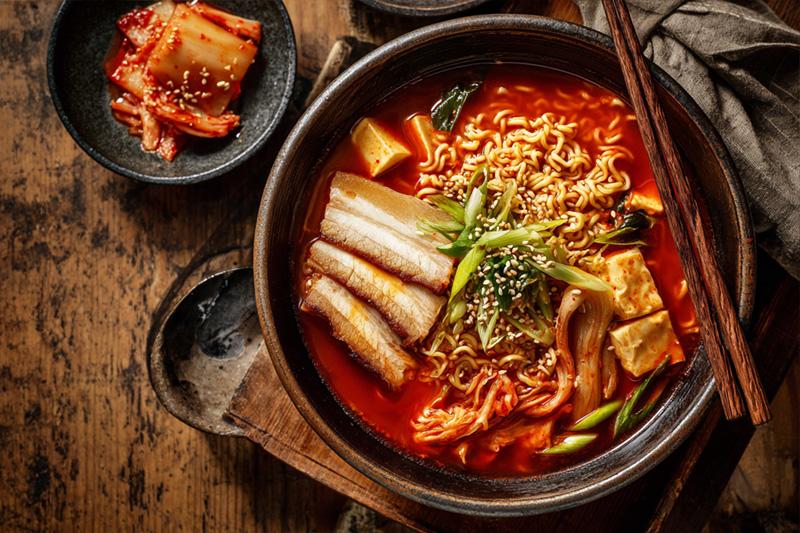
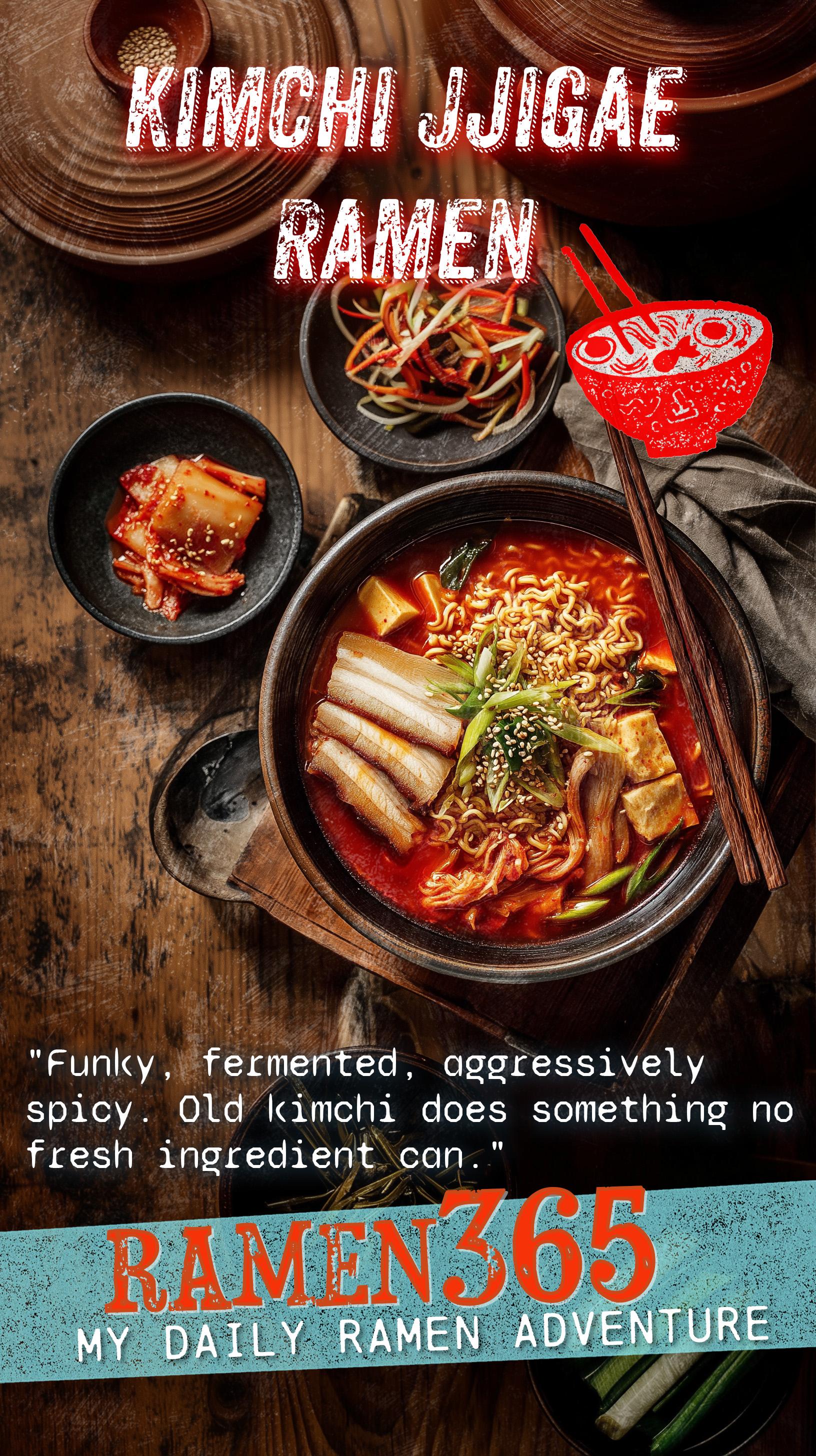
Kimchi jjigae is one of those dishes where the worse your kimchi looks, the better the stew tastes. If yours is still crispy and mild, wait a few more weeks. The over-fermented, almost fizzy stuff that makes you slightly nervous is exactly what you want here. It breaks down in the pot and turns into something deeply savory and sour that no fresh ingredient could replicate. Korean home cooks have been making this stew forever, and ramen noodles sliding into that broth is one of those additions that just makes sense, even if grandma never would have done it. The pork belly renders into soft, yielding pieces that absorb the kimchi brine, and a spoonful of doenjang stirred in at the end adds an earthy backbone that rounds out all the acidity. This is weeknight food that tastes like it took effort, which is a very good kind of lie to tell yourself.
Old kimchi simmers—Funk and fire fill the kitchen—Noodles drink it in
Let Me Tell You...
There is a specific smell that hits you when really old kimchi goes into a hot pan, and it is not polite.
It is sour and pungent and almost aggressive, and the first time I made this I genuinely thought I had done something wrong.
I stood over the pot wondering if I should start over, and then the smell shifted as the kimchi started to caramelize slightly at the edges, and suddenly the kitchen smelled like something you would pay good money for.
That is kind of the whole deal with kimchi jjigae: you have to trust the funk.
Fresh kimchi makes a pale, sweet stew.
Old kimchi makes something worth eating.
The pork belly goes in before the liquid, and you want to get some color on it before you add anything else.
I skipped that step once because I was impatient and the broth came out watery and sad.
The fat needs to render a little, the pork needs to brown at the edges, and only then does the whole pot earn the right to become a stew.
Doenjang is the move here, stirred in off the heat so it does not lose its complexity.
It is the quiet ingredient that makes people ask what you put in it, and you get to feel mysterious about it.
Even three minutes of color makes the broth taste like it simmered for an hour.
Ramen noodles are not traditional in kimchi jjigae, and I am aware of that, and I do not care.
They soak up the spicy, funky broth in a way that rice never quite does.
The noodles become almost red after a minute or two in the pot, which looks dramatic and tastes exactly as intense as it looks.
You can also add a block of soft tofu if you want something that soaks up flavor without competing with the pork.
Noodles sitting in broth absorb it all and turn to mush if anyone goes back for seconds.
This is the kind of bowl that rewards you for being lazy about your fridge.
The kimchi you forgot about for two months, the half-used tube of gochugaru paste, the pork belly you bought on sale and then did not know what to do with.
None of those things are accidents anymore when they end up in this pot together.
You just call it dinner, and it is the best dinner you have had in a while, which happens sometimes when you are not trying very hard.
Ingredients
- 2 ramen noodle bricks (about 6 oz total, seasoning packets discarded)
- 12 ounces pork belly, cut into 1-inch pieces
- 2 cups well-fermented kimchi, roughly chopped (plus 3 tablespoons kimchi brine)
- 1 tablespoon sesame oil
- 1 tablespoon neutral oil (such as canola or vegetable)
- 4 cloves garlic, minced
- 1 tablespoon gochugaru (Korean red pepper flakes), or more to taste
- 1 tablespoon doenjang (Korean fermented soybean paste)
- 1 tablespoon soy sauce
- 4 cups low-sodium chicken broth or water
- 1 teaspoon sugar
- 8 ounces soft or firm tofu, cut into 1-inch cubes (optional)
- 2 green onions, sliced thin, divided
- Kosher salt, to taste
Preparation
- Heat neutral oil in a large heavy-bottomed pot or Dutch oven over medium-high heat. Add pork belly pieces in a single layer and cook for 3-4 minutes, turning once, until lightly browned on at least two sides. Do not crowd the pan.
- Add sesame oil and garlic to the pot with the pork. Stir for 30 seconds until fragrant. Add gochugaru and stir for another 30 seconds to bloom the spice in the fat.
- Add kimchi and kimchi brine to the pot. Stir to combine with the pork and spices. Cook for 2-3 minutes, stirring occasionally, until the kimchi softens slightly and the edges caramelize.
- Pour in the chicken broth. Add soy sauce and sugar. Bring to a boil, then reduce heat to a steady simmer. Cook uncovered for 10 minutes to develop the broth.
- While the stew simmers, bring a separate pot of water to a boil. Cook ramen noodles for 2 minutes until just tender, then drain and rinse under cool water. Set aside.
- Add tofu cubes (if using) to the stew and simmer for 2-3 minutes until heated through. Remove the pot from heat and stir in the doenjang until fully dissolved. Taste and adjust salt and gochugaru as needed.
- Divide noodles between bowls. Ladle hot stew and broth over the noodles. Top with sliced green onions and any optional garnishes. Serve immediately.