
Korean Bulgogi Beef Ramen

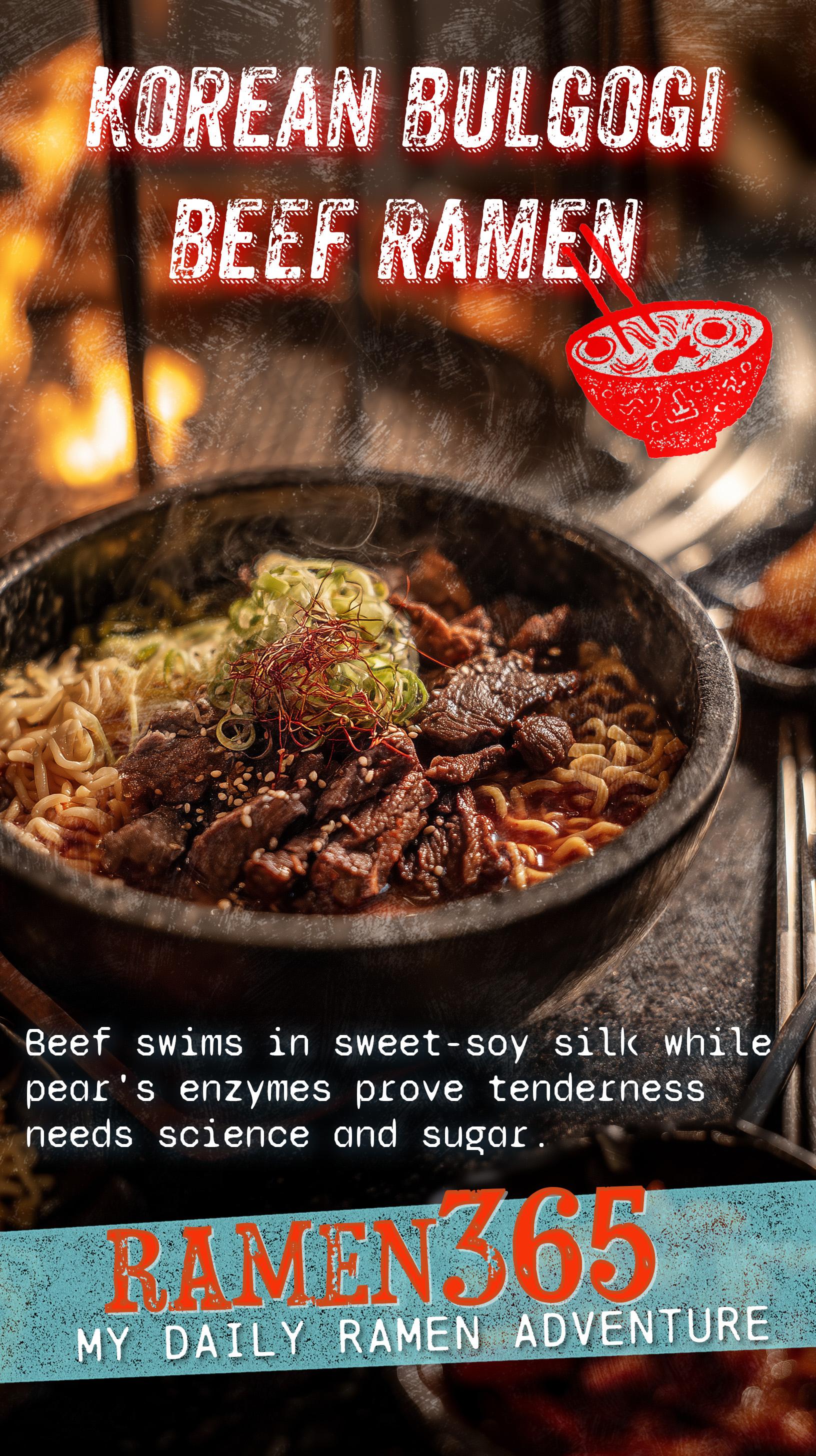
So this is Korean Bulgogi Beef Ramen. Thinly sliced beef that's been marinated in a soy-sugar-pear concoction until it's basically candy disguised as protein, grilled until the edges caramelize into crispy bits of umami, all sitting on noodles in a broth that walks the line between Japanese and Korean without falling into either completely. You know how bulgogi usually comes with lettuce wraps and rice and makes you feel like you're at a Korean BBQ even when you're just at home? This keeps that sweet-savory magic but puts it in a bowl where the marinade becomes part of the broth instead of just being something that drips off the meat. The beef stays tender from the pear enzymes breaking down the protein, while the sugar caramelizes under high heat creating that characteristic bulgogi crust. It's the kind of fusion that actually works because both cuisines understand that good broth and properly seasoned meat are worth the effort.
Sugar meets soy—beef caramelizes to silk—Korea finds steam
Let Me Tell You...
I first had real bulgogi at a Korean BBQ spot in LA where they brought the marinated meat to your table and you cooked it yourself on the grill built into the table.
The beef was sliced so thin you could see through it, marinated until it was dark and glistening, and when it hit the hot grill it caramelized in seconds.
The smell was intoxicating, that sweet-savory-garlic aroma that made everyone in the restaurant turn their heads.
I ate until I couldn't move, then went home determined to figure out how to get those flavors into something I could eat with a spoon.
The marinade is what makes bulgogi special, and you can't shortcut it.
Soy sauce for salt and umami, sugar for sweetness and caramelization, Asian pear for enzymes that tenderize and subtle fruit flavor.
Garlic and ginger because Korean food without those feels wrong.
Sesame oil for nuttiness, mirin for depth, and gochugaru if you want heat though traditional bulgogi isn't particularly spicy.
The beef needs to marinate for at least a few hours, ideally overnight, soaking up all those flavors until it's transformed.
The key is slicing the beef paper-thin against the grain, which requires either a very sharp knife and steady hands or the smart move of partially freezing the meat first.
Turning bulgogi into ramen required rethinking the broth.
Traditional ramen broth would overpower the delicate sweet-savory beef, but plain stock felt too weak.
I landed on a light beef broth seasoned with some of the bulgogi marinade, creating this sweet-umami base that complements the meat without competing.
The beef gets grilled hot and fast, just until the sugars caramelize and the edges crisp, then arranged on top of the noodles like you're plating at a restaurant.
Kimchi on the side is non-negotiable, providing acid and crunch that cuts through the sweetness.
Now this has become my go-to when I want something that feels special without requiring a full Korean BBQ setup.
The bulgogi beef provides that addictive sweet-savory flavor, the noodles make it substantial, and the whole bowl tastes like the best parts of Korean BBQ without needing a table grill.
Every bite reminds me that fusion works when you understand what makes each cuisine special and find the overlap instead of forcing them together.
Ingredients
- 8 ounces dried ramen noodles (2 bricks, seasoning packets discarded)
- 1.5 pounds beef ribeye or sirloin, thinly sliced against the grain
- 1/2 cup soy sauce
- 1/4 cup brown sugar
- 1 Asian pear, peeled and grated
- 6 cloves garlic, minced
- 2 tablespoons fresh ginger, minced
- 3 tablespoons sesame oil
- 3 tablespoons mirin
- 2 teaspoons gochugaru (Korean red pepper flakes)
- 1/4 teaspoon black pepper
- 2 tablespoons vegetable oil (for grilling)
- 4 cups beef stock
- 2 tablespoons soy sauce (for broth)
- 1 tablespoon mirin (for broth)
- 4 scallions, thinly sliced
- 2 tablespoons toasted sesame seeds
- 1 cup kimchi, for serving
- Nori sheets, cut into strips
Preparation
- For easier slicing, freeze beef for 30 minutes until firm but not solid. Slice beef paper-thin (about 1/8-inch thick) against the grain.
- In a bowl, whisk together soy sauce, brown sugar, grated pear (including juice), garlic, ginger, sesame oil, mirin, gochugaru, and black pepper until sugar dissolves.
- Reserve 1/2 cup of marinade in a separate container. Add sliced beef to remaining marinade, tossing to coat completely. Cover and refrigerate for at least 2 hours, preferably 4-8 hours.
- Bring reserved marinade to a boil in a small saucepan. Simmer for 5 minutes to reduce slightly into a glaze. Set aside.
- Heat vegetable oil in a large skillet or grill pan over high heat. Working in batches to avoid crowding, grill marinated beef for 1-2 minutes per side until caramelized and slightly charred at edges. Don't overcook or it becomes tough.
- Bring a large pot of salted water to a boil. Cook ramen noodles for 2-3 minutes until just tender, then drain.
- In a pot, heat beef stock with 2 tablespoons soy sauce and 1 tablespoon mirin. Bring to a simmer and taste for seasoning.
- Divide noodles among bowls. Ladle hot broth over noodles. Arrange grilled bulgogi beef on top, drizzle with reduced marinade glaze.
- Garnish with sliced scallions, sesame seeds, and nori strips. Serve with kimchi on the side.