
Labneh Cucumber Ramen
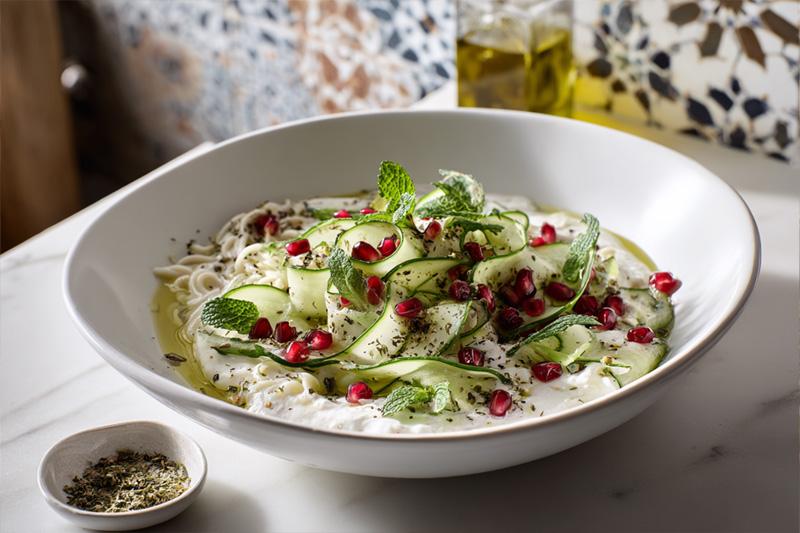
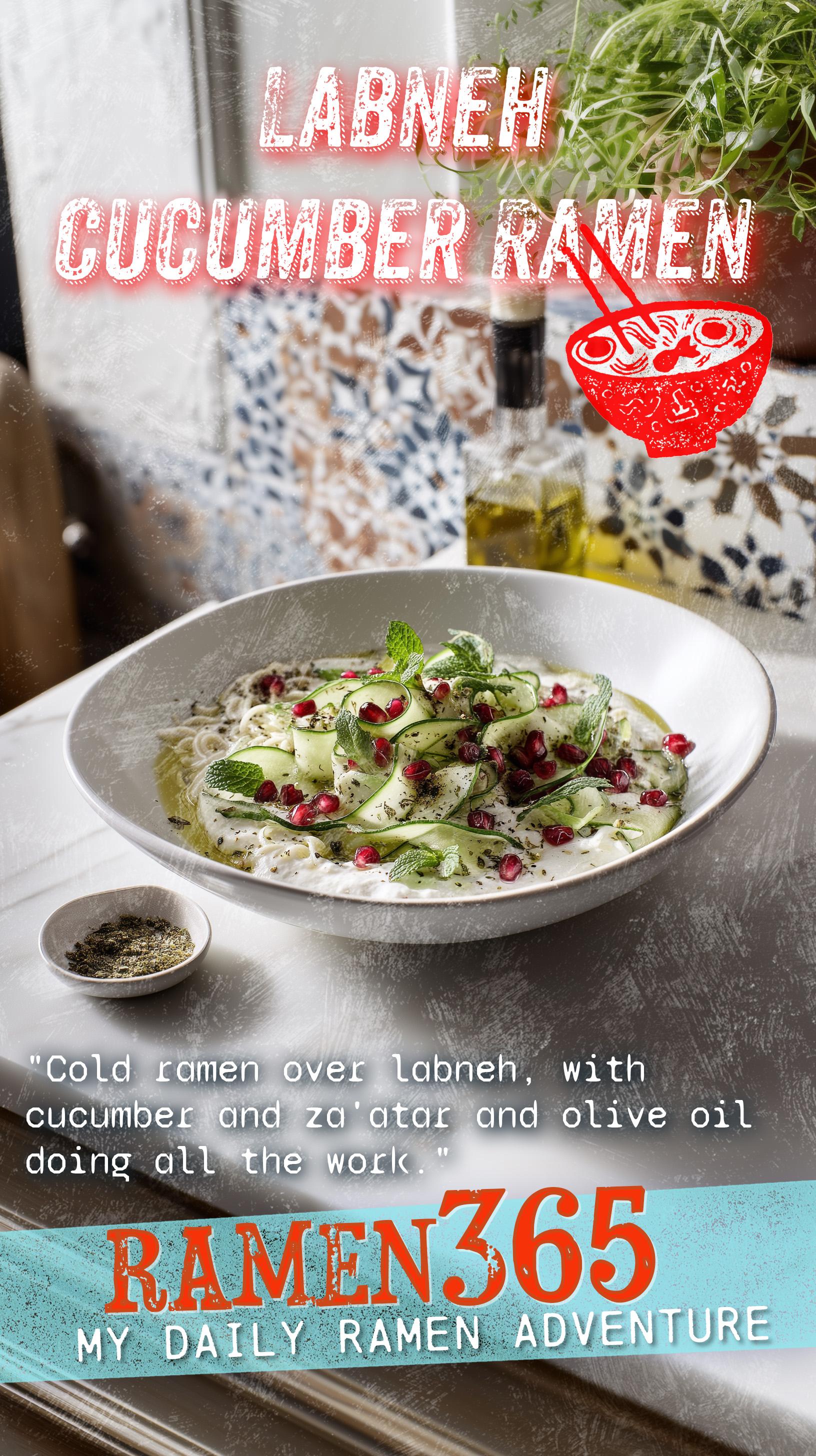
Labneh is strained yogurt taken to its logical extreme, thick enough to hold its shape, tangy enough to serve as a sauce, and versatile enough to appear at every meal in Lebanese cuisine from breakfast spreads to dinner dips. It is one of the great underhyped dairy products in the world, and if you have never put it in the bowl before the noodles, you are missing the most elegant shortcut in cold ramen construction. The cucumber keeps it cold. The za'atar keeps it savory. The olive oil ties everything together in the way that a good Lebanese olive oil always does. This bowl is fast enough to make on a Tuesday when it's too hot to cook anything, which is its primary virtue, but it tastes composed enough that you could put it in front of someone and feel good about it.
Labneh spreads like snow—cucumber beads with cold dew—za'atar blooms dark
Let Me Tell You...
My first encounter with labneh was at a Lebanese bakery at seven in the morning, served on a plate with olive oil pooled in the center and za'atar dusted across the top, with warm pita on the side, and I ate it the way you eat something when you don't know yet that it's going to rearrange your understanding of breakfast. It is dense and sour in a way that is completely different from cream cheese or sour cream, more alive, more present, and it turns out that presence translates across temperature and context, including cold noodle bowls at dinner.
The cucumber component is about temperature as much as flavor.
Persian cucumbers stay firm and cold and don't release water the way English cucumbers do, which means they keep the bowl's texture clean instead of diluting the labneh.
Shaving them thin on a mandoline or with a vegetable peeler makes them delicate and layerable, which is the visual difference between a bowl that looks assembled and one that looks deliberate.
This draws out excess moisture and keeps it crisp in the bowl.
Za'atar is a spice blend that varies by household and region, but its constants are dried thyme or oregano, sumac, sesame seeds, and salt. The sumac is what gives it tartness, and that tartness stacks with the labneh's tang in a way that feels like too much and isn't.
Lebanese food operates at this edge frequently.
The balance is exactly where it looks like it shouldn't be.
It releases the sesame and herb oils and deepens the flavor considerably.
This bowl works best when it is genuinely cold, not just not-hot.
Chill the bowls, chill the noodles, chill the cucumber.
The labneh comes straight from the fridge.
Cold food served cold is the whole point.
Ingredients
- 8 ounces dried ramen noodles (2 bricks, seasoning packets discarded)
- 1 cup labneh (or plain full-fat Greek yogurt strained overnight through cheesecloth)
- 2 Persian cucumbers, thinly sliced into rounds or ribbons with a peeler
- 3 tablespoons good-quality olive oil, divided
- 1.5 tablespoons za'atar spice blend
- 1 clove garlic, finely minced or grated
- 2 tablespoons fresh lemon juice
- 1/4 teaspoon kosher salt, plus more to taste
- 1/4 cup fresh mint leaves
- 1/4 cup fresh flat-leaf parsley, roughly torn
Preparation
- Bring a pot of salted water to a boil. Cook ramen noodles for 2-3 minutes until just tender. Drain and rinse immediately under very cold running water until completely cold. Shake off excess water and set aside.
- Lightly salt cucumber slices and let sit 5 minutes. Pat dry with a paper towel.
- Stir together labneh, minced garlic, lemon juice, 1 tablespoon olive oil, and 1/4 teaspoon salt until smooth and creamy. Taste and adjust lemon and salt.
- Warm remaining 2 tablespoons olive oil in a small pan over medium-low heat for 30 seconds. Add za'atar and stir for 20 seconds until fragrant. Remove from heat.
- Spoon a generous layer of labneh into the bottom of each chilled serving bowl, spreading it toward the edges. Pile cold noodles on top.
- Arrange cucumber slices over the noodles. Scatter fresh mint and parsley across the bowl. Drizzle warm za'atar olive oil over everything. Add optional toppings and serve immediately.