
Lamb Sumac Flatbread Ramen
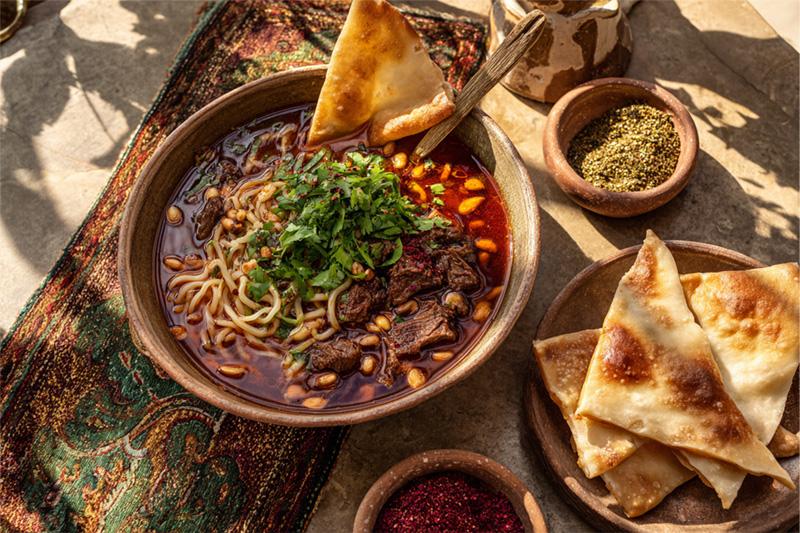
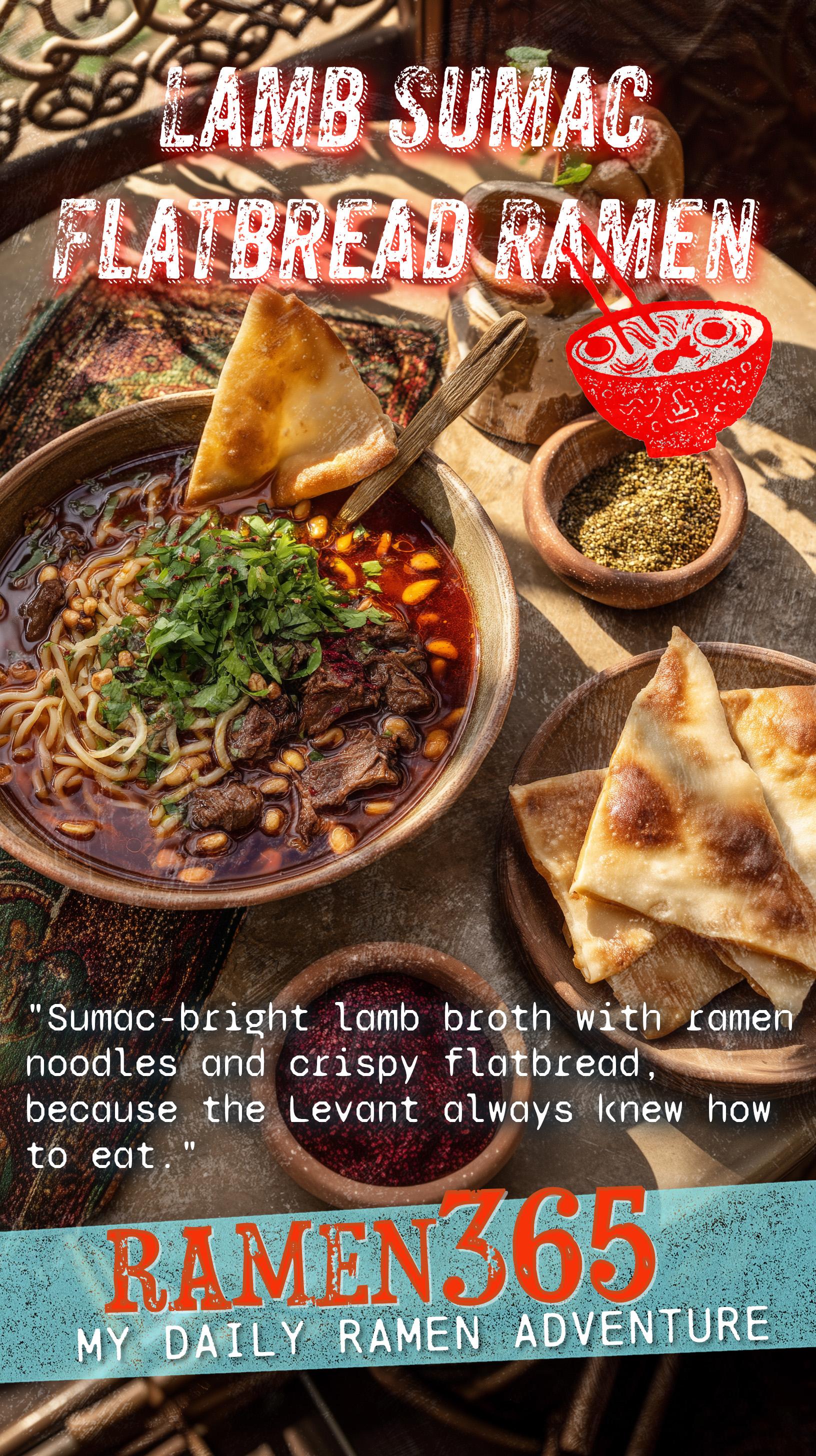
Levantine food is built around the idea that every dish should make you feel like you've been somewhere, and sumac is the ingredient most responsible for that feeling in this part of the world. It's a deep burgundy-red spice ground from dried berries that tastes like someone figured out how to turn tart citrus into a powder and decided to put it on everything, which is broadly correct and also the best possible outcome. Lamb and sumac have been in a committed relationship for centuries across Lebanon, Syria, and the Palestinian territories, showing up in everything from fattoush to musakhan, that extraordinary Palestinian dish of spiced lamb over flatbread with onions and pine nuts. What happens when you build a lamb broth on those same spices and add ramen noodles is something that feels completely logical in retrospect and entirely surprising in practice. The crispy baked pita shards on top are not decorative. They're the structural soul of the bowl, the thing that ties it back to the flatbread traditions this dish grew out of. This is dinner for a cold weeknight when you want something that feels traveled and considered without requiring either.
Sumac stains the broth—lamb falls soft in ancient spice—bread tears at the edge
Let Me Tell You...
The first time I noticed sumac as a distinct flavor was on a plate of fattoush at a Lebanese restaurant in Chicago where the menu had maybe six items and the owner came out of the kitchen to check that you'd ordered correctly.
The salad was full of torn pita and cucumber and tomato and this dark crimson powder I'd seen before without properly registering it, and the first bite had this tart, fruity, vaguely floral punch that didn't come from the lemon or the vinegar or anything else I could identify at the time.
I spent ten minutes asking the waiter about it and left with a bag of sumac from the pantry shelf they kept near the register, and that bag did not last long.
It loses its tartness quickly at room temperature and stale sumac is a flat, dusty version of the ingredient you actually want.
Getting sumac into a ramen broth required some adjustments, mostly because it's acidic enough that it shifts the balance of the whole liquid when added too early.
The solution is to use it in two stages, once at the start to build background tartness into the lamb, and again at the very end where its bright, fruity punch is what you actually notice.
The baharat handles the warm, aromatic depth that ground lamb needs alongside it, and the tomato paste rounds the whole thing into something that smells like a Levantine kitchen on a weeknight rather than a generic spiced meat soup.
Sumac's tartness is most alive when it's fresh.
Simmered sumac tastes flat and loses the thing that makes it worth using.
The crispy pita shards are the detail that moves this from a ramen soup with Levantine flavors into something that genuinely belongs to both traditions.
Lebanese bread-and-broth dishes like fatteh and various fattet preparations always involve something crunchy and baked on top that partially softens into the liquid while staying crispy in the middle, a textural philosophy that ramen culture would recognize and approve of immediately.
You bake the pita with a little sumac and olive oil until it's golden and crackling, and then you lay it over the hot bowl and something structurally interesting happens to it.
Raw pine nuts are mild and forgettable.
Toasted pine nuts are nutty and specific and taste like they mean something in the bowl.
What I like about this bowl is that it doesn't ask you to decide what it is.
It's Lebanese in its spice logic and Japanese in its noodle delivery system and the combination is not a compromise but an addition, each tradition making the other more interesting.
Sumac and lamb over noodles with crispy bread and pine nuts is the kind of meal that someone from Beirut and someone from Tokyo would both recognize as carefully made, without being able to fully explain why they felt that way.
Ingredients
- 8 oz ground lamb
- 6 oz dried ramen noodles (2 bricks, seasoning packets discarded)
- 2 tablespoons sumac, divided
- 1 teaspoon baharat (seven spice blend)
- 1 teaspoon ground cumin
- 1/2 teaspoon ground cinnamon
- 1 medium yellow onion, finely diced
- 3 garlic cloves, minced
- 2 tablespoons tomato paste
- 4 cups low-sodium beef or lamb broth
- 2 tablespoons olive oil, divided
- 1 large pita bread, torn into rough 2-inch pieces
- 2 tablespoons pine nuts
- 1 tablespoon fresh lemon juice
- 2 tablespoons fresh flat-leaf parsley, roughly chopped (for serving)
- Kosher salt and freshly ground black pepper, to taste
Preparation
- Preheat the oven to 375°F. Toss the torn pita pieces and pine nuts with 1 tablespoon of the olive oil, a pinch of sumac, and a pinch of salt. Spread in a single layer on a baking sheet and bake for 8-10 minutes until golden and crispy. Set aside.
- Heat the remaining 1 tablespoon of olive oil in a large pot over medium-high heat. Add the ground lamb and cook, breaking it up with a wooden spoon, for 5-6 minutes until well browned and cooked through. Season with 1/2 teaspoon salt, several grinds of black pepper, 1 tablespoon of the sumac, baharat, cumin, and cinnamon. Stir to coat and cook 1 more minute.
- Reduce heat to medium. Add the diced onion to the pot and cook for 4-5 minutes until softened and lightly golden. Add the garlic and tomato paste and stir constantly for 1-2 minutes until the paste darkens slightly.
- Pour in the broth and bring to a simmer. Reduce heat to medium-low and simmer uncovered for 20 minutes. Stir in the lemon juice and the remaining 1 tablespoon of sumac. Taste and adjust seasoning with salt and pepper.
- Bring a separate pot of salted water to a boil. Cook the ramen noodles for 2-3 minutes until just tender. Drain.
- Divide the noodles between bowls. Ladle the lamb broth generously over the noodles. Top with the crispy pita shards and toasted pine nuts. Finish with the chopped parsley and serve immediately with any optional toppings alongside.