
Miso Pork Belly Chashu Ramen

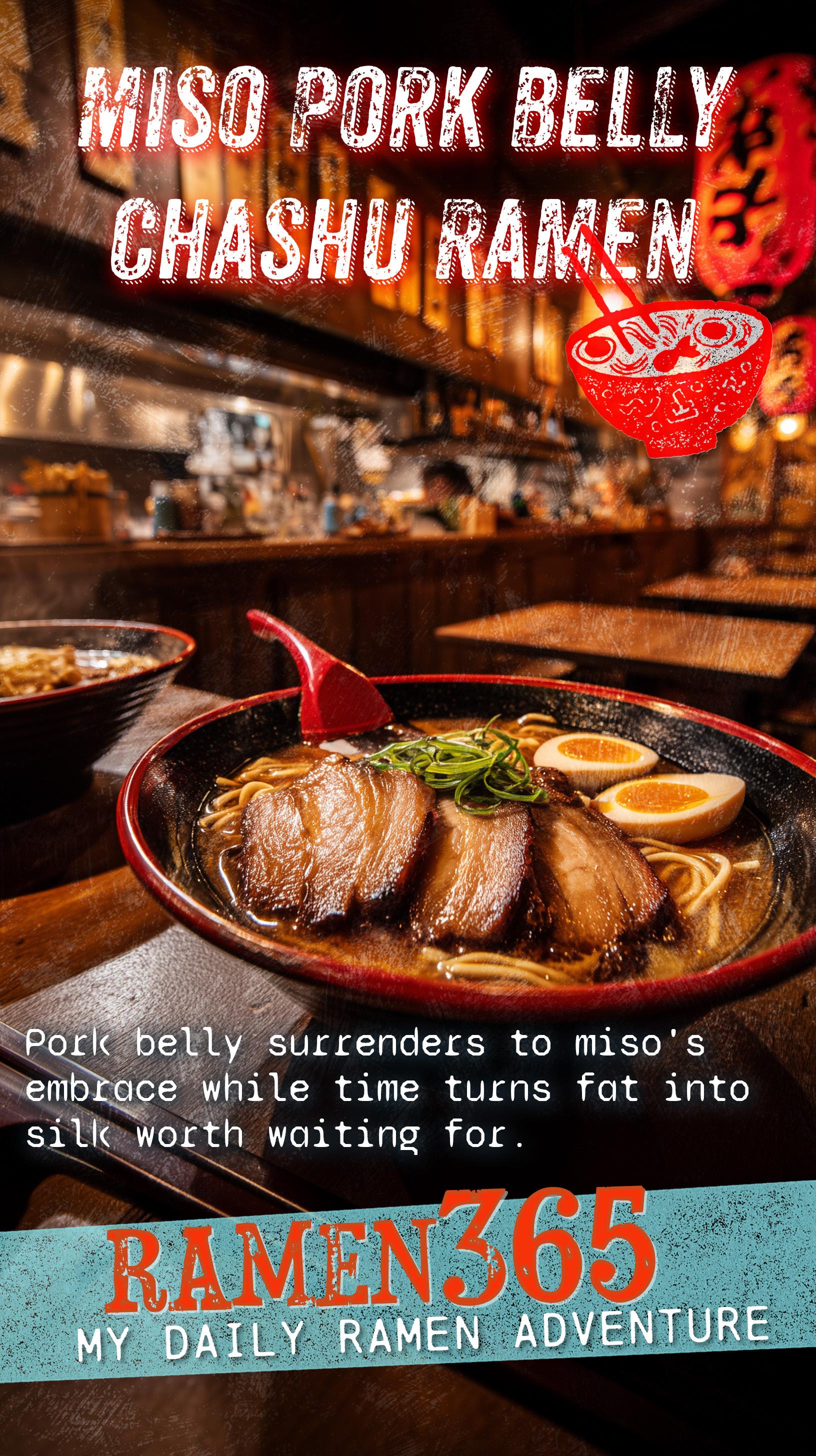
So this is Miso Pork Belly Chashu Ramen. Pork belly that's been braised for so long it practically falls apart when you look at it, soaking in a miso-spiked braising liquid that turns it into something that barely resembles meat anymore and is closer to pure umami made solid. You know how some ramen tries to hide behind fancy toppings and Instagram-worthy presentation? This is old-school, the kind of bowl they've been making in Tokyo ramen shops for decades because it works and doesn't need to prove anything. The pork belly gets rolled, tied, and braised until the fat renders into silky richness while the meat stays tender enough to cut with chopsticks. The miso broth is layered and complex, built from chicken and pork bones simmered until they give up everything they have, then enriched with both white and red miso for depth that goes beyond simple salty. It's the kind of bowl that makes you understand why people wait in line for hours at famous ramen shops, why some recipes are worth the effort even when shortcuts exist.
Pork melts into time—miso's depth holds ancient truths—fat becomes wisdom
Let Me Tell You...
I first encountered real chashu at a hole-in-the-wall ramen shop in Tokyo's Shinjuku district, where an old man had been making the same bowl for forty years and wasn't about to change anything for tourists.
The chashu came out thick as my thumb, glazed and glistening, with fat so tender it melted on my tongue before I could properly chew.
The miso broth was murky and rich, tasting like someone had distilled the essence of umami into liquid form.
I ate that bowl in reverent silence, occasionally making embarrassing noises, and spent the next year trying to recreate it.
Making proper chashu requires patience I don't naturally possess and precision that goes against my throw-it-together instincts.
The pork belly gets rolled with the fat on the outside, tied at regular intervals like you're gift-wrapping meat, then seared until the fat renders and starts to crisp.
Into the pot goes soy sauce, sake, mirin, sugar, and a truly irresponsible amount of aromatics: ginger, garlic, scallions, all there to perfume the pork as it braises.
The miso comes later, whisked into the braising liquid after the pork is tender, because adding it too early makes it bitter.
Three hours later, when you finally lift the lid and the pork has transformed into this mahogany-colored roll of pure richness, you've created something that belongs in a restaurant with a Michelin star.
The miso broth needed to match the intensity of the chashu without competing with it.
I built it the traditional way: chicken carcasses and pork bones simmered for hours until the broth turns cloudy from dissolved collagen, creating that creamy texture you can't get from clear stocks.
White miso goes in for sweetness and delicate fermented flavor, red miso for depth and that characteristic tang.
The two misos work together like they're having a conversation about umami, each bringing different notes that combine into something neither could achieve alone.
Tare seasoning ties it all together: more soy sauce, more mirin, sesame oil for nuttiness, and enough garlic to make your kitchen smell like a ramen shop for days.
Now this has become my benchmark, the bowl I compare all other ramen to and the one I make when I want to feel like I've accomplished something meaningful.
The chashu takes time and attention, the broth requires patience, and the whole process can't be rushed or cheated.
But when you slice that pork belly into thick rounds and watch the fat glisten under the light, when you ladle that rich miso broth over perfect noodles and arrange everything like you're plating at Michelin-starred restaurant, every minute feels worth it.
Every bowl reminds me that some things are worth doing right, even when doing them right takes all afternoon.
Ingredients
- 8 ounces dried ramen noodles (2 bricks, seasoning packets discarded)
- 2 pounds pork belly, skin removed
- 1 cup soy sauce
- 1 cup sake
- 1 cup mirin
- 1/2 cup brown sugar
- 6-inch piece fresh ginger, sliced
- 1 head garlic, halved crosswise
- 6 scallions, cut into 3-inch pieces
- 2 star anise
- 4 cups chicken stock
- 4 cups pork stock (or additional chicken stock)
- 1/4 cup white miso paste
- 1/4 cup red miso paste
- 3 tablespoons soy sauce (for broth)
- 2 tablespoons mirin (for broth)
- 2 tablespoons sesame oil
- 1 tablespoon doubanjiang (spicy bean paste)
- 4 soft-boiled eggs, halved
- 4 scallions, thinly sliced
- 2 sheets nori, cut into strips
- 2 teaspoons toasted sesame seeds
- Mayu (burnt garlic oil), optional
Preparation
- Roll pork belly tightly lengthwise with fat on the outside. Tie securely with kitchen twine at 1-inch intervals. Pat dry.
- Heat a large Dutch oven over medium-high heat. Sear pork roll on all sides until deeply browned, about 10-12 minutes total.
- Add 1 cup soy sauce, sake, mirin, brown sugar, ginger, garlic, scallion pieces, and star anise to the pot. Add enough water to just cover the pork (about 4 cups). Bring to a boil.
- Reduce heat to low, cover, and simmer gently for 2.5 to 3 hours, turning pork every 30 minutes, until a chopstick slides through with no resistance.
- Remove pork from braising liquid and let cool slightly. Strain braising liquid and reserve 1 cup. In a small bowl, whisk together reserved braising liquid with white and red miso pastes until smooth.
- Once pork is cool enough to handle, remove twine and slice into 1/2-inch thick rounds. Set aside.
- In a large pot, combine chicken stock, pork stock, 3 tablespoons soy sauce, 2 tablespoons mirin, sesame oil, and doubanjiang. Bring to a simmer.
- Whisk in the miso-braising liquid mixture until fully incorporated. Simmer gently for 10 minutes to blend flavors. Taste and adjust seasoning.
- Bring a large pot of salted water to a boil. Cook ramen noodles for 2-3 minutes until just tender, then drain.
- Divide noodles among bowls. Ladle hot miso broth over noodles. Arrange 2-3 slices of chashu pork on each bowl. Add soft-boiled egg halves, sliced scallions, nori strips, and sesame seeds. Drizzle with mayu if using. Serve immediately.