
Oat Milk Miso Ramen
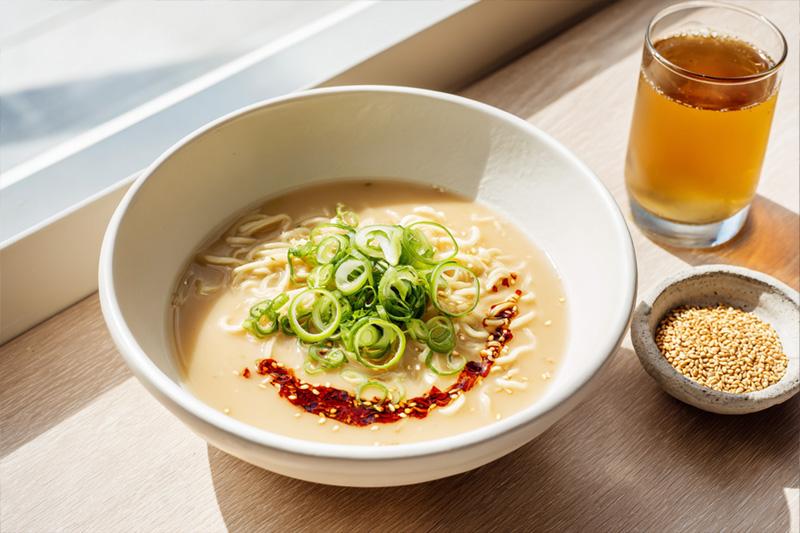
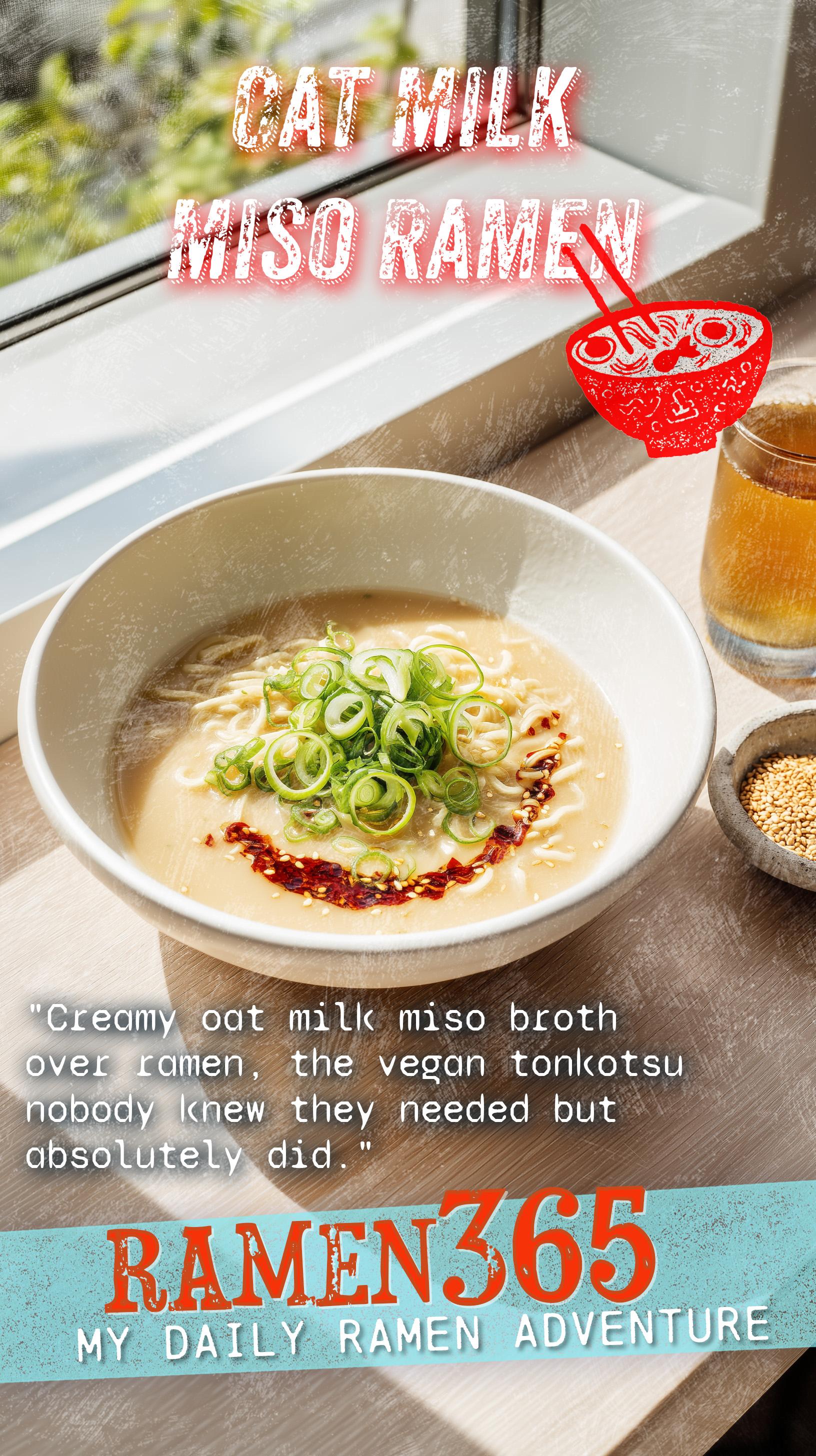
The vegan ramen problem is mostly a broth problem. Traditional tonkotsu depends on pork bones simmered for twelve hours, and even a basic miso ramen typically gets its depth from dashi, which means fish and kelp. Oat milk entered my kitchen as a coffee substitute and never quite left, and the moment I added a cup of it to a miso broth I had the answer I'd been circling for a while. It does something that soy milk and almond milk don't quite manage, creating a silky, creamy texture without adding a distinctive flavor that fights with the miso, which is the baseline requirement for a plant-based ramen broth that tastes like the broth itself is the point. White and red miso together give you complexity that neither achieves alone, the white for sweetness and rounded depth, the red for the fermented earthiness that makes miso taste like miso. Garlic and ginger do what aromatics always do in Japanese cooking, which is quietly make everything else more interesting without announcing themselves. This is a bowl for cold evenings and for people who've been told that vegan ramen can't be as good as the real thing.
Oat milk swirls in white—miso blooms in creamy fog—noodles disappear
Let Me Tell You...
The problem with most vegan ramen is that you can taste the absence.
The broth is technically present, the noodles are fine, the toppings are sometimes genuinely excellent, but there's a missing layer of richness, the fat and collagen from long-simmered bones, that no amount of vegetable broth can fully replace through conventional means.
Oat milk, specifically the barista-style version with extra fat content and emulsifiers designed to hold up under heat, is the first dairy-free liquid I've found that actually fills that gap in a way that reads as richness rather than substitution.
Regular oat milk can separate and turn grainy when heated.
The barista formulas are specifically designed to handle high temperatures and stay cohesive.
The miso matters more than most people realize in a bowl like this, and the combination of white and red is the move that most recipes skip in favor of simplicity.
White miso alone gives you a sweet, mild base that works fine but lacks the depth that makes you want a second bowl.
Adding red miso shifts the whole broth into a register that's more fermented and earthier and almost savory in a way that's hard to describe but immediately noticeable.
You end up with something that tastes layered and considered rather than assembled quickly.
Dissolve both misos in a ladle of warm broth first, whisk completely smooth, then stir into the pot off the heat.
Boiling kills the live cultures and flattens the flavor into something generic.
What oat milk adds isn't only fat and creaminess, it's a grain-forward character that makes more sense in this context than it probably should.
Miso is fermented grain.
Oat milk is grain.
Ramen noodles are wheat.
The bowl is fundamentally a vehicle for fermented and milled grains dressed in sesame and scallion, and the flavor logic is completely coherent even if nobody designed it that way on purpose.
Sometimes the most convincing fusions are the ones that feel like they were always going to happen.
The difference in flavor is significant and the aroma when they start popping is one of the better things a kitchen can smell like on a Tuesday night.
This is the bowl I make when I want something that feels genuinely comforting but comes together in thirty minutes and doesn't feel like a compromise afterward. The oat milk keeps the broth creamy without being heavy, the double miso keeps it interesting, and the whole thing tastes like more effort went into it than actually did.
The best bowls usually do.
Ingredients
- 6 oz dried ramen noodles (2 bricks, seasoning packets discarded)
- 3 tablespoons white miso paste
- 1 tablespoon red miso paste
- 1 cup unsweetened barista-style oat milk
- 3 cups low-sodium vegetable broth
- 3 garlic cloves, minced
- 1-inch piece fresh ginger, peeled and grated
- 2 tablespoons sesame seeds, toasted
- 1 tablespoon toasted sesame oil
- 1 tablespoon neutral oil (such as vegetable or avocado oil)
- 1 tablespoon low-sodium soy sauce
- 1 teaspoon rice vinegar
- 2 green onions, thinly sliced (for serving)
- Kosher salt, to taste
Preparation
- Heat the neutral oil in a medium saucepan over medium heat. Add the minced garlic and grated ginger and cook, stirring frequently, for 1-2 minutes until fragrant and just beginning to turn golden. Do not let them brown or burn.
- Add the vegetable broth and soy sauce. Bring to a gentle simmer over medium heat.
- In a small bowl, whisk together the white miso paste, red miso paste, and 1/4 cup of the hot broth until completely smooth with no lumps remaining. Pour the miso mixture back into the pot and stir well to combine. Reduce heat to low immediately.
- Stir in the oat milk and sesame oil. Heat gently over low heat for 2-3 minutes, stirring occasionally, until the broth is hot throughout but not simmering. Stir in the rice vinegar. Taste and adjust with a pinch of salt if needed. Keep warm over the lowest possible heat.
- Bring a separate pot of salted water to a boil. Cook the ramen noodles for 2-3 minutes until just tender. Drain.
- Divide the noodles between bowls. Ladle the hot oat milk miso broth generously over the noodles. Top with the sliced green onions and toasted sesame seeds. Serve immediately with any optional toppings alongside.