
Porcini & Parmesan Ramen
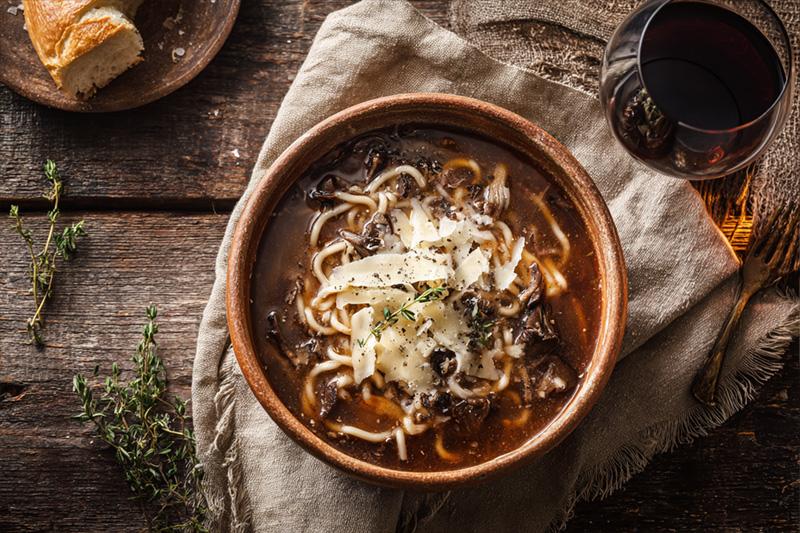
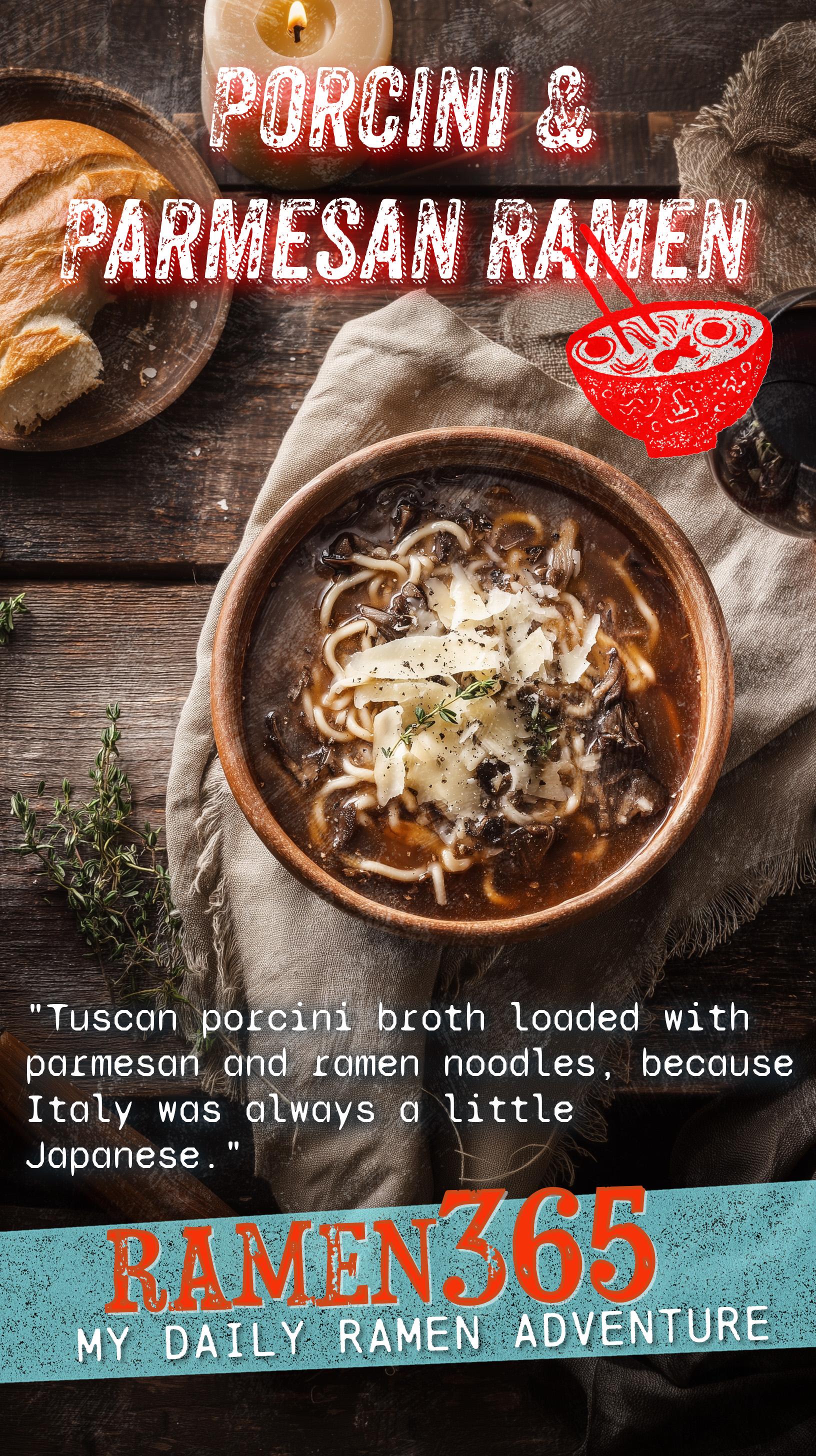
Tuscany and Japan have a shared obsession that nobody talks about enough, which is the kind of deep, earthy, slow-built umami that you can only get from dried or fermented or long-cooked things. Porcini mushrooms are Italian pantry royalty, wrinkled and ugly and capable of turning a cup of hot water into something that tastes like a forest floor, in the best possible way. Parmesan rind is one of those kitchen secrets that your Italian grandmother and your Japanese grandmother would both recognize as pure common sense, the thing you throw into a simmering pot and fish out later, having given everything it had. Ramen noodles absorb this combination embarrassingly well, and the result is a bowl that tastes expensive and old-world without requiring anything particularly complicated. There's a slow-cooked quality to this dish that you can actually taste in the broth, the kind of depth that shortcuts cannot fake. This is a Sunday evening bowl, the one you make when you have no particular rush and the apartment smells like wine and herbs and browned butter by the time you sit down.
Porcini soaks long—parmesan melts in the dark—noodles pull it in
Let Me Tell You...
Dried porcini mushrooms are one of those pantry items that looks like an afterthought until it quietly saves the whole meal.
You pour boiling water over what appears to be a pile of dried failures and walk away, and when you come back twenty minutes later there's a cup of deeply flavored, smoky, earthy liquid that smells like the underside of an old-growth forest, in the most appealing possible sense.
Italians have understood this forever, which is why porcini broth shows up in risotto and pasta and braises across Tuscany as a foundation flavor that other things are built around rather than added to as an afterthought.
Grit from the dried mushrooms sinks to the bottom and a sandy broth is not the experience you're working toward. The parmesan rind is the other ingredient that most people are quietly throwing away, which is a small tragedy that happens in kitchens every day.
It doesn't melt, it just sits in the simmering broth and releases its fat and salt and that aged, deep cheese flavor into the liquid over thirty minutes of unhurried simmering, and when you pull it out the broth has a body and a richness that you can't achieve by any other method.
The combination of porcini liquid and parmesan rind working together in one pot makes a broth that has no right being as good as it is given that both ingredients are things most people discard.
Concentrated broth has the body to coat the noodles.
Thin, undercooked broth runs right off them and pools at the bottom of the bowl.
Where ramen noodles fit into a Tuscan framework is a question I spent more time thinking about than I'd like to admit.
The noodle in Italian cooking, particularly in the long-simmered broths of central Italy, has always been about absorption, about pasta taking on the character of whatever it swims in rather than standing apart from it.
Ramen noodles do this better than most pastas, their wheat character blending into the broth seamlessly, and the curly texture catches tiny bits of porcini in the liquid so nothing flavorful escapes.
Whenever a broth or sauce needs body and depth, throw one in.
This is genuinely useful knowledge.
You finish the bowl with freshly grated parmesan, and not a modest amount.
The cheese melts partially into the hot broth and partially stays in strings around the noodles, and the combination of the aged parm and the earthy porcini and the butter swirled in at the end is the kind of thing that makes you want to tell someone about it immediately, which is the highest compliment you can give a bowl of noodles on a quiet Sunday night.
Ingredients
- 1 oz (about 1 cup loosely packed) dried porcini mushrooms
- 6 oz dried ramen noodles (2 bricks, seasoning packets discarded)
- 1 oz parmesan rind (about a 2-inch piece)
- 1/2 cup freshly grated parmesan (for serving)
- 1 medium yellow onion, thinly sliced
- 4 garlic cloves, thinly sliced
- 1 tablespoon fresh thyme leaves (from 4-5 sprigs)
- 1 tablespoon tomato paste
- 1/2 cup dry white wine (such as pinot grigio or vermentino)
- 4 cups low-sodium vegetable broth
- 2 tablespoons unsalted butter, divided
- 1 tablespoon olive oil
- 1 teaspoon low-sodium soy sauce (for added umami depth)
- 1 tablespoon fresh lemon juice
- Kosher salt and freshly ground black pepper, to taste
Preparation
- Place the dried porcini mushrooms in a heatproof bowl. Pour 2 cups of boiling water over them and let soak for 20-25 minutes until fully softened and rehydrated. Using a slotted spoon, lift the mushrooms out and squeeze gently to remove excess liquid. Roughly chop them and set aside. Strain the soaking liquid through a fine-mesh sieve lined with a paper towel to remove grit. Reserve the strained liquid.
- Heat the olive oil and 1 tablespoon of the butter in a large pot over medium heat. Add the sliced onion and cook, stirring occasionally, for 8-10 minutes until soft and deeply golden. Add the sliced garlic and thyme leaves and cook for 2 more minutes until very fragrant.
- Add the tomato paste and stir it into the onion mixture, cooking for 1-2 minutes until it darkens slightly and smells nutty. Add the chopped porcini mushrooms and stir to combine.
- Pour in the white wine and scrape up any browned bits from the bottom of the pot with a wooden spoon. Let the wine reduce by half, about 2-3 minutes. Add the vegetable broth, strained porcini soaking liquid, parmesan rind, and soy sauce. Bring to a gentle simmer.
- Reduce heat to low and simmer uncovered for 25-30 minutes, stirring occasionally, until the broth has reduced slightly and deepened in flavor. Remove and discard the parmesan rind. Swirl in the remaining 1 tablespoon of butter and the lemon juice. Taste and season generously with kosher salt and black pepper.
- Bring a separate pot of salted water to a boil. Cook the ramen noodles for 2-3 minutes until just tender. Drain.
- Divide the noodles between bowls. Ladle the hot porcini broth generously over the noodles, including plenty of the softened mushrooms. Top immediately with a generous pile of freshly grated parmesan and several grinds of black pepper. Serve with any optional toppings alongside.