
Roasted Cauliflower Tahini Ramen

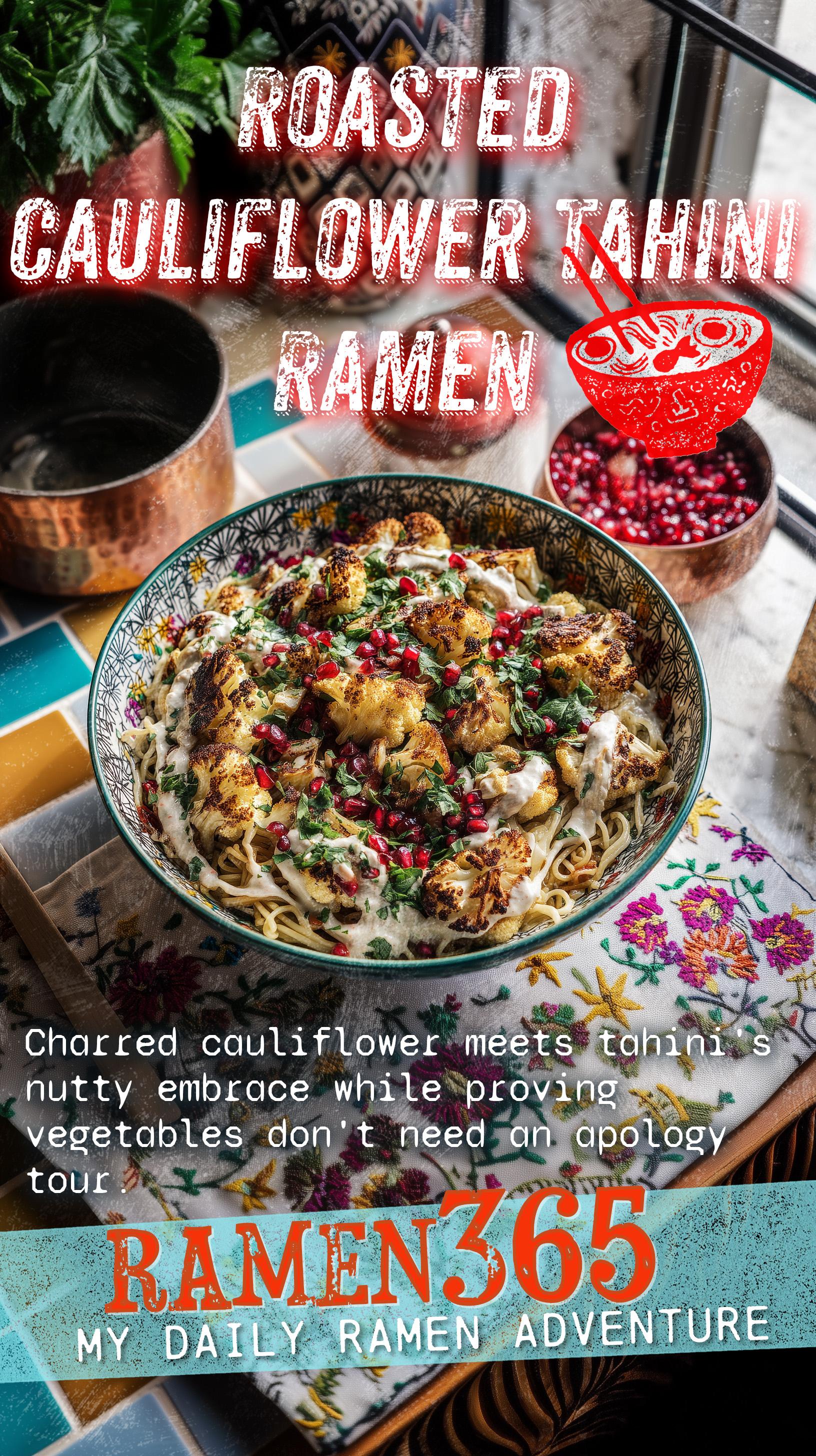
So this is Roasted Cauliflower Tahini Ramen. Cauliflower that's been roasted until it's almost burnt in the best possible way, covered in a tahini sauce so creamy you'll question whether it's actually vegan, all sitting on noodles that have somehow become the supporting actor in their own bowl. You know how cauliflower usually gets treated like the boring vegetable that shows up to parties it wasn't invited to? This is cauliflower's redemption arc. The high-heat roasting transforms it from pale, sulfurous florets into these caramelized, nutty chunks with crispy edges that crunch when you bite them. The tahini sauce brings this Middle Eastern richness that makes you forget there's no meat anywhere in sight, while the lemon and garlic keep everything bright enough that you don't feel like you're eating paste. It's the kind of bowl that makes vegetarians feel smug and makes everyone else wonder why they don't eat more vegetables, at least until they remember that most vegetables don't get this kind of treatment.
Cauliflower chars gold—tahini whispers of stones—sesame finds home
Let Me Tell You...
My cauliflower revelation happened at a Lebanese restaurant in Dearborn, Michigan, where the menu had this dish called "roasted cauliflower with tahini" that sounded boring as hell but the table next to me was practically licking their plates clean.
I ordered it out of curiosity and mild peer pressure, and when it arrived, the cauliflower was so dark I thought they'd accidentally burned it.
Turns out, that char is the entire point.
The edges were crispy and caramelized, the insides were tender, and the tahini sauce had this nutty richness that made the whole thing taste way more substantial than cruciferous vegetables have any right to taste.
Turning it into ramen required some mental gymnastics.
Cauliflower isn't exactly a traditional ramen topping, and tahini sauce is about as Japanese as hummus.
But the more I thought about it, the more it made sense.
Ramen is just noodles in sauce, and if that sauce happens to be tahini-based instead of tonkotsu, who's really going to complain?
I thinned out the tahini with vegetable stock and lemon juice until it had the consistency of actual ramen broth, added garlic and cumin because Middle Eastern food without those feels wrong, and suddenly I had something that worked.
The roasted cauliflower floats on top like a protein would, providing texture and substance, while the tahini broth coats the noodles in this creamy, nutty goodness.
The key to making this work is treating the cauliflower with the respect it deserves.
You can't just steam it and hope for the best. High heat, good spacing on the baking sheet, maybe a drizzle of olive oil and some cumin seeds, then you walk away and let the oven do its magic.
When it comes out deeply browned, almost burned looking, with those crispy edges and nutty aroma, that's when you know you've done it right.
The tahini sauce needs to be properly emulsified too, whisked together with warm stock so it doesn't seize up into a grainy mess, seasoned aggressively with lemon and salt because tahini can handle it.
Now this has become my go-to when I need to feed vegetarians or when I just want something that feels healthy without tasting like punishment.
The roasted cauliflower provides satisfying texture and char, the tahini broth delivers richness without heaviness, and the whole bowl comes together in under an hour.
Every bite reminds you that vegetables can be the star of the show when you stop treating them like an afterthought and start giving them the high-heat, aggressive-seasoning treatment they deserve.
Ingredients
- 8 ounces dried ramen noodles (2 bricks, seasoning packets discarded)
- 1 large head cauliflower, cut into florets (about 6 cups)
- 1/4 cup olive oil, divided
- 2 teaspoons ground cumin
- 1 teaspoon smoked paprika
- Kosher salt and black pepper, to taste
- 1/2 cup tahini
- 3 cups vegetable stock (warm)
- 1/4 cup fresh lemon juice (about 2 lemons)
- 4 cloves garlic, minced
- 2 tablespoons soy sauce
- 1 tablespoon maple syrup
- 1/2 teaspoon ground coriander
- 1/4 teaspoon cayenne pepper
- 1/4 cup fresh parsley, chopped
- 3 tablespoons pomegranate seeds
- 2 tablespoons toasted sesame seeds
- Lemon wedges, for serving
Preparation
- Preheat oven to 425°F. Line a large baking sheet with parchment paper.
- In a large bowl, toss cauliflower florets with 3 tablespoons olive oil, cumin, smoked paprika, salt, and black pepper until evenly coated.
- Spread cauliflower in a single layer on the baking sheet, ensuring florets aren't crowded (use two sheets if needed). Roast for 25-30 minutes, flipping halfway through, until deeply golden brown and crispy at the edges.
- While cauliflower roasts, prepare the tahini broth. In a medium pot, whisk together tahini, warm vegetable stock, lemon juice, garlic, soy sauce, maple syrup, coriander, cayenne, and remaining tablespoon of olive oil. Whisk vigorously until smooth and creamy.
- Bring tahini broth to a gentle simmer over medium heat, whisking occasionally. Taste and adjust seasoning with salt, lemon juice, or soy sauce as needed. Keep warm over low heat.
- Bring a large pot of salted water to a boil. Cook ramen noodles for 2-3 minutes until just tender, then drain and set aside.
- Divide noodles among bowls. Ladle hot tahini broth over the noodles, ensuring they're well coated.
- Top each bowl generously with roasted cauliflower florets, fresh parsley, pomegranate seeds, and toasted sesame seeds. Serve with lemon wedges on the side.