
Scrambled Egg Kimchi Ramen
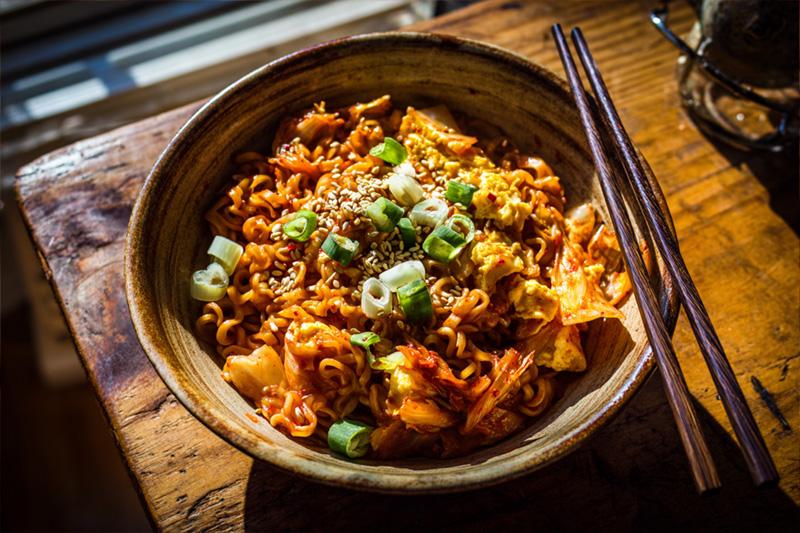
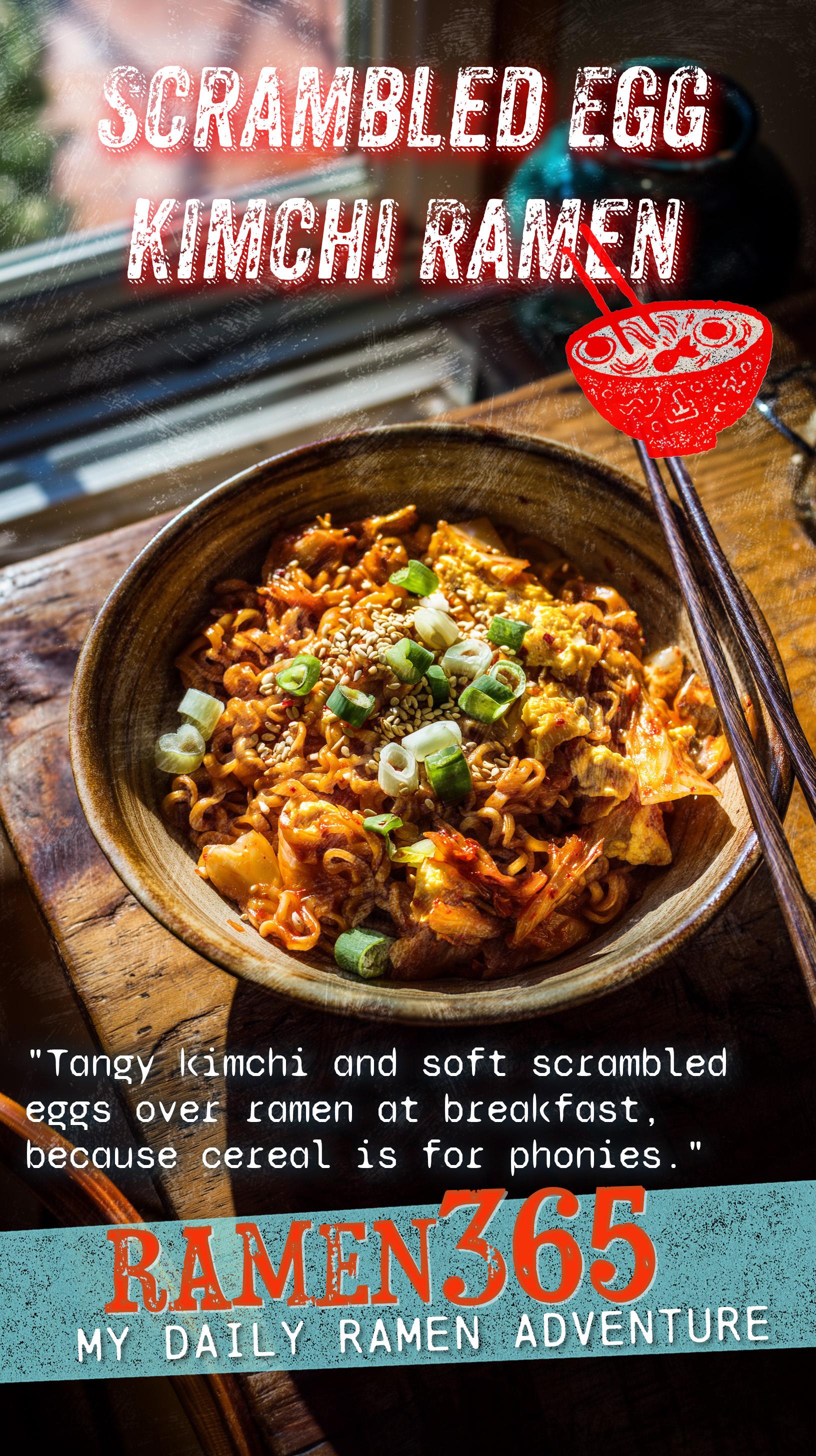
There's a version of Saturday morning where you open the fridge and find leftover kimchi, a carton of eggs, and some noodles in the pantry, and the whole thing somehow becomes better than anything you'd order at brunch. Korean breakfast has always had this honest, unfussy quality to it, rice and fermented things and soup, a philosophy that says morning food should actually do something for you rather than just look good on a phone screen. Kimchi and eggs are one of those pairings that should be obvious to everyone but somehow isn't to most people outside Korea. When the kimchi caramelizes at the edges, that's when it starts getting serious, the funk deepens, the sweetness comes out, and the whole pan smells like something you should have been making for years. Gochujang ties everything together with a low, slow heat that warms your face without actually burning it. Ramen noodles absorb every bit of that red, fermented, slightly smoky residue and carry it into actual meal territory. This qualifies as breakfast, lunch, or dinner and doesn't apologize for any of them.
Kimchi hits the pan—eggs bloom soft in ferment steam—morning finds its fire
Let Me Tell You...
Somewhere in the second week of living alone for the first time, you figure out that eggs and kimchi together are better than either one deserves to be.
I had a half-jar of kimchi a coworker's mom had made and approximately no idea what to do with my life, and I put them in a pan together and the whole kitchen started smelling like something a real person with actual cooking skills had made.
The sound alone was worth it, that hiss when cold kimchi hits hot oil, and then the slow caramelization that changes the whole character of the fermented cabbage from bright and tangy to something deeper and more serious.
You need color on it.
Uncaramelized kimchi is just wet and tangy.
Caramelized kimchi is something else entirely.
The addition of ramen noodles was a later development, born from the specific desperation of a Saturday morning when there was nothing else in the house that qualified as breakfast food.
What I didn't expect was how well the noodles held onto the kimchi pan drippings, absorbing all that red, fermented, slightly smoky residue and carrying it into every bite.
Add the eggs in the right way, off the heat while everything's still moving, and you end up with soft curds that melt into the noodles instead of the rubbery scrambled eggs that ruin a lot of otherwise decent breakfasts.
Off heat, in the warm pan, they'll finish in thirty seconds.
Overcooked scrambled eggs are unforgivable and irreversible.
Gochujang is the ingredient that makes it all cohere into something intentional.
It's not just heat but a fermented, slightly sweet paste that adds body and complexity, coating the noodles and eggs and kimchi in a way that ties together what would otherwise be just three separate things sharing a bowl.
The Korean instinct to layer fermented flavors on top of each other, kimchi and gochujang and kimchi brine all at once, is a philosophy that makes deep intuitive sense when you're eating it, even when you can't quite articulate why.
Raw gochujang tastes flat.
Toasted gochujang tastes like purpose.
What this bowl is really doing is making a quiet argument that breakfast has been sold short in most Western countries.
You get toast and cereal and maybe a mediocre egg if you're feeling ambitious, and meanwhile Korean kitchens have been making fermented, layered, deeply satisfying food in the morning for centuries without much fanfare about it.
This bowl is the fanfare.
Eat it with green onions piled on top and a cold cup of barley tea and stop pretending that pancakes were ever the right answer.
Ingredients
- 4 oz dried ramen noodles (1 brick, seasoning packet discarded)
- 1 cup kimchi, roughly chopped, plus 2 tablespoons kimchi brine
- 3 large eggs
- 1 tablespoon gochujang (Korean red chili paste)
- 1 teaspoon toasted sesame oil
- 1 tablespoon neutral oil (such as vegetable or avocado oil)
- 2 green onions, thinly sliced (white and green parts separated)
- 1 teaspoon low-sodium soy sauce
- 1 teaspoon rice vinegar
- Kosher salt, to taste
Preparation
- Bring a pot of water to a boil (do not salt). Cook the ramen noodle brick for 2-3 minutes until just tender. Drain, rinse under cold water, and toss with the sesame oil to prevent sticking. Set aside.
- In a small bowl, whisk together the eggs, kimchi brine, soy sauce, and a small pinch of salt until fully combined.
- Heat the neutral oil in a large skillet or wok over medium-high heat. Add the white parts of the green onions and the chopped kimchi. Cook, pressing down occasionally with a spatula, for 3-4 minutes until the kimchi edges are caramelized and fragrant.
- Reduce heat to medium. Add the gochujang to the pan and stir it into the kimchi for 30 seconds until toasted and fragrant. Add the cooked noodles and toss everything together until the noodles are evenly coated in the chili paste and kimchi juices, about 1-2 minutes.
- Push the noodles to one side of the pan. Pour the egg mixture into the open space and cook, folding gently with a spatula, for 60-90 seconds until the eggs are just set but still glossy and soft. Do not let them fully firm up.
- Remove from heat immediately. Gently fold the soft eggs through the noodles. Add the rice vinegar, taste for seasoning, and adjust with salt if needed.
- Divide into bowls and top with the sliced green onion tops. Serve immediately with any optional toppings on the side.