
Sichuan Mapo Pork Ramen
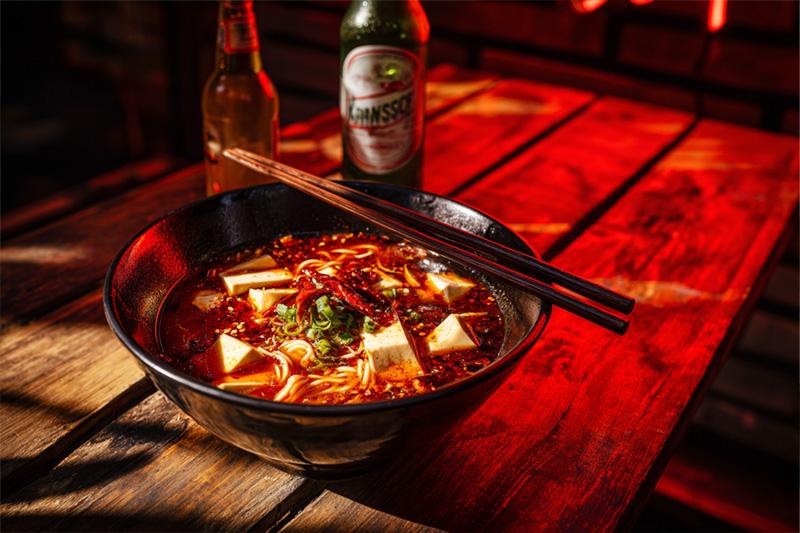
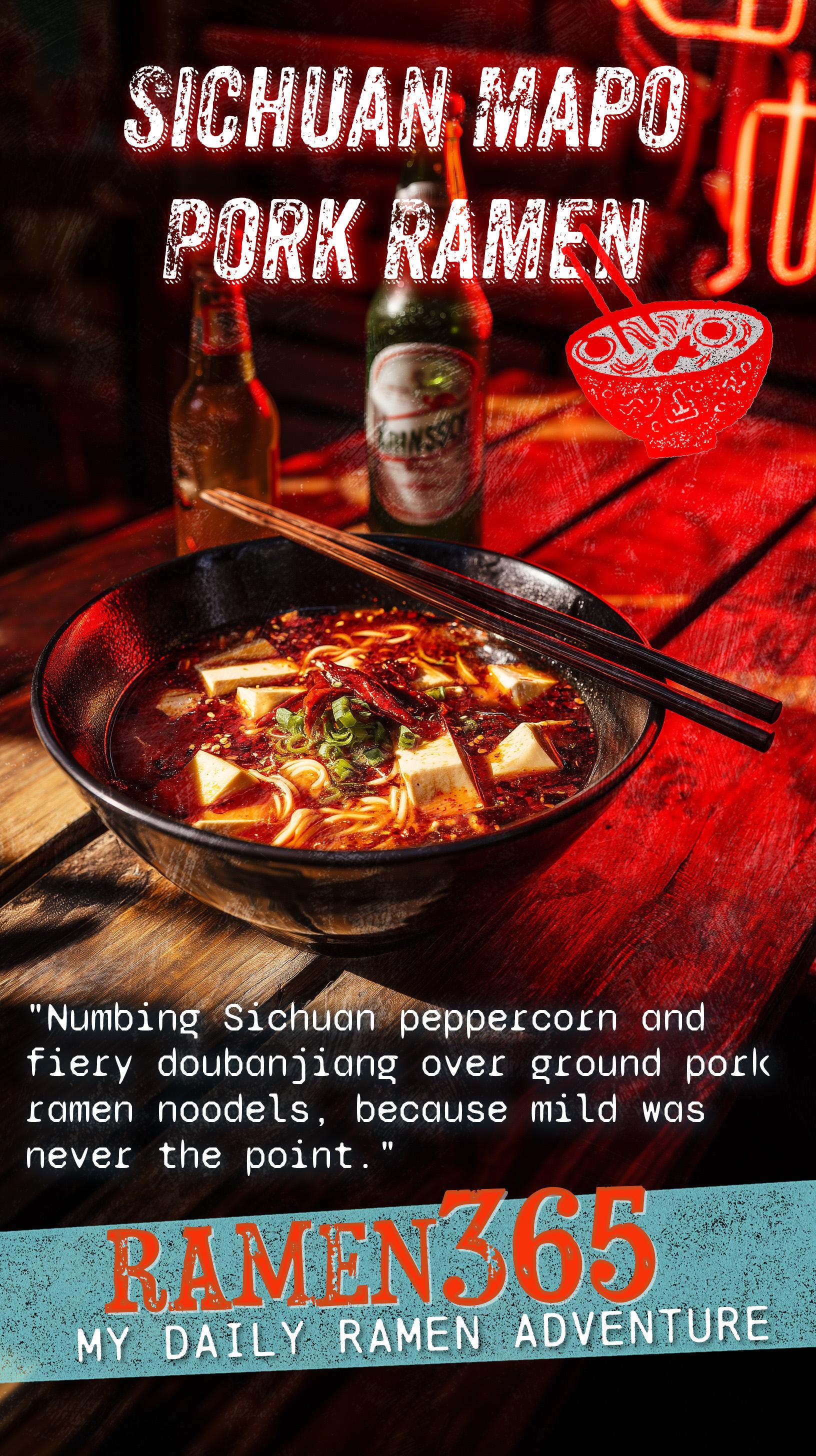
Mapo tofu is one of those dishes that people claim to find intimidating right up until they actually make it, at which point the intimidation disappears and is replaced by mild regret about all the years they didn't. The name translates roughly to "pockmarked old woman's tofu," which is a story involving a Sichuan restaurant owner from the Qing dynasty and is worth looking up, but the dish itself is straightforward: ground pork in a fiery, deeply spiced sauce with silken tofu, built on doubanjiang and the numbing Sichuan peppercorns that produce that specific mala sensation nobody forgets their first time. Adding ramen noodles to the equation turns a classic side dish into a proper bowl meal, and the noodles carry the ground pork and tofu through every bite rather than leaving them pooled at the bottom. The broth thickens just slightly from a cornstarch slurry, the way mapo sauce is traditionally finished, and the result coats the noodles in a way that diluted soup cannot. Doubanjiang is the ingredient you may not have in your pantry yet but absolutely should, a fermented chili and fava bean paste from Pixian that no other condiment in the world replaces. This is a weeknight bowl that rewards a small pantry investment with something that tastes like it came from a restaurant that knows what it's doing.
Peppercorn goes numb—ground pork blooms in chili oil—ramen takes the heat
Let Me Tell You...
The first time I had mapo tofu at a Sichuan restaurant that actually knew what it was doing, I made the mistake of eating too fast before the numbness hit.
Sichuan peppercorns have a delayed effect where the food is spicy and then a minute or two later the front of your mouth goes electric and slightly disconnected from normal sensation, which is pleasant in a way that sounds alarming when you describe it to someone who hasn't experienced it.
I ate about a third of the bowl before my face went comprehensively numb, and I ate the rest anyway because the flavor underneath all that numbing heat was extraordinary.
Heat activates the compounds responsible for the numbing sensation and the aroma becomes significantly more complex than the pre-ground version.
Doubanjiang is the other ingredient that's non-negotiable and cannot be substituted without losing the soul of the dish.
It's a fermented chili and fava bean paste from the Sichuan town of Pixian that has a depth and rounded complexity no other chili paste approaches.
You cook it in hot oil until the fat turns brick red and the kitchen smells like something serious is happening, which it is, and that base carries the entire flavor of the bowl from that point forward. Cheap doubanjiang exists and so does good doubanjiang, and the difference between them is the difference between a bowl that tastes fine and one you want to make every week.
You are frying the paste, not simmering it, and that step is where the deep brick-red color and the rounded, complex flavor come from.
The cornstarch slurry is the step that most mapo adaptations skip and the one that makes the most difference.
Mapo sauce is traditionally thick enough to coat the tofu and cling to whatever it touches, not thin enough to be called a broth in the conventional sense.
The silken tofu should float in something that holds it rather than a liquid it swims through, and the noodles should be coated rather than submerged.
One teaspoon of cornstarch and two teaspoons of water is the difference between a bowl that eats like a sauce-forward noodle dish and one that just eats like soup.
It will break apart completely if stirred aggressively and you want distinct soft cubes in the finished bowl rather than a scattered, shapeless scramble.
What this bowl does is take a Sichuan classic that was already complete and make it slightly more filling and slightly more a whole meal without doing anything that would make a Chengdu grandmother actively uncomfortable.
The ramen noodles are a genuinely good fit for mapo sauce, better than rice in some ways because they pick up the sauce differently and carry the ground pork through every strand.
Make it with a full teaspoon of Sichuan peppercorn the first time and find your personal threshold, because knowing exactly how numb is too numb is useful self-knowledge.
Ingredients
- 6 oz ground pork
- 6 oz dried ramen noodles (2 bricks, seasoning packets discarded)
- 12 oz silken tofu, cut into 1-inch cubes (handle gently)
- 2 tablespoons doubanjiang (Sichuan fermented chili bean paste)
- 1 teaspoon Sichuan peppercorns, toasted and roughly crushed
- 3 garlic cloves, minced
- 1-inch piece fresh ginger, peeled and minced
- 2 green onions, thinly sliced (white and green parts separated)
- 3 cups low-sodium chicken or pork broth
- 1 tablespoon low-sodium soy sauce
- 1 teaspoon chili oil (such as Lao Gan Ma)
- 1 tablespoon neutral oil
- 1 teaspoon cornstarch mixed with 2 teaspoons cold water (slurry)
- 1 teaspoon toasted sesame oil
- Kosher salt, to taste
Preparation
- Heat the neutral oil in a large pot or wok over medium-high heat. Add the ground pork and cook, breaking it up with a wooden spoon, for 4-5 minutes until well browned and cooked through. Season lightly with salt.
- Reduce heat to medium. Add the doubanjiang to the pot and stir it constantly into the pork for 1-2 minutes until the fat turns brick red and the paste is deeply fragrant. Add the garlic, ginger, and white parts of the green onions and cook, stirring, for another 1-2 minutes.
- Pour in the broth and soy sauce. Bring to a gentle simmer and cook uncovered for 10 minutes to let the flavors meld and the broth deepen in color.
- Gently lower the silken tofu cubes into the broth. Add the chili oil. Stir the cornstarch slurry briefly to recombine it, then pour it slowly into the broth while stirring gently. Simmer for 2-3 minutes until the broth thickens slightly and coats the back of a spoon.
- Remove from heat. Stir in the sesame oil and crushed Sichuan peppercorns. Taste and adjust with salt or more soy sauce as needed.
- Bring a separate pot of salted water to a boil. Cook the ramen noodles for 2-3 minutes until just tender. Drain.
- Divide the noodles between bowls. Ladle the mapo broth over the noodles, distributing the ground pork and tofu cubes evenly. Garnish with the green onion tops and serve immediately with any optional toppings alongside.