
Silken Tofu Century Egg Ramen
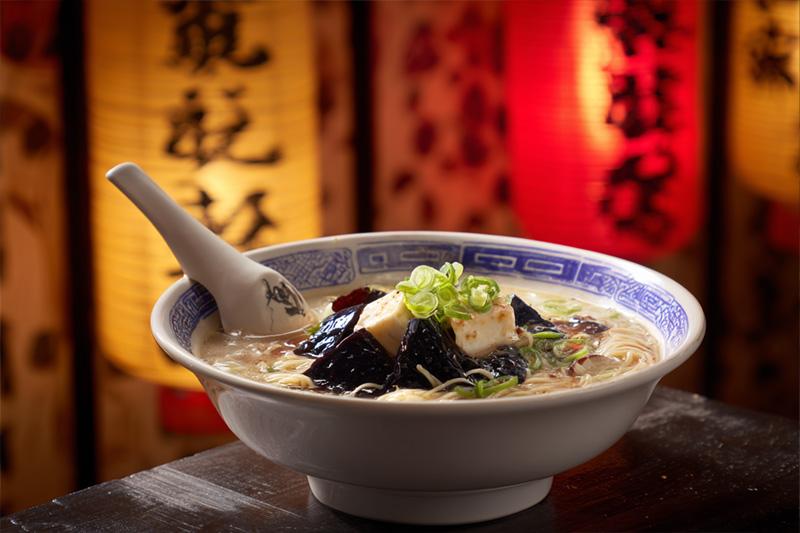
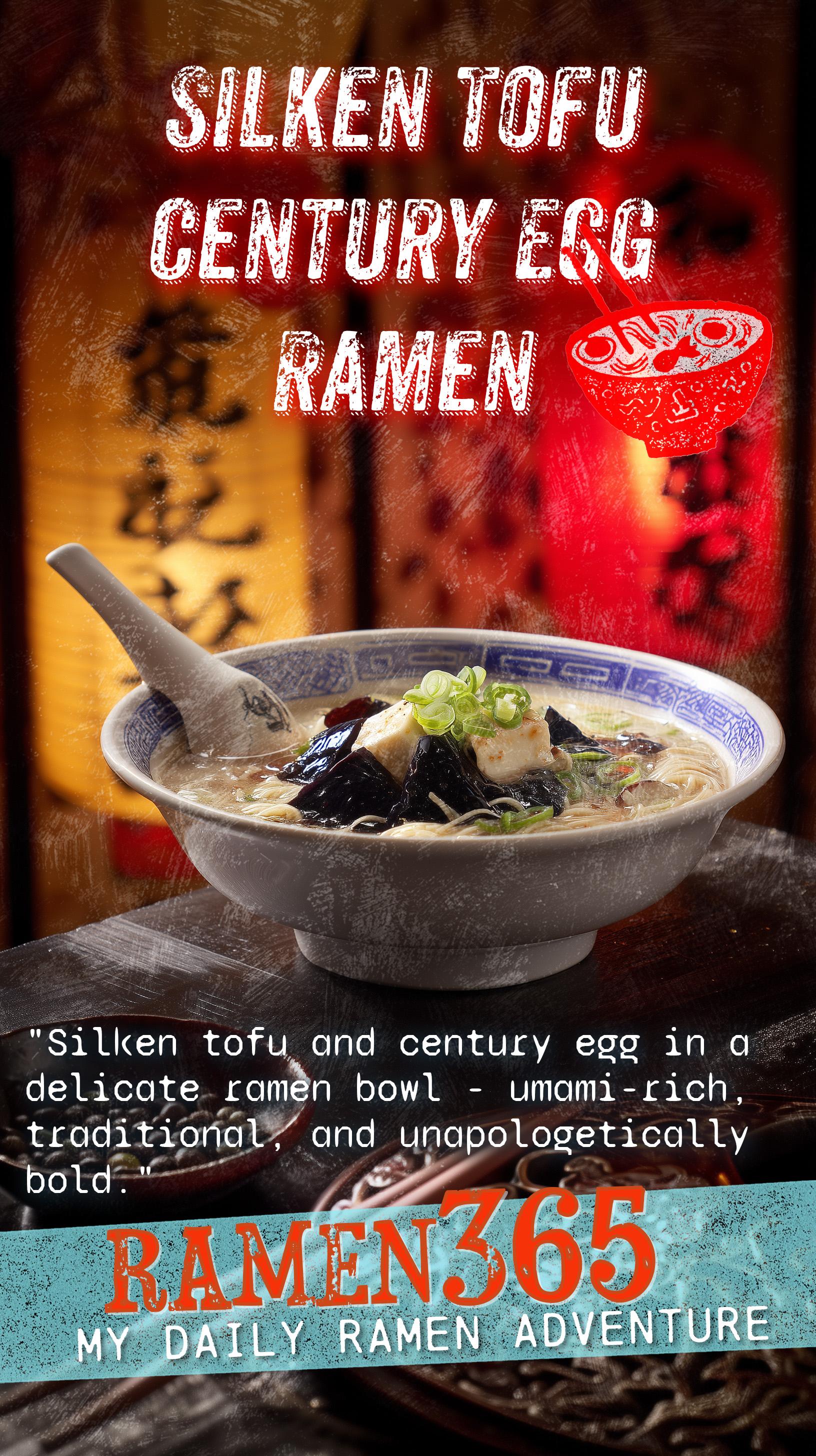
Century eggs are one of those ingredients that either fascinate you or make you question your life choices, depending on how adventurous you're feeling. They're preserved duck eggs that have been cured in a mixture of clay, ash, and salt until the whites turn into this dark, translucent jelly and the yolks become creamy and intensely savory. They taste like umami concentrated into egg form, with a slight sulfur edge that some people love and others avoid entirely. Pairing them with silken tofu in a delicate broth is the kind of traditional Chinese combination that makes perfect sense once you taste it, because the creamy, neutral tofu balances out the bold, funky egg. It's the kind of dish you make when you want something simple and traditional, or when you're feeling brave enough to try something that looks weird but tastes incredible.
Black meets the pure white—time transforms what once was whole—umami blooms dark.
Let Me Tell You...
The first time I saw a century egg, I was at a dim sum restaurant with a friend who ordered it without warning me what it was.
When the plate arrived, I stared at this dark, greenish-black egg with a texture that looked like it had been sitting in someone's basement for a decade.
My friend laughed at my face and said, "Just try it." I cut off a piece and ate it, expecting the worst, and was surprised when it tasted like the most intensely savory egg I'd ever had, with this creamy, almost cheese-like quality that I couldn't quite place.
It was weird, sure, but it was also kind of addictive.
You're just slicing them and adding them to the bowl for flavor.
I started buying century eggs at Asian grocery stores, usually in packs of four wrapped in plastic with Chinese characters I couldn't read.
I'd eat them on their own as a snack, or chop them up and add them to congee or rice porridge for breakfast. They have this unique flavor that's hard to describe, earthy and savory with a slight ammonia edge that sounds terrible but somehow works.
One night, I had silken tofu in the fridge and a couple of century eggs, and I decided to put them together in a ramen bowl because why not.
You want it creamy and custard-like, not chewy.
I made a simple broth with vegetable stock, ginger, and a splash of soy sauce, keeping it light so the tofu and egg could be the stars.
I cubed the silken tofu carefully because it's so delicate it falls apart if you look at it wrong, and I sliced the century eggs into wedges to show off their dramatic dark color.
I cooked the ramen noodles, ladled the broth over them, and gently placed the tofu and egg on top.
I garnished it with scallions and a sprinkle of white pepper because that's what you do with Chinese soups, and when I took the first bite, it was like eating something that had been made the same way for generations.
It's traditional in Chinese cooking and adds a different kind of heat.
The silken tofu was creamy and mild, the century egg added that deep, funky umami, and the broth tied everything together with its light, ginger-spiked flavor.
The noodles soaked up the broth and turned slippery and smooth, and every bite had this perfect balance of delicate and bold, traditional and satisfying.
It's not the kind of dish that's going to win over people who are scared of weird food, but for those willing to try it, it's a reminder that some of the best flavors are the ones that take a little courage to taste.
Ingredients
- 2 packages ramen noodles (discard seasoning packets)
- 1 block (14 oz) silken tofu, drained and cut into 1-inch cubes
- 2 century eggs (preserved duck eggs), peeled and cut into wedges
- 4 cups vegetable broth (preferably low-sodium)
- 1-inch piece fresh ginger, sliced
- 2 tablespoons soy sauce
- 1 tablespoon sesame oil
- 1 teaspoon sugar
- 3 green onions, thinly sliced (white and green parts separated)
- 1/2 teaspoon ground white pepper
- Salt, to taste
- Fresh cilantro, for garnish (optional)
Preparation
- In a medium pot, heat the sesame oil over medium heat. Add the sliced ginger and the white parts of the green onions. Sauté for 1-2 minutes until fragrant.
- Pour in the vegetable broth, soy sauce, and sugar. Bring to a gentle simmer and cook for 10 minutes to let the ginger infuse the broth. Remove and discard the ginger slices. Taste and adjust seasoning with salt and white pepper as needed.
- While the broth simmers, cook the ramen noodles according to package instructions until just tender. Drain and set aside.
- Divide the cooked ramen noodles between two serving bowls. Carefully add the cubed silken tofu to the hot broth (do not stir vigorously or the tofu will break apart). Let the tofu warm gently in the broth for 1-2 minutes.
- Using a ladle, carefully transfer the broth and tofu cubes over the noodles in each bowl.
- Top each bowl with century egg wedges, the green parts of the green onions, a sprinkle of white pepper, and fresh cilantro if desired.
- Serve immediately while hot.