
Tempeh Rendang Ramen
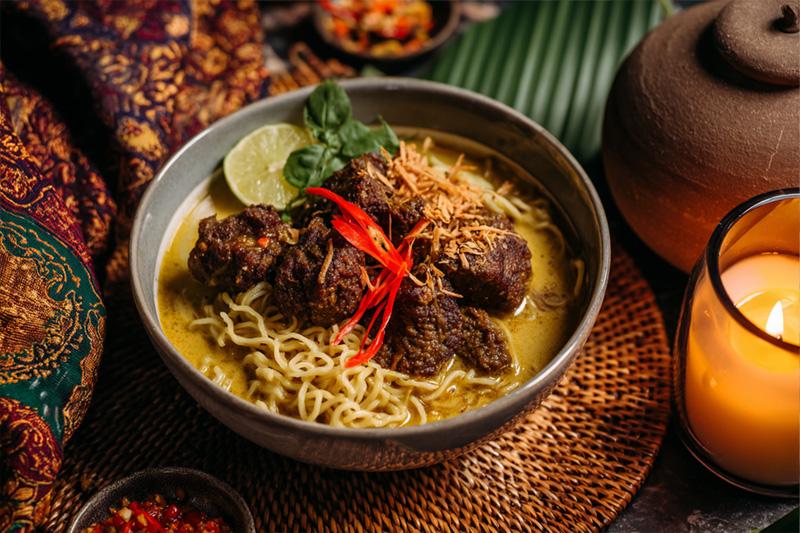

Rendang is one of those dishes that rewards you for being patient, which is not exactly my natural state but I'm working on it. The whole point is to cook something down until it looks almost ruined and then discover it's actually perfect. Tempeh holds up to that process in a way that most proteins can only dream about. The outside gets this dark, almost crackly crust from the coconut paste and the dried chilies, and the inside stays firm with a slight nuttiness that cuts through all that richness. Kaffir lime leaves are doing a lot of work here, more than people give them credit for. You don't eat them, but they leave this floral citrus note behind that makes the whole broth smell like somewhere you actually want to be. This one is a weeknight stretch, not a weeknight easy. But on a Saturday when you have nowhere to be and the whole apartment smells like toasted coconut and galangal, you'll forgive yourself for the extra effort.
Coconut and fire—Tempeh darkens, slow and proud—Noodles wait below
Let Me Tell You...
There is a specific moment in making rendang when everything in the pan looks wrong.
The coconut milk has cooked down, the paste is starting to catch on the bottom, and the tempeh is sitting there looking dry and suspicious.
That is exactly when you keep going.
The Malay cooks I've read about describe rendang as a dry curry that forgets it was ever a curry, which I think is a beautiful way to describe something that spends an hour losing its mind before arriving at something extraordinary.
Low-fat splits and goes grainy.
You need the fat to carry the spices properly.
I made this the first time by accident, or close to it.
I had a block of tempeh I kept ignoring and a half-opened can of coconut milk that was a day away from turning, and I figured the worst case was a bad dinner and a lesson learned.
I toasted the coconut in a dry pan while I blended the paste, and the smell hit the whole kitchen at once: lemongrass, galangal, the dried chilies opening up, and then that toasted coconut landing on top of all of it like a slow exhale.
My neighbor knocked on the door to ask what I was cooking.
That has never happened before or since.
It goes from pale to burnt in about thirty seconds if you look away.
The ramen broth here is light on purpose.
The tempeh carries so much flavor from the braise that putting it into a rich tonkotsu or a heavy miso would be like wearing two coats.
A thin coconut broth, just coconut milk let down with vegetable stock and a few kaffir lime leaves simmered in, keeps things from collapsing under their own weight.
The tempeh floats on top with its dark crust mostly intact, and the noodles underneath soak up the surrounding broth without competing with anything.
Coconut milk curdles at a hard boil and you'll lose the silky texture you're going for.
Malaysian cooking doesn't get enough credit for how much it asks of its spices.
The rendang paste here has galangal, which is sharper and more piney than ginger, and kaffir lime leaves, which are nothing like regular lime zest in any way that matters.
If you can only find one of those ingredients, find the kaffir lime leaves.
They're the thing that makes the broth smell like it came from somewhere with better weather than wherever you're eating it.
Slice them very thin and drop a few into the broth at the end, not the beginning.
They're fragrant and they mean it.
The tempeh will look burnt.
It is not burnt.
The dark crust is caramelized coconut and dried chili paste, and it holds together on the noodles long enough to give you a few bites where everything lands at once: the crunch of toasted coconut on top, the broth, the soft noodle, and that dark slab of tempeh sitting in the middle of it all like it knew this is where it belonged the whole time.
Ingredients
- 8 ounces tempeh, cut into 1-inch cubes
- 8 ounces dried ramen noodles (2 bricks, seasoning packets discarded)
- 1 can (13.5 oz) full-fat coconut milk, divided
- 2 cups low-sodium vegetable broth
- 4 dried red chilies (such as arbol or guajillo), stems and seeds removed
- 3 shallots, roughly chopped
- 4 garlic cloves, roughly chopped
- 2 stalks lemongrass (white and light green parts only), sliced thin
- 1 inch fresh galangal, peeled and sliced (or 1 teaspoon galangal powder)
- 6 kaffir lime leaves, 4 left whole and 2 thinly sliced (divided)
- 1/4 cup unsweetened shredded coconut, toasted
- 1 tablespoon neutral oil (such as avocado or grapeseed)
- 1 teaspoon brown sugar
- 1 teaspoon ground coriander
- 1/2 teaspoon ground turmeric
- Kosher salt, to taste
Preparation
- Make the rendang paste: combine the dried chilies, shallots, garlic, lemongrass, galangal, 4 kaffir lime leaves, ground coriander, and ground turmeric in a blender or food processor. Add 2 tablespoons of coconut milk and blend to a thick, coarse paste. Scrape down the sides as needed.
- Heat the oil in a wide, heavy skillet or wok over medium heat. Add the rendang paste and cook, stirring constantly, for 4-5 minutes until darkened and very fragrant and the oil begins to separate around the edges.
- Add the tempeh cubes to the pan and toss to coat in the paste. Pour in 3/4 of the remaining coconut milk (reserve about 1/3 cup for the broth). Stir in the brown sugar and 1/2 teaspoon kosher salt.
- Braise the tempeh: reduce heat to medium-low and cook uncovered, stirring every 5-7 minutes, for 35-45 minutes. The coconut milk will reduce completely and the paste will caramelize onto the tempeh, forming a dark, fragrant crust. The tempeh is ready when it looks almost dry and deeply browned. If the pan starts to scorch before 30 minutes, lower heat slightly and add a splash of water.
- While the tempeh finishes braising, make the broth: combine the vegetable broth, reserved coconut milk, and the 4 whole kaffir lime leaves in a small saucepan. Bring to a gentle simmer over medium-low heat and cook for 10 minutes. Season with salt to taste. Remove and discard the whole kaffir lime leaves before serving.
- Bring a separate pot of salted water to a boil. Cook ramen noodles for 2-3 minutes until just tender. Drain and rinse briefly under cool water.
- Assemble the bowls: divide noodles between bowls. Ladle hot coconut broth over the noodles. Arrange braised tempeh pieces on top. Scatter toasted coconut over the tempeh and garnish with the thinly sliced kaffir lime leaves. Add any optional toppings and serve immediately.