
Wild Boar Miso Tsukemen
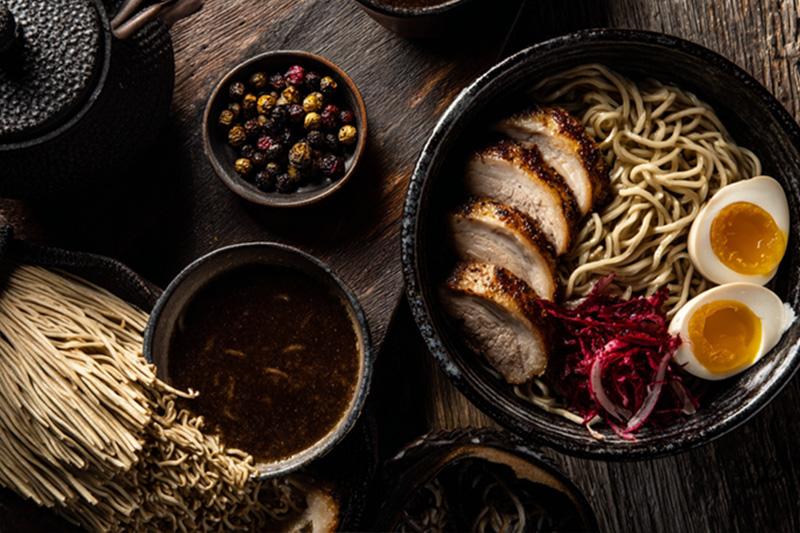
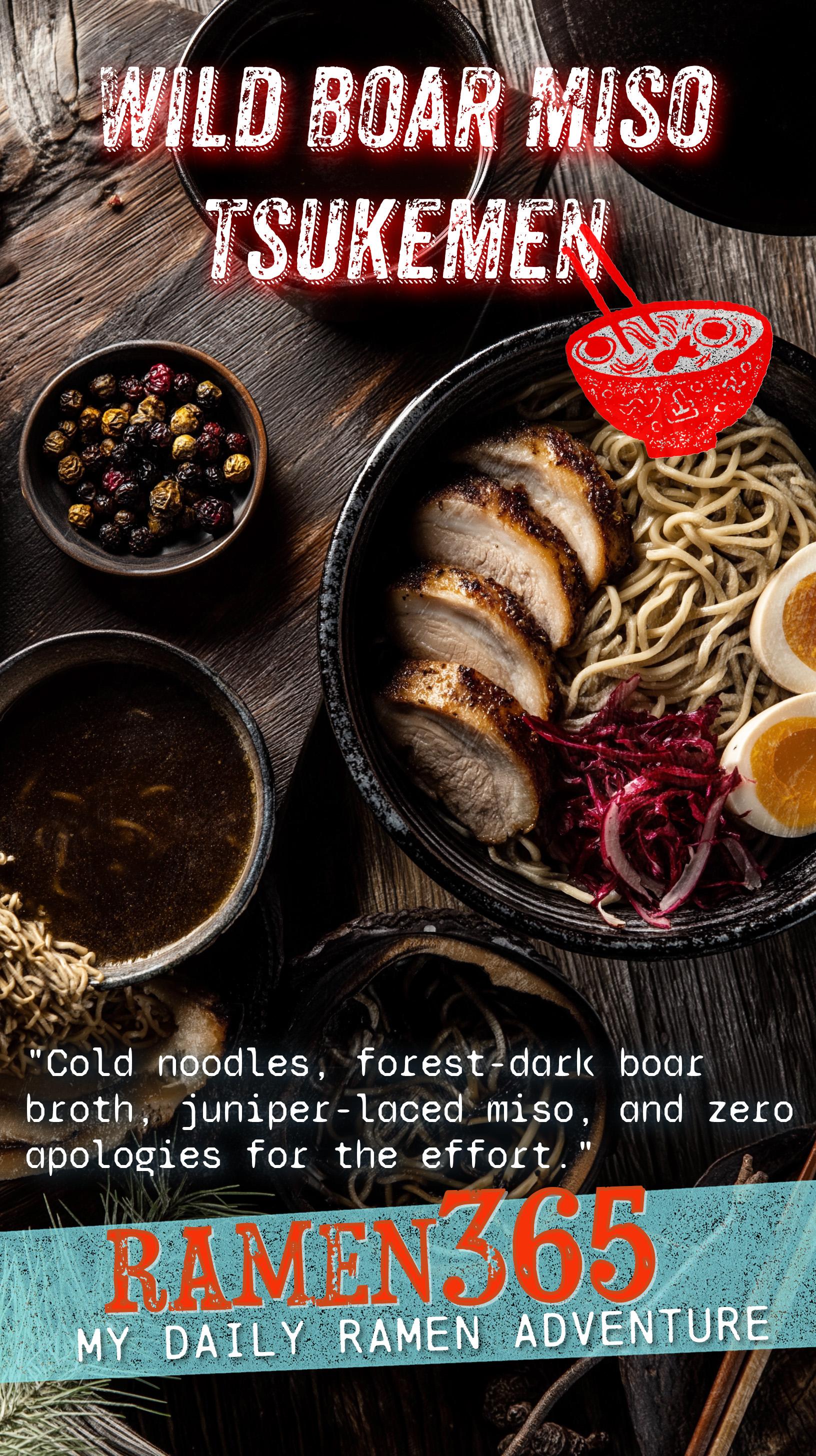
There is something genuinely strange and correct about dipping cold noodles into a broth that smells like a Nordic forest decided to become Japanese. Wild boar is the kind of meat that takes its time letting you know who is in charge, and here the braise runs low and slow until it gives up all that gamey depth into a miso base that has no business tasting this good. The juniper berries are the weird genius move, sharp and resinous in a way that cuts through fat like they know exactly what they are doing. Tsukemen is already a format built on intensity, concentrated dipping broth beside cold noodles so you control the ratio yourself, and the boar just leans into that premise hard. This is not a weeknight bowl, and it probably should not be attempted when you are tired or impatient, but if you are willing to spend an afternoon with a Dutch oven and some pine-smelling spices, the payoff is the kind of meal people ask about for years.
Cold noodles wait still—Dark broth of boar and juniper—Forest meets the bowl
Let Me Tell You...
My neighbor came back from a hunting trip once and left two pounds of wild boar shoulder on my doorstep, no note, just the meat, vacuum-sealed and slightly alarming in the way unexpected gifts from people who own rifles always are.
I had no plan, I had miso and ramen noodles and a jar of juniper berries I had bought for a cocktail recipe I never made, and somewhere between staring at all of it and looking up what tsukemen actually meant I decided that the Nordic forest and the Japanese noodle shop had probably always wanted to meet each other, they just needed someone irresponsible enough to introduce them.
Pale steamed meat in the broth means you skipped the step that matters.
The boar went into the Dutch oven with a mirepoix of onion, leek, and carrot, plus smashed garlic and a thumb of ginger that felt like it was doing cultural diplomacy, and then the juniper berries and caraway seed went in and the whole thing smelled like a sauna inside a ramen shop, which sounds wrong but is actually the best possible combination of smells.
The miso paste dissolves in last, after you deglaze with sake and let the alcohol cook off, and you have to be patient with that part because rushing the deglaze just means the broth tastes boozy rather than deep.
Two and a half hours at a low simmer and the boar is doing that thing where it pulls apart if you look at it the wrong way.
White miso is too delicate against wild boar and the Nordic spices will run right over it.
The cold noodle component is what makes this thing actually work as more than just a braise over hot noodles, because there is something in the temperature contrast that sharpens every element: the broth tastes more concentrated beside cold noodles, the fat blooms differently when it hits the cold, and you are forced to eat slowly and deliberately because you are the one calibrating each dip.
I overcooked my noodles the first time because I forgot they would keep softening even after draining, so now I pull them at ninety seconds shy of done and shock them under cold water immediately until they are genuinely cold and have that slight resistance that tsukemen noodles need.
Warm or room-temperature noodles ruin the contrast the whole format is built on.
What I did not expect was how the juniper would behave in the finished broth, because during the braise it smells sharp and almost medicinal, but after two hours of simmering it mellows into something that is more like a forest after rain than a bottle of gin, rounded and faintly sweet at the edges.
The boar loses its gamey aggression but keeps the depth that chicken or pork cannot fake.
My neighbor never explained why he left the meat, and I never asked, but I made this dish for him the following week and he ate two portions and said nothing beyond "yeah" and then nodded slowly, which in the language of people who are not expressive is basically a Michelin star.
Ingredients
- 2 lbs bone-in wild boar shoulder, cut into 3-inch chunks
- 4 bricks (about 12 oz total) dried ramen noodles, seasoning packets discarded
- 2 tablespoons neutral oil (such as vegetable or canola)
- 1 tablespoon rendered lard or unsalted butter
- 1 medium yellow onion, roughly chopped
- 1 medium leek, white and light green parts, roughly chopped and cleaned
- 2 medium carrots, roughly chopped
- 6 cloves garlic, smashed
- 1-inch piece fresh ginger, peeled and sliced
- 12 dried juniper berries, lightly crushed
- 1 teaspoon caraway seeds
- 1/2 teaspoon black peppercorns
- 1/4 cup sake
- 4 tablespoons red (aka) miso paste
- 2 tablespoons soy sauce (low-sodium)
- 1 tablespoon mirin
- 4 cups low-sodium chicken or pork broth
- 1 teaspoon toasted sesame oil
- Kosher salt, to taste
Preparation
- Pat the wild boar chunks completely dry with paper towels and season generously on all sides with kosher salt and black pepper. Let sit at room temperature for 20 minutes while you prep the aromatics.
- Heat the neutral oil in a large Dutch oven over high heat until just smoking. Add the boar pieces in a single layer without crowding (work in 2 batches if needed). Sear undisturbed for 3-4 minutes per side until a deep brown crust forms on all surfaces. Transfer seared boar to a plate and set aside.
- Reduce heat to medium. Add the lard or butter to the same pot. Add onion, leek, and carrot and cook, stirring occasionally, for 6-8 minutes until softened and lightly browned. Add the smashed garlic and ginger and cook for 2 more minutes until fragrant.
- Add the crushed juniper berries, caraway seeds, and black peppercorns to the pot. Stir and toast in the fat for 1 minute until aromatic.
- Pour in the sake and scrape up any browned bits from the bottom of the pot. Let the sake cook off for 2-3 minutes, then add the soy sauce and mirin. Stir in the miso paste until fully dissolved.
- Return the seared boar pieces to the pot along with any accumulated juices. Pour in the broth. Bring to a boil, then reduce heat to the lowest setting, cover partially, and braise for 2 hours to 2 hours 30 minutes, turning the boar once halfway through, until the meat is fall-apart tender and the broth has reduced and concentrated.
- Remove the boar from the broth. Strain the broth through a fine-mesh strainer, pressing on the solids to extract all liquid. Discard solids. Skim excess fat from the surface of the strained broth (or refrigerate overnight and lift the solidified fat cap). Return broth to a clean pot and keep at a low simmer. Adjust seasoning with salt. Stir in the toasted sesame oil.
- Pull or slice the braised boar into thick, rustic pieces. Reserve warm in a small amount of the broth to prevent drying out.
- Bring a large pot of unsalted water to a boil. Cook the ramen noodles for 90 seconds less than the package's suggested time (they should be just barely underdone). Drain immediately and rinse under cold running water, tossing continuously until the noodles are completely cold. Drain thoroughly and divide into 4 serving portions.
- To serve tsukemen-style: arrange a portion of cold noodles in a wide bowl or on a plate. Place braised boar slices on or beside the noodles. Pour the hot, concentrated miso broth into individual small bowls or dipping cups (about 3/4 to 1 cup per person). Add optional toppings alongside the noodles. Dip bundles of noodles into the hot broth before eating.