
Wild Boar Ragù Ramen
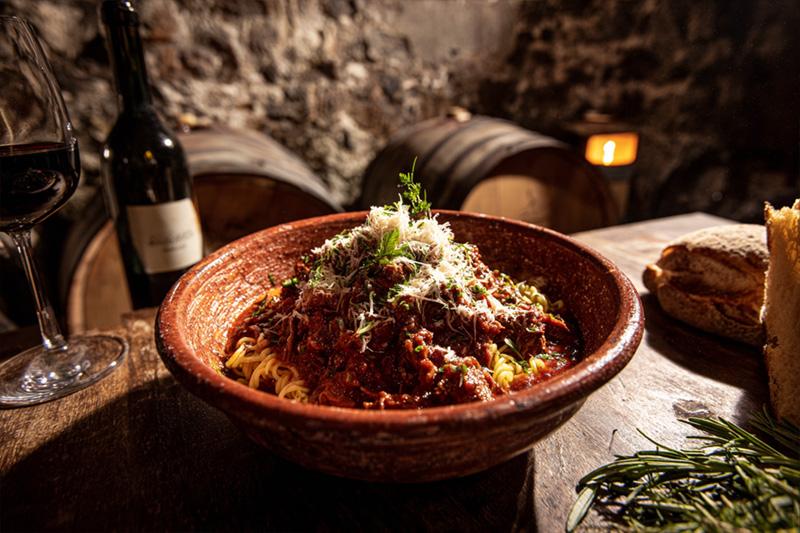
Wild boar is one of those meats that makes you feel like you're eating something primal and untamed, because unlike domesticated pork, it actually tastes like the animal lived in the woods and ate acorns and roots. The meat is darker, leaner, and more flavorful than regular pork, with this gamey richness that's either exactly what you're looking for or completely off-putting depending on your tolerance for wild flavors. Cooking it low and slow in a ragù with red wine, tomatoes, and aromatics tames the wildness just enough while keeping that deep, earthy flavor intact. Serving it over ramen noodles instead of pasta is fusion in the best way, because the noodles soak up the sauce beautifully and you get all the comfort of Italian cooking with the convenience of quick-cooking noodles.
Wild runs through the woods—wine turns fierce to velvet smooth—time breaks the savage.
Let Me Tell You...
I had wild boar for the first time at a hunting lodge restaurant where the menu was entirely game meat, which should've been a warning but I was hungry and curious.
The boar came as a ragù over pappardelle, and the first bite was intense, darker and richer than any pork I'd ever eaten, with this earthy, almost funky flavor that tasted like the forest. I wasn't sure if I liked it at first, but by the end of the plate I was scraping up every last bit of sauce with bread.
It tenderizes the meat and mellows the gamey flavor.
I started buying wild boar from specialty butchers who sold game meat, usually frozen and vacuum-sealed in thick cuts.
The butcher told me to treat it like pork but expect it to be leaner and tougher, which meant braising was the way to go.
I'd cut it into chunks, marinate it overnight in red wine with garlic and herbs, and then brown it the next day before building the ragù.
The wine marinade would turn the meat darker and more tender, and the house would smell like I was running an Italian vineyard.
Overcrowding the pan steams the meat instead of searing it, and you lose that caramelized crust. For the ragù, I'd sauté onions, carrots, and celery until they were soft, then add tomato paste, canned tomatoes, more red wine, and beef stock.
I'd return the browned boar to the pot and let it simmer for three hours, low and slow, until the meat was fall-apart tender and the sauce had thickened into something dark and glossy.
One night I decided to serve it over ramen noodles because I didn't have pappardelle and couldn't be bothered to make a store run.
I cooked the noodles, ladled the ragù over them, and topped the whole thing with grated Parmesan and fresh rosemary.
The starch helps it cling to the noodles.
The first bite was rustic and rich, with the wild boar adding this deep, earthy flavor that regular pork could never match.
The sauce was thick and savory with hints of wine and tomato, and the ramen noodles soaked it all up until they were glossy and flavorful.
It tasted like something you'd eat in a Tuscan farmhouse after a day of hunting, except I was eating it on my couch with Netflix on in the background, which is honestly just as good.
Ingredients
- 2 packages ramen noodles (discard seasoning packets)
- 1.5 lbs wild boar shoulder or leg, cut into 1-inch chunks
- 1 cup red wine (for marinade)
- 1 cup red wine (for ragù)
- 1 large onion, finely chopped
- 2 carrots, finely diced
- 2 celery stalks, finely diced
- 4 cloves garlic, minced
- 3 tablespoons tomato paste
- 1 can (28 oz) crushed tomatoes
- 2 cups beef or game stock
- 2 sprigs fresh rosemary
- 2 sprigs fresh thyme
- 2 bay leaves
- 3 tablespoons olive oil
- Salt and black pepper, to taste
- 1/2 cup grated Parmesan cheese, for serving
- Fresh rosemary, for garnish
Preparation
- Place the wild boar chunks in a bowl or container. Pour 1 cup of red wine over the meat, add 2 smashed garlic cloves, and a sprig of rosemary. Cover and refrigerate overnight (or at least 4 hours).
- Remove the boar from the marinade and pat completely dry with paper towels. Discard the marinade. Season the meat generously with salt and black pepper.
- Heat 2 tablespoons of olive oil in a large Dutch oven or heavy pot over medium-high heat. Brown the boar chunks in batches, about 3-4 minutes per side, until deeply caramelized. Remove and set aside.
- In the same pot, add the remaining tablespoon of olive oil. Add the onion, carrots, and celery. Cook for 8-10 minutes until softened and starting to caramelize.
- Add the minced garlic and tomato paste. Cook for 2 minutes, stirring constantly, until the tomato paste darkens.
- Pour in 1 cup of red wine and scrape up any browned bits from the bottom of the pot. Let the wine reduce by half, about 5 minutes.
- Add the crushed tomatoes, beef or game stock, rosemary sprigs, thyme sprigs, and bay leaves. Stir to combine. Return the browned boar to the pot along with any accumulated juices.
- Bring to a boil, then reduce heat to very low. Cover and simmer gently for 2.5 to 3 hours, stirring occasionally, until the boar is fall-apart tender and the sauce has thickened. If the sauce gets too thick, add a splash of stock or water.
- Remove the herb sprigs and bay leaves. Taste and adjust seasoning with salt and black pepper as needed. The ragù should be rich, thick, and deeply flavorful.
- While the ragù finishes, cook the ramen noodles according to package instructions until just tender. Reserve 1/2 cup of the cooking water, then drain the noodles.
- Toss the cooked noodles with a few spoonfuls of the ragù and a splash of the reserved cooking water to help the sauce cling to the noodles.
- Divide the noodles between two serving bowls. Ladle the wild boar ragù generously over the noodles.
- Top with grated Parmesan cheese and fresh rosemary. Serve immediately.