
Cassoulet Ramen
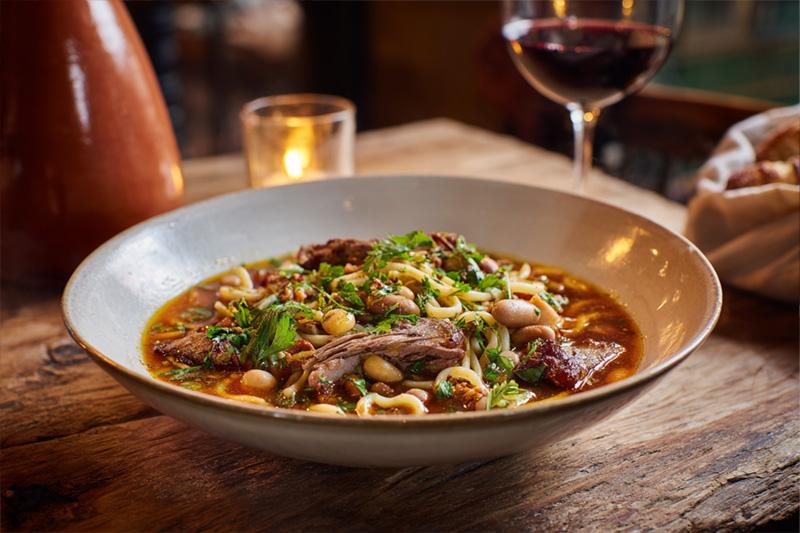
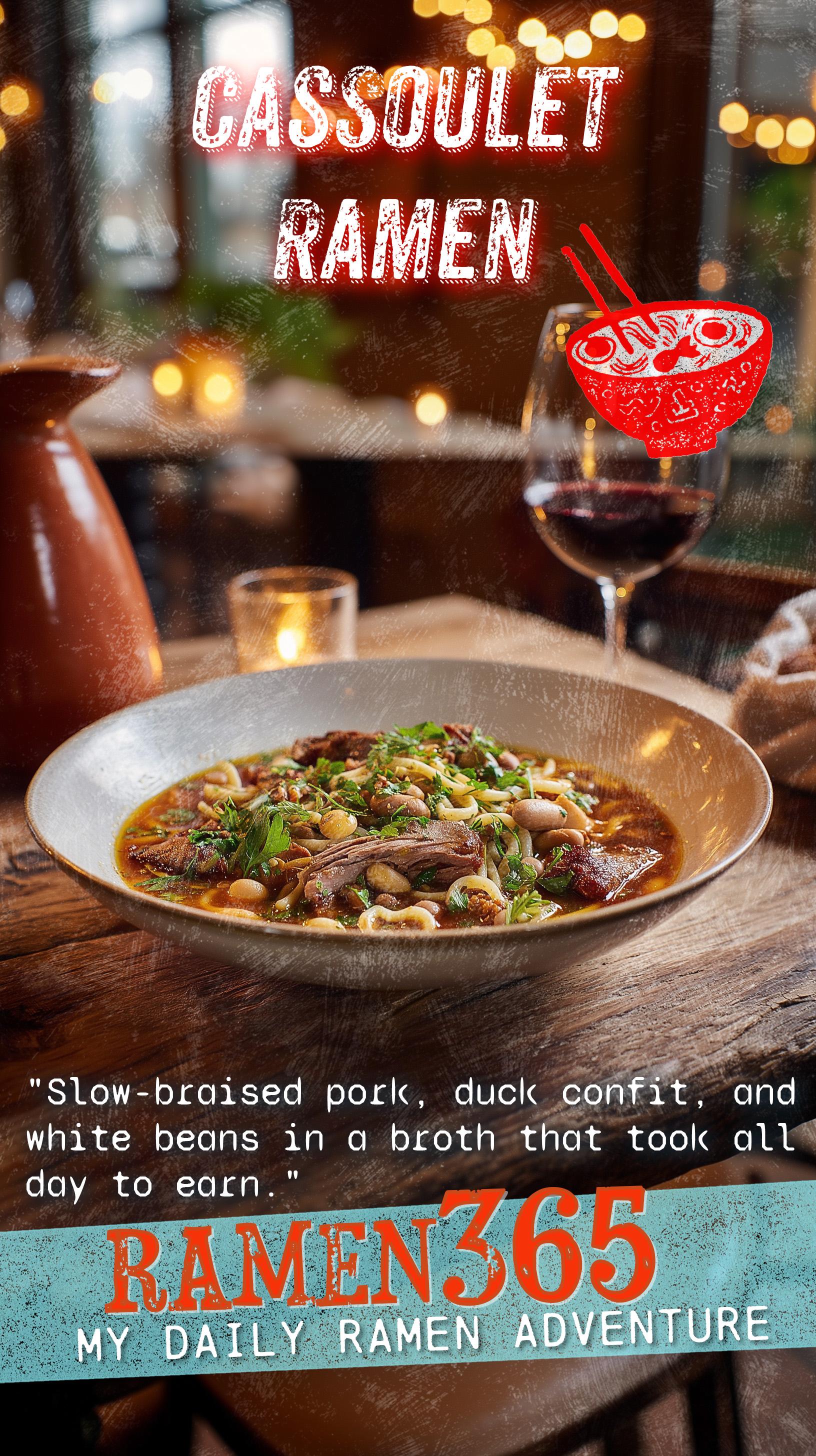
Cassoulet is the kind of dish that French people argue about the way Americans argue about barbecue, which is to say with complete certainty that their version is correct and everyone else's is a charming but mistaken interpretation. The original is from the Languedoc region, and depending on which town you ask, it contains confit duck, Toulouse sausage, pork, or some combination of all three, plus white beans and a bread crust that forms over hours in the oven. This version keeps the beans, the duck, the pork, and the long braise, and swaps the crust for ramen noodles, which is something a French grandmother would describe as a crime but which actually works very well. The broth becomes this silky, fat-enriched thing that clings to the noodles in a way that a bread crust never could. It takes time, and that's the honest part of this recipe: cassoulet does not pretend to be a weeknight dinner and neither does this. Give it a Sunday afternoon and a decent bottle of wine for cooking purposes, and it will give back something worth the trouble.
White beans hold the fat—Toulouse sausage meets the bowl—France approves nothing
Let Me Tell You...
Cassoulet is one of those dishes that is technically achievable by a home cook but designed in a way that makes you feel like it is actively trying to humiliate you while you do it.
It takes hours, requires three different proteins, and produces enough to feed people for days, which feels excessive until you're eating it and then it feels like the only reasonable portion size.
I made it properly once, with duck confit from a jar that cost more than I expected and Toulouse sausage from a specialty butcher who explained its provenance with the solemnity of a man discussing inheritance law, and I stood there nodding like I understood what he was saying.
The braise needs two unattended hours of low heat and that is just the reality of the recipe, not a suggestion.
The ramen came in because I was looking at the finished cassoulet and thinking about what it was missing, which sounds insane when you look at what's in the pot, but the answer was a delivery mechanism that actually gets into the broth.
The traditional bread crust sits on top and absorbs from above, but ramen noodles go inside the bowl and soak from every direction, and once you've eaten cassoulet with noodles tangled through the beans and duck and pork you will find it very difficult to go back to bread.
The broth by this point has been enriched by three different animal fats and reduced into something that coats the back of a spoon, which is a technical phrase that means it tastes incredible in a way that takes most of a day to achieve.
Those bits are pure flavor and you paid for them in time and spatula effort, so don't leave them behind.
I've served this to French people twice and gotten two different reactions.
The first was a quiet inspection of the bowl followed by the word "bien," which I understood was a compliment in the way that a 6 out of 10 from a very demanding teacher is actually a 10 out of 10.
The second was a long explanation of how cassoulet from Castelnaudary is different from cassoulet from Carcassonne, which I listened to carefully while eating three bowls and nodding, and which I respected completely even though I retained none of it.
The ramen element was noted but not commented upon directly, which in French is a recognized form of approval.
Fine shreds disappear into the broth; you want distinct chunks with presence in the bowl.
The thing is, cassoulet is not a recipe that pretends to be convenient, and making a noodle version doesn't change that fundamental truth.
This takes the better part of an afternoon and uses every large pot you own, and when it's done you'll be eating it for two days and feeling genuinely fine about that.
It's French peasant food built for winter and long conversations and not caring what time it is, which maps onto ramen more naturally than you'd think, because both are broths you build slowly and eat immediately, and both reward the kind of patience that most Tuesday nights simply do not allow.
Ingredients
- 1 lb bone-in pork shoulder, cut into 2-inch chunks
- 2 duck legs (about 1.5 lbs total), trimmed of excess surface fat
- 8 oz Toulouse sausage or garlic pork sausage, cut into 1-inch rounds
- 1 can (15 oz) cannellini beans, drained and rinsed
- 1 can (14.5 oz) crushed tomatoes
- 4 cups low-sodium chicken broth
- 1 medium yellow onion, diced
- 4 garlic cloves, minced
- 2 medium carrots, peeled and cut into 1-inch rounds
- 2 celery stalks, thinly sliced
- 2 tablespoons tomato paste
- 1/2 cup dry white wine (such as Sauvignon Blanc or Muscadet)
- 3 sprigs fresh thyme
- 2 bay leaves
- 1 tablespoon duck fat or olive oil
- 12 oz dried ramen noodles (3 bricks, seasoning packets discarded)
- 1/4 cup fresh flat-leaf parsley, roughly chopped, for serving
- Kosher salt and freshly ground black pepper, to taste
Preparation
- Pat the pork shoulder chunks and duck legs completely dry with paper towels. Season all sides generously with kosher salt and freshly ground black pepper.
- Heat the duck fat or olive oil in a large Dutch oven over medium-high heat until shimmering. Working in batches without crowding, sear the pork shoulder pieces until deeply browned on two sides, about 4-5 minutes per side. Transfer to a plate. Add the duck legs skin-side down and sear until the skin is golden and crispy, about 6-7 minutes. Flip and cook 2 more minutes. Transfer to the plate.
- Add the sausage rounds to the pot and cook, turning occasionally, until browned on most sides, about 4-5 minutes. Transfer to the plate with the other meats.
- Reduce heat to medium. Add the diced onion, carrots, and celery to the pot. Cook, scraping up any browned bits from the bottom, until the onion is softened and translucent, about 5-6 minutes. Add the minced garlic and tomato paste, stir to combine, and cook 2 more minutes until the tomato paste darkens slightly.
- Pour in the white wine and stir, scraping up any remaining browned bits. Cook until the wine reduces by half, about 3 minutes. Add the crushed tomatoes, chicken broth, thyme sprigs, and bay leaves. Stir to combine.
- Return the seared pork shoulder, duck legs, and sausage to the pot, nestling them into the liquid. Bring to a boil, then reduce heat to the lowest setting. Cover and simmer gently for 1 hour 45 minutes, until the pork shoulder yields easily to a fork.
- Remove the duck legs from the pot. When cool enough to handle, pull the meat from the bones in large shreds, discarding the bones. Return the shredded duck meat to the pot. Remove and discard the thyme sprigs and bay leaves.
- Stir in the drained cannellini beans. Continue cooking uncovered for 20-25 minutes, until the broth has thickened slightly and the beans are heated through. Taste and adjust seasoning with salt and pepper.
- While the beans finish, bring a large pot of salted water to a boil. Cook the ramen noodles 2-3 minutes until just tender. Drain well.
- Divide the cooked noodles among deep bowls. Ladle the broth generously over the noodles, ensuring each bowl has portions of pork shoulder, duck, sausage, beans, and vegetables. Scatter fresh parsley over each bowl and serve immediately.