
Ethiopian Beef Tibs Ramen
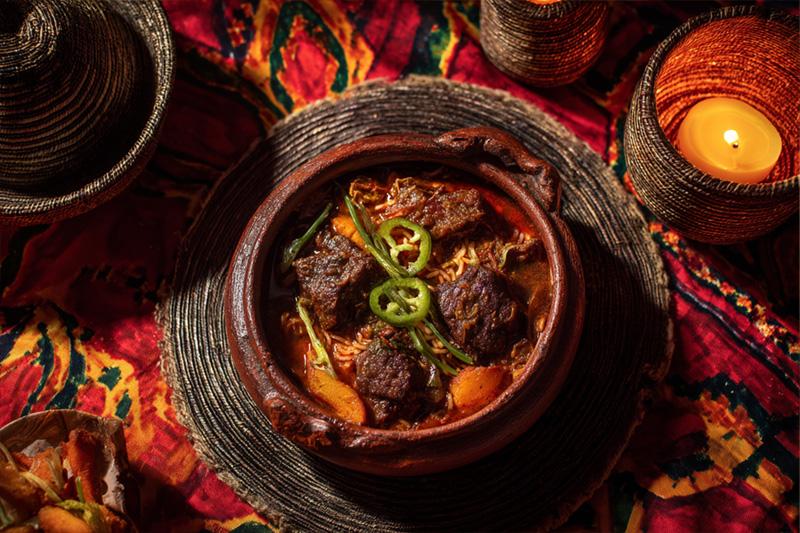
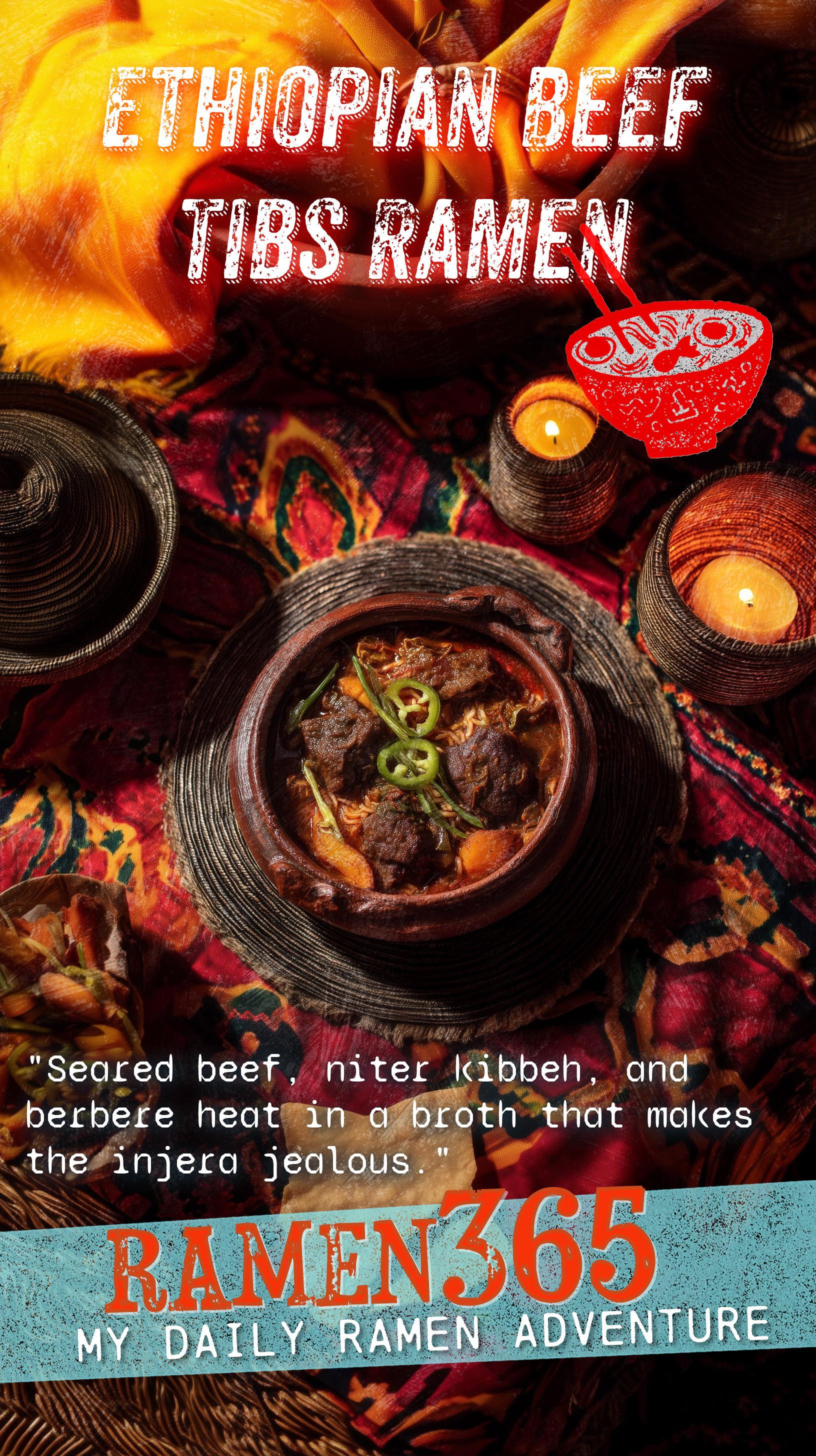
Tibs is Ethiopian stir-fried meat, and if you've never had it, the short version is that it's one of the best things you can do to a piece of beef. You sear it fast in niter kibbeh, which is this spiced clarified butter that smells like nothing else on earth, and then you hit it with berbere and let everything get dark and a little smoky and completely insane. Most people eat it with injera, the spongy sourdough flatbread that acts as both plate and utensil. This version swaps in ramen noodles, which sounds weird until you taste the broth that forms in the pan, all that rendered fat and spice and beef juice. Then it doesn't sound weird at all. It sounds inevitable.
Niter kibbeh browns—berbere coats every edge—the pan smells like home
Let Me Tell You...
I didn't grow up eating Ethiopian food, which means I came to it late and with the specific enthusiasm of someone who feels like they've been missing out, which I had been.
Tibs was the dish that did it.
There's something about the combination of niter kibbeh and berbere that doesn't politely introduce itself.
It arrives.
You smell it from outside the restaurant and then you're just waiting for the food to catch up to what your nose already knows.
Substituting plain butter works but you lose half the personality of the dish.
The key to tibs is the sear.
You want the beef to be going into a screaming-hot pan, not a warm one, because you want char on the outside before the inside overcooks.
This is a stir-fry, not a braise, and the difference matters.
The noodles get added to a broth built from the drippings and extra stock, so all that spiced fat from the pan ends up in the bowl, which is exactly where you want it.
5-inch cubes so everything sears at the same rate.
Smaller pieces steam instead of sear.
Berbere is one of those spice blends that varies enormously depending on who made it.
Store-bought versions are usually milder and sweeter.
If you can get it from an Ethiopian grocery, do that.
If you're making your own, lean into the fenugreek and cardamom more than you think you need to, because those are the notes that make berbere actually taste like berbere and not just generic chili powder.
It blooms the spices and deepens the color of the broth.
The bowl ends up being this thing that is fully Ethiopian in spirit but completely flexible in form, which is maybe what all fusion dishes are aspiring to and most of them don't achieve.
This one does, and it does it by not apologizing for any of its ingredients.
Ingredients
- 8 ounces dried ramen noodles (2 bricks, seasoning packets discarded)
- 1.25 lbs beef sirloin or ribeye, cut into 1.5-inch cubes
- 3 tablespoons niter kibbeh (Ethiopian spiced clarified butter) or unsalted butter
- 2 tablespoons berbere spice blend
- 1 medium red onion, sliced into half-moons
- 1 green bell pepper, sliced thin
- 1 jalapeño, sliced thin
- 4 cloves garlic, minced
- 3 cups low-sodium beef broth
- 1 cup water
- 2 tablespoons tomato paste
- 1 tablespoon neutral oil (for searing)
- Kosher salt and black pepper, to taste
Preparation
- Pat beef cubes dry with paper towels and season generously with salt and pepper. Heat neutral oil in a large cast iron skillet or heavy-bottomed pan over high heat until just smoking.
- Add beef in a single layer without crowding, working in batches if needed. Sear for 2 minutes per side until deeply browned. Transfer to a plate and set aside.
- Reduce heat to medium-high. Add niter kibbeh to the same pan. Once melted, add berbere and toast for 30 seconds, stirring, until fragrant. Add red onion, bell pepper, and jalapeño and cook for 4-5 minutes until softened.
- Add garlic and cook for 1 more minute. Stir in tomato paste and cook for 2 minutes, pressing it into the vegetables.
- Pour in beef broth and water, scraping up any browned bits from the bottom of the pan. Return seared beef to the pan. Bring to a simmer and cook for 8-10 minutes until the broth is slightly reduced and the beef is warmed through. Taste and adjust salt.
- Bring a separate pot of salted water to a boil. Cook ramen noodles for 2-3 minutes until just tender. Drain and divide between bowls.
- Ladle beef, vegetables, and broth over noodles. Add optional toppings and serve immediately.