
Fermented Soybean Paste Ramen
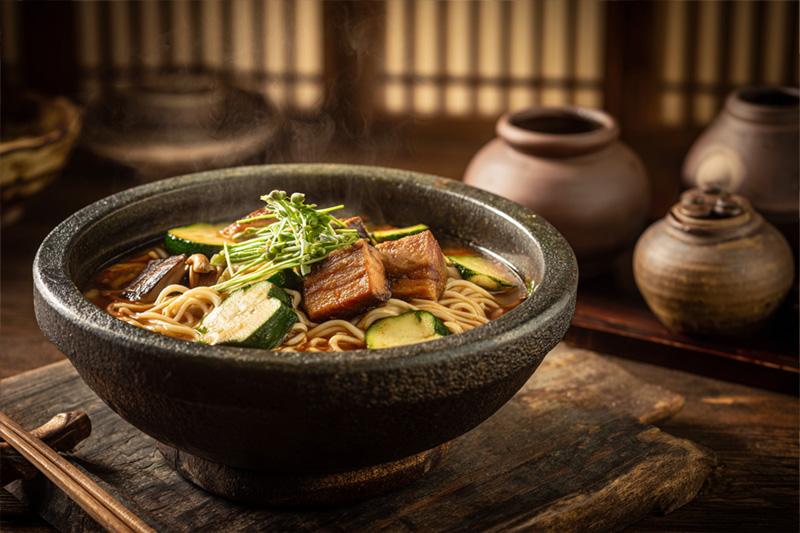
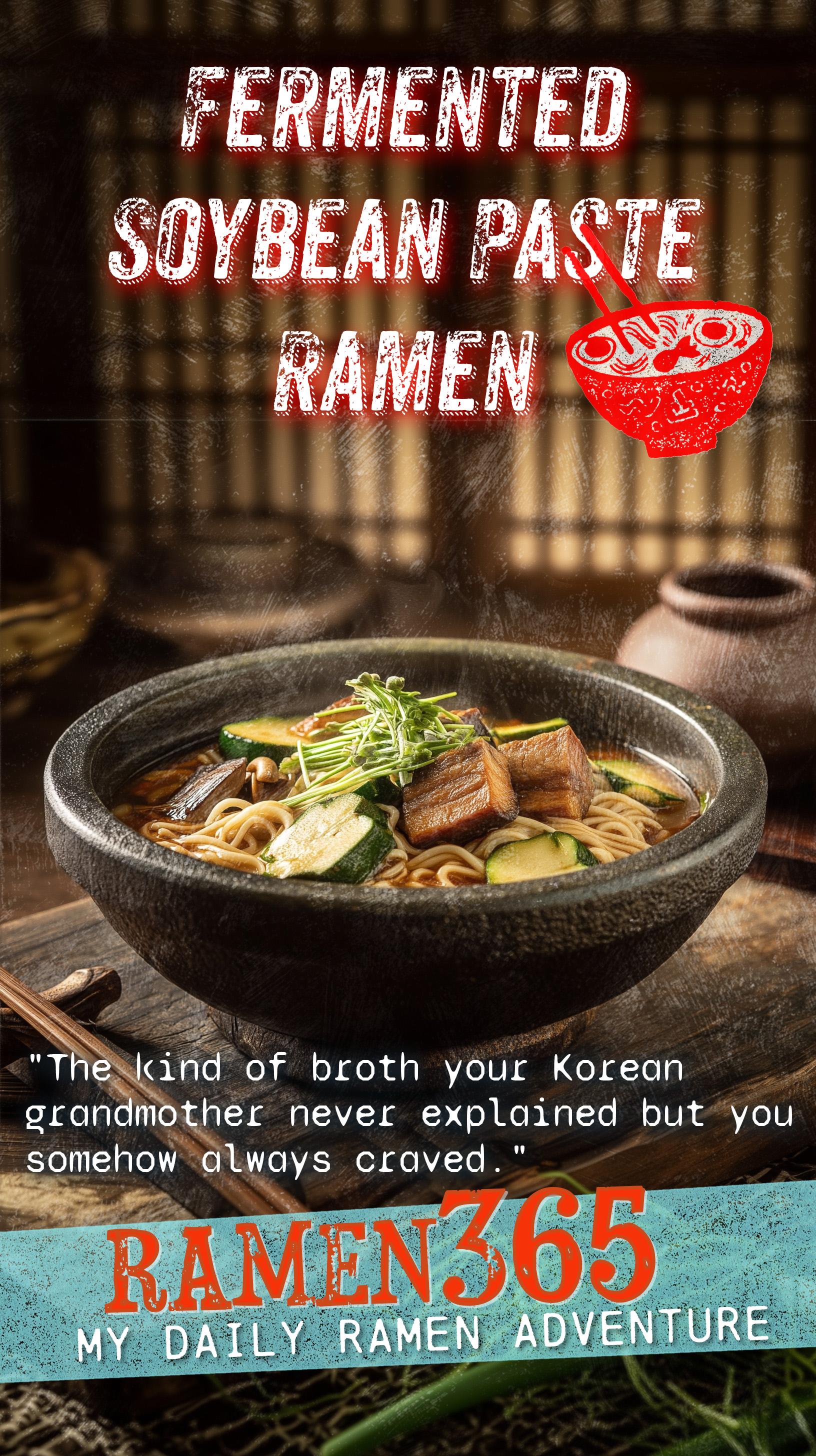
There's this thing about doenjang that no one tells you until you're standing over a pot that smells like it's been fermenting in someone's basement for three hundred years. Which, technically, is kind of the point. The paste is pungent in a way that polite food writing usually glosses over, but once it hits heat and fat, it transforms into something so rounded and deep you start to wonder why you've been eating anything else. Doenjang jjigae is Korea's answer to everything: bad days, cold mornings, the specific hunger that sets in after you've been ignoring your feelings for too long. This version leans into ramen because noodles are a more honest delivery system than rice, and the broth gets into all the coils and stays there. The pork belly renders into the soup and the tofu absorbs everything around it, and by the time it's in front of you, the whole thing smells like comfort in a language you don't speak but somehow understand.
Dark paste wakes the bowl—Pork and time make something right—Doenjang never lies
Let Me Tell You...
The first time I ate doenjang jjigae from an actual Korean grandmother's pot and not a restaurant bowl, I made the mistake of telling her it tasted like soy sauce.
She looked at me the way someone looks at a person who has just confused a cathedral with a bus shelter.
Doenjang is not soy sauce the way an aged Bordeaux is not grape juice, and the distinction matters enough that she physically walked me to the fermentation pots on her back porch to make her point, which I appreciated even though it was cold outside.
Bloom it in hot fat first, or the paste stays raw and sharp instead of opening up into something deep and useful.
Doenjang paste smells aggressive, there's no way around it, and I want you to respect that before you open the container in a small apartment kitchen with limited ventilation and a curious roommate.
The smell fades and deepens when it hits heat, which is the thing about fermented foods in general: they're doing something and they require a little trust. The pork belly goes in first, browns up in its own fat, and then the paste gets stirred into the rendered fat until it softens and turns a shade darker, and the kitchen begins to smell less alarming and more like something you would actually want to eat, which happens faster than you'd expect.
The fat it releases becomes the cooking medium for the doenjang, and a pale sear is a missed opportunity that you'll taste.
I added ramen noodles to this because I find rice somewhat passive in this context and noodles seem to actually participate.
The tofu takes on the broth like a sponge and the zucchini gets just soft enough without collapsing, and all of it lands in bowls that look brown and a little unassuming until you taste the first spoonful and realize the broth is doing something genuinely interesting on every part of your palate.
This is the kind of thing that people who say they don't like Korean food haven't tried yet, but I try not to be smug about it because that's not a good look.
Silken falls apart in the simmering broth and essentially disappears, which is a waste.
Firm holds its shape and actually absorbs the doenjang flavor.
Eat this with kkakdugi on the side if you can find it, because the cold, crunchy, pickled radish against the hot, deep broth is the kind of contrast that makes you want to keep eating even after you're technically done.
The paste does everything the broth needs without requiring you to build some elaborate stock from scratch, which feels like a very efficient form of ancient wisdom that got quietly preserved in ceramic jars on somebody's back porch.
I keep a tub of doenjang in my fridge now and I use it constantly, and I have never once had to explain it to anyone who's tasted it, which tells you more about the paste than I ever could.
Ingredients
- 8 oz pork belly, cut into 1-inch pieces
- 3 tablespoons doenjang (Korean fermented soybean paste)
- 4 cups anchovy-kelp broth (or low-sodium chicken broth)
- 1 cup firm tofu, cut into 1-inch cubes
- 1 medium zucchini, halved lengthwise and sliced into half-moons
- 4 oz fresh shiitake mushrooms, stems discarded, caps sliced
- 4 garlic cloves, minced
- 1 tablespoon gochugaru (Korean red pepper flakes)
- 1 teaspoon toasted sesame oil
- 2 teaspoons low-sodium soy sauce
- 8 oz dried ramen noodles (2 bricks, seasoning packets discarded)
- 2 green onions, thinly sliced (plus more for serving)
- Kosher salt, to taste
Preparation
- Make the anchovy-kelp broth if starting from scratch: combine 4 cups cold water, 5 dried anchovies (heads and guts removed), and a 4-inch piece of dried kelp in a medium saucepan. Bring to a simmer over medium heat, cook 10 minutes, then discard the solids and set the broth aside. Skip this step if using store-bought low-sodium chicken broth.
- Heat a medium Dutch oven or heavy pot over medium-high heat. Add the pork belly pieces and cook, turning occasionally, until browned on most sides, about 6-8 minutes. Remove excess rendered fat if needed, leaving about 1 tablespoon in the pot.
- Add the minced garlic and gochugaru to the pot and stir for 30 seconds until fragrant. Add the doenjang paste and stir to coat the pork. Cook 1-2 minutes, stirring frequently, until the paste darkens slightly and the fat turns deep orange.
- Pour in the anchovy-kelp broth and soy sauce. Bring to a boil, then reduce heat to a low simmer. Add the zucchini and shiitake mushrooms. Simmer uncovered for 15 minutes until the pork is tender and the vegetables are cooked through.
- Add the firm tofu cubes and stir gently. Simmer 3-4 more minutes until the tofu is heated through. Stir in the sesame oil. Taste and adjust seasoning with kosher salt if needed.
- While the stew finishes, bring a separate large pot of salted water to a boil. Cook the ramen noodles 2-3 minutes until just tender, then drain and rinse briefly under cool water.
- Divide the cooked noodles between bowls. Ladle the doenjang broth over the noodles, distributing pork, tofu, zucchini, and mushrooms evenly. Top with sliced green onions and serve immediately.