
Lemongrass Tom Kha Ramen
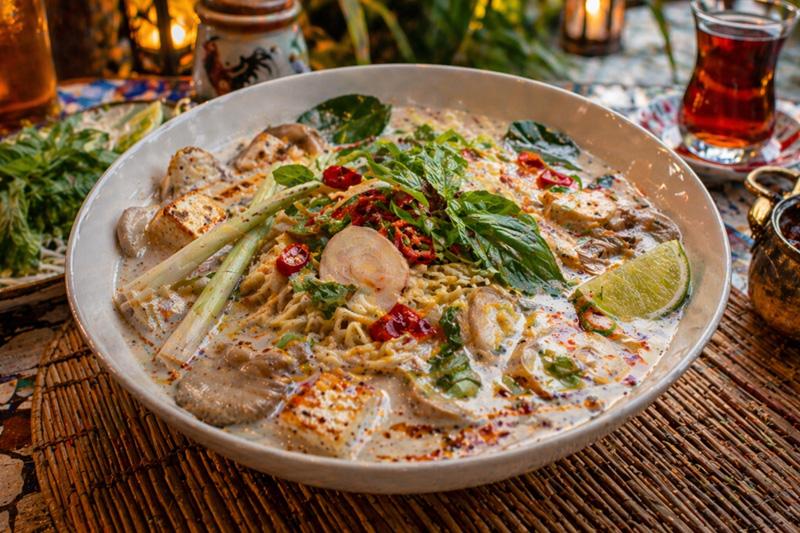
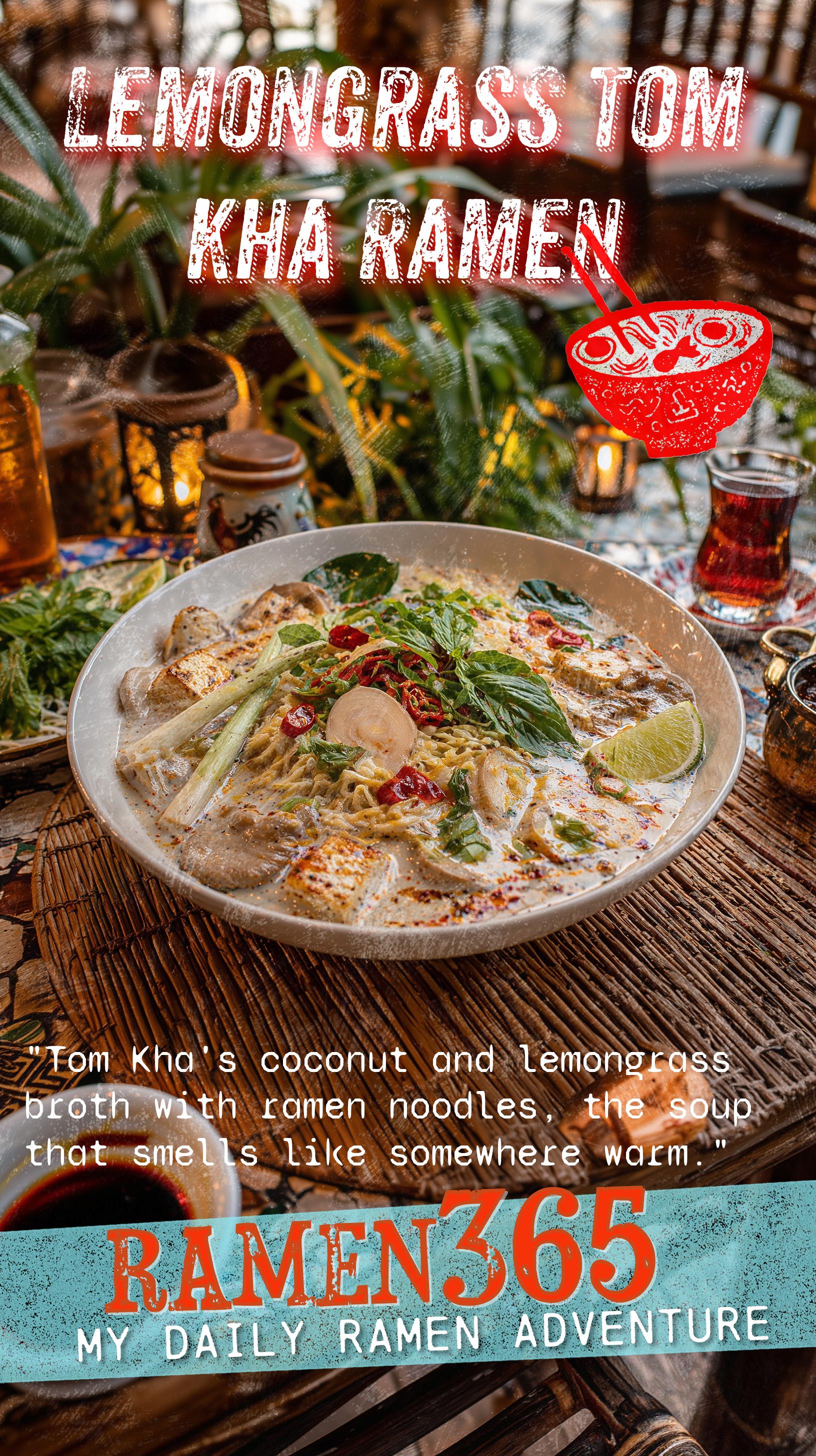
Tom Kha Gai is the Thai coconut soup that outsells Tom Yum at Thai restaurants outside of Thailand, and it outsells it because the coconut milk softens the galangal and lemongrass aromatics into something approachable without making them any less present. It's one of the most fragrant soups in any culinary tradition, the kind of thing where the smell arrives before the bowl does and makes the bowl better in advance. This version omits the chicken and uses mushrooms and tofu, which keeps it vegan and also shifts the focus to the broth, where it belongs. The ramen noodles go in last and absorb the coconut broth in a way that makes them taste like they were always meant for this soup.
Lemongrass uncoils—galangal bends the steam sideways—coconut holds all
Let Me Tell You...
The aromatics in Tom Kha are not gentle.
Lemongrass, galangal, and kaffir lime leaves are all doing something assertive: the lemongrass is bright and citrusy, the galangal is peppery and medicinal in the best possible way, and the kaffir lime leaves add a floral quality that the lime juice at the end echoes and amplifies.
None of these aromatics are meant to be eaten.
They're in the broth to give it everything they have and then be left behind, which is a useful model for a lot of things that aren't soup.
Breaking the cell walls releases the aromatic oils that make the broth what it is.
Galangal is not ginger.
They're related and they look similar and you can substitute one for the other if you have no other option, but the flavor is different enough that the dish changes character.
Galangal has a more medicinal, earthy quality and a blue note that ginger doesn't have. Fresh galangal is available at most Asian grocery stores and is worth using when you can find it.
Dried galangal powder works in a pinch but loses most of the freshness.
Let them float in the bowl as visual signals of what went into the broth, but make clear they're not for eating.
Lemongrass is too fibrous to chew.
The fish sauce is the ingredient that completes Tom Kha and also the ingredient most likely to be omitted by someone making this vegan, which is understandable but regrettable.
Good vegan fish sauce exists, made from fermented seaweed, and it's worth finding.
The bowl needs the funk and the salt and the depth that fermented fish provides, and without it the soup tastes flat and slightly sweet in a way that coconut milk alone produces when left unchecked.
Both are volatile and lose character with prolonged cooking.
This is the sixty-first and final recipe in this collection, and it ends with a soup that smells like it arrived from somewhere specific.
Thailand, obviously, but also somewhere broader than that, the place where cooking knows what it's doing and invites you to sit down and stop rushing.
Ingredients
- 8 ounces dried ramen noodles (2 bricks, seasoning packets discarded)
- 1 can (13.5 oz) full-fat coconut milk
- 3 cups low-sodium vegetable broth
- 2 stalks lemongrass, bruised and cut into 3-inch pieces
- 6 slices fresh galangal (or ginger, as substitute)
- 6 kaffir lime leaves, bruised and torn
- 2 bird's eye chilies, lightly bruised
- 8 ounces oyster or shiitake mushrooms, cleaned and torn
- 7 ounces firm tofu, cut into 1-inch cubes
- 2 tablespoons fish sauce (or vegan fish sauce)
- 2 tablespoons fresh lime juice
- 1 teaspoon sugar or palm sugar
- Fresh Thai basil, for serving
- Lime wedges, for serving
Preparation
- Combine coconut milk, vegetable broth, lemongrass, galangal, kaffir lime leaves, and bird's eye chilies in a large saucepan over medium-high heat. Bring to a gentle simmer.
- Simmer for 10 minutes to infuse the aromatics into the broth. Don't strain.
- Add mushrooms and tofu. Simmer for 5 minutes until mushrooms are tender.
- Remove from heat. Stir in fish sauce, lime juice, and sugar. Taste and adjust. The broth should be creamy, aromatic, slightly sour, and lightly sweet.
- Bring a separate pot of salted water to a boil. Cook ramen noodles for 2-3 minutes until just tender. Drain and divide between serving bowls.
- Ladle coconut broth, mushrooms, and tofu over noodles, including the aromatic pieces as visual elements. Top with Thai basil and a lime wedge. Serve immediately.