
Lion's Mane Ramen
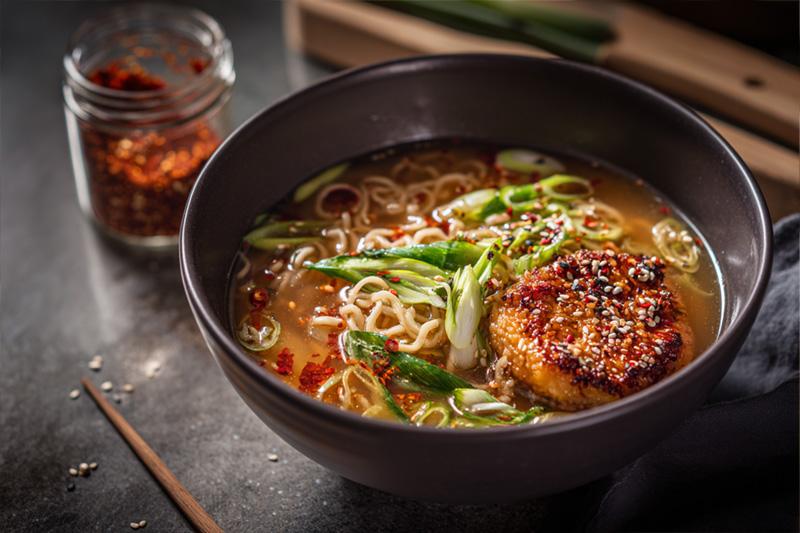
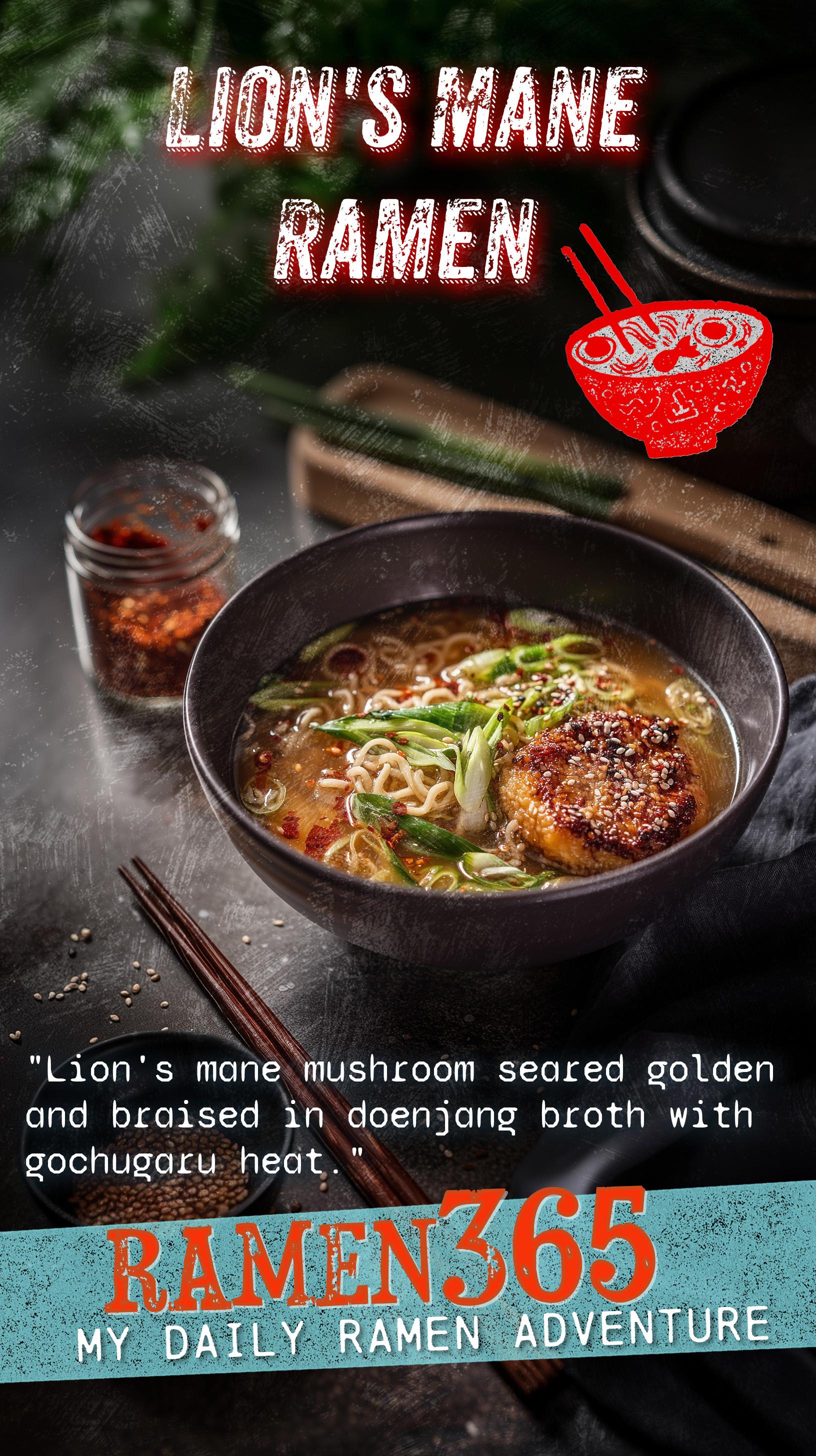
Lion's mane mushroom looks like a small cloud that got lost and ended up in your grocery bag, and if you've never cooked with it, the texture is going to genuinely surprise you. It's meaty in a way that most vegetables aren't, with a slight seafood quality that shows up especially when it hits a hot pan and starts developing color. Korean cooking has a strong tradition of making mushrooms the whole point, not just a supporting ingredient, and doenjang, the fermented soybean paste that anchors this broth, gives lion's mane the depth it deserves. This bowl is vegan but it doesn't perform veganism at you. It's just a really good bowl of ramen that happens to not have any meat in it.
White tendrils sear gold—doenjang pulls the broth dark—meaty without meat
Let Me Tell You...
The first thing lion's mane mushroom does in a hot pan is nothing, and that's the part that gets you.
It sits there releasing its moisture and you think nothing is happening, and then suddenly the water is gone and the pan is screaming and the mushroom starts taking on color like it's been waiting this whole time, which it has.
All mushrooms do this but lion's mane does it with a particular drama because the surface area is enormous and the browning happens in these concentric waves across the fronds.
You want a crust to form before you start poking at it.
Doenjang is to Korean cooking what miso is to Japanese, which is to say it's fermented, deeply savory, and non-negotiable for a certain category of dish.
But it's also not interchangeable with Japanese miso, because the fermentation process is different and the flavor is rougher, earthier, more assertive.
It can handle the lion's mane because lion's mane can handle it.
This is a dish where both the mushroom and the paste want to be in charge, and they work it out.
It's salty and strong and easy to overshoot.
The gochugaru goes in after the doenjang and it turns the broth this brick-red color that looks more intimidating than it tastes.
The heat level is moderate, present but not punishing, and it creates a warmth that builds slowly as you eat.
If you want more fire, more gochugaru.
If you want less, add a tablespoon of rice vinegar at the end to balance things out and cool the whole bowl down a couple degrees.
Don't skip it.
You eat this bowl and realize at some point that you haven't thought about meat once, which is the highest compliment a vegan dish can receive.
The mushroom did the job.
The broth did the job.
You didn't miss anything except maybe the second bowl you should have made.
Ingredients
- 8 ounces dried ramen noodles (2 bricks, seasoning packets discarded)
- 14 ounces fresh lion's mane mushroom, torn or sliced into 1-inch pieces
- 1.5 tablespoons doenjang (Korean fermented soybean paste)
- 1 tablespoon gochugaru (Korean red pepper flakes)
- 4 cups low-sodium vegetable broth
- 1 cup water
- 4 cloves garlic, minced
- 1 teaspoon fresh ginger, grated
- 1 tablespoon low-sodium soy sauce
- 1 teaspoon toasted sesame oil
- 1 tablespoon neutral oil (for searing)
- 1 tablespoon rice vinegar
- 3 green onions, sliced thin (white and green parts)
- Kosher salt, to taste
Preparation
- Heat neutral oil in a large pot or Dutch oven over medium-high heat. Add lion's mane mushroom pieces in a single layer (work in batches if needed). Let sear without moving for 3-4 minutes until golden brown on the bottom. Flip and sear 2 more minutes on the other side. Transfer to a plate.
- Reduce heat to medium. Add garlic and ginger to the pot and cook for 1 minute, stirring constantly, until fragrant.
- Add doenjang and gochugaru. Stir into the garlic mixture and cook for 1 minute. The paste will look dry at first, which is fine.
- Pour in vegetable broth and water. Add soy sauce and stir well to dissolve the doenjang. Bring to a boil, then reduce heat to medium-low. Simmer for 10 minutes.
- Return seared mushroom to the broth. Simmer for 5 more minutes. Stir in rice vinegar and sesame oil. Taste and adjust salt.
- Bring a separate pot of salted water to a boil. Cook ramen noodles for 2-3 minutes until just tender. Drain and divide between serving bowls.
- Ladle broth and mushroom pieces over noodles. Top with sliced green onions and any optional items. Serve immediately.