
Mahi Mahi Ceviche Ramen
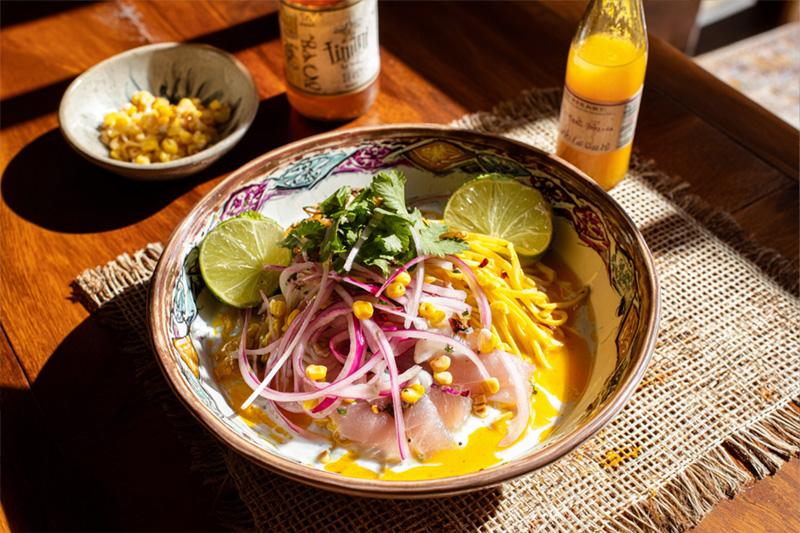
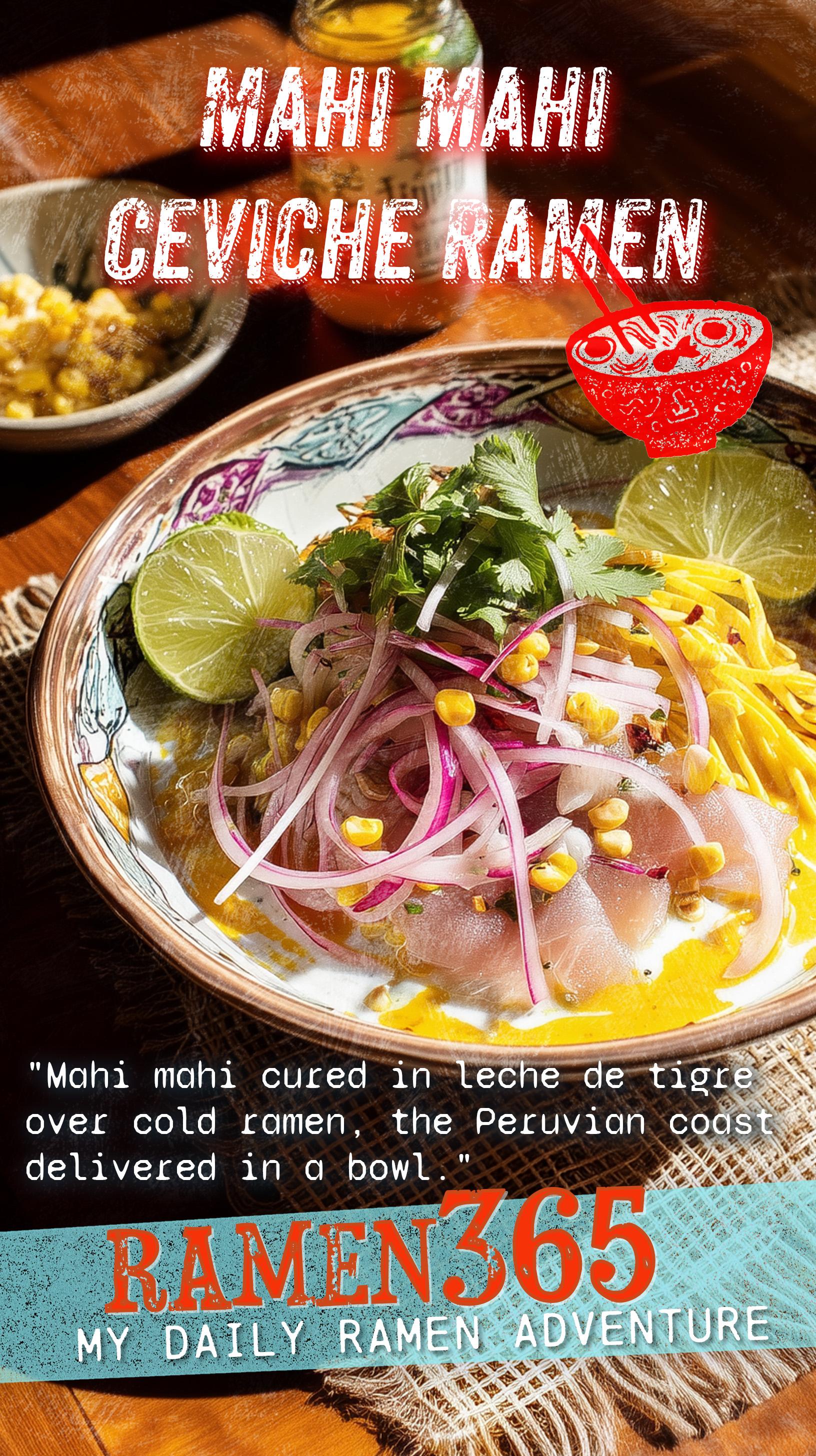
Ceviche is one of the great debates of South American food culture, with Peru and Ecuador each claiming the origin and Chile entering quietly from the side. The Peruvian version wins the international argument partly on merit and partly because Peru produced leche de tigre, the tiger's milk marinade that is simultaneously a sauce, a cure, and a shot you're encouraged to drink from the bowl when the fish is finished. This version takes the ceviche and serves it over cold ramen noodles, which sounds like the invention of someone who couldn't decide between two foods and wisely chose not to. The noodles absorb the leche de tigre and become something neither noodles nor ceviche alone can produce.
Lime pulls the fish white—leche de tigre wakes the bowl—cold and alive at once
Let Me Tell You...
The first thing you have to accept about ceviche is that it is cured, not cooked, and the lime juice is doing all the work that heat would normally do.
The acid denatures the protein in the fish, turning it opaque and firm on the outside while the interior stays silky and almost raw in texture.
This process takes about fifteen to twenty minutes for thin-cut pieces of firm white fish like mahi mahi, and the margin between properly cured and overcooked-by-acid is about ten minutes on either side, which means you should set a timer and taste as you go.
Inconsistent sizing means some pieces overcure while others are still raw.
Consistency is the technique.
Leche de tigre is made by blending lime juice with fish trimmings, aji amarillo, garlic, ginger, and cilantro stems, then straining for a smooth, intensely flavored liquid that is the true engine of Peruvian ceviche.
The version here is simplified to avoid requiring a blender and fish trimmings, using a lime-heavy vinaigrette built with aji amarillo paste and fresh ginger that captures most of the flavor without the additional step.
The difference is real but the bowl still tastes fully Peruvian.
Bottled lime juice is pasteurized and lacks the volatile acids that cure fish properly.
This is the one rule that is not negotiable.
The cold ramen noodles provide the starch element that ceviche is usually missing, the role that cancha (toasted corn) or choclo partially fills in traditional Peruvian service but doesn't fully satisfy as a base.
The noodles absorb the leche de tigre and give the whole bowl the body it needs to be a meal rather than an appetizer.
This prevents them from clumping while also keeping them from absorbing the dressing too quickly.
The bowl should be eaten immediately.
Ceviche waits for no one.
Ingredients
- 8 ounces dried ramen noodles (2 bricks, seasoning packets discarded)
- 1 lb fresh mahi mahi fillets, skin removed, cut into 3/4-inch cubes
- 1/2 cup freshly squeezed lime juice (from about 6-8 limes), plus extra
- 1/4 cup freshly squeezed lemon juice
- 1 tablespoon aji amarillo paste
- 1 teaspoon fresh ginger, finely grated
- 1 clove garlic, minced to a paste
- 1/2 teaspoon kosher salt, plus more to taste
- 1/2 small red onion, thinly sliced into half-moons
- 1 jalapeño or aji limo, thinly sliced
- 1/2 cup fresh cilantro leaves and tender stems
- 1 teaspoon neutral oil (for noodles)
Preparation
- Combine lime juice, lemon juice, aji amarillo paste, grated ginger, garlic paste, and salt in a medium bowl. Whisk until smooth.
- Add mahi mahi cubes to the citrus mixture. Stir to coat all pieces. Let cure for 15-20 minutes at room temperature, stirring gently every 5 minutes. The fish is ready when the exterior is opaque and white but the interior is still slightly translucent. Taste and adjust salt and lime.
- While fish cures, soak sliced red onion in cold salted water for 10 minutes to remove sharpness. Drain and pat dry.
- Cook ramen noodles in boiling salted water for 2-3 minutes until just tender. Drain and rinse under very cold water until completely cold. Toss with neutral oil.
- Divide cold noodles between serving bowls. Spoon ceviche and its leche de tigre over the noodles. Top with soaked red onion, sliced jalapeño, and fresh cilantro. Add optional toppings and serve immediately.