
Mung Bean Ramen
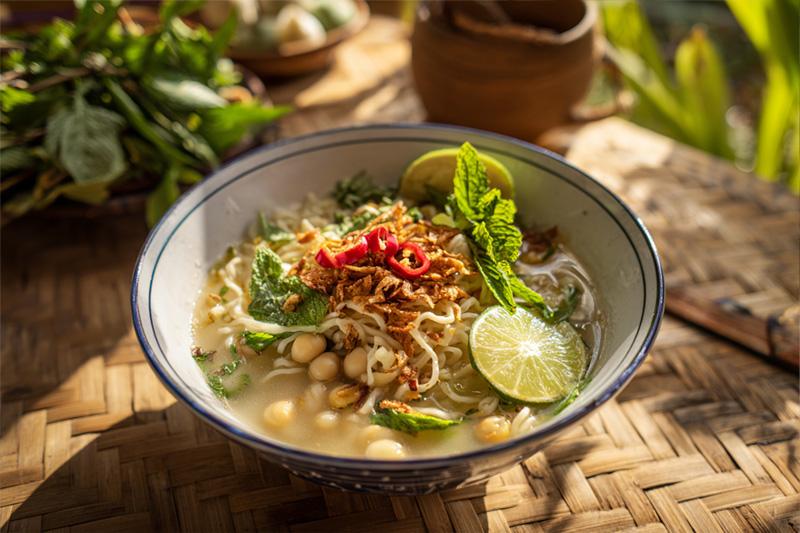
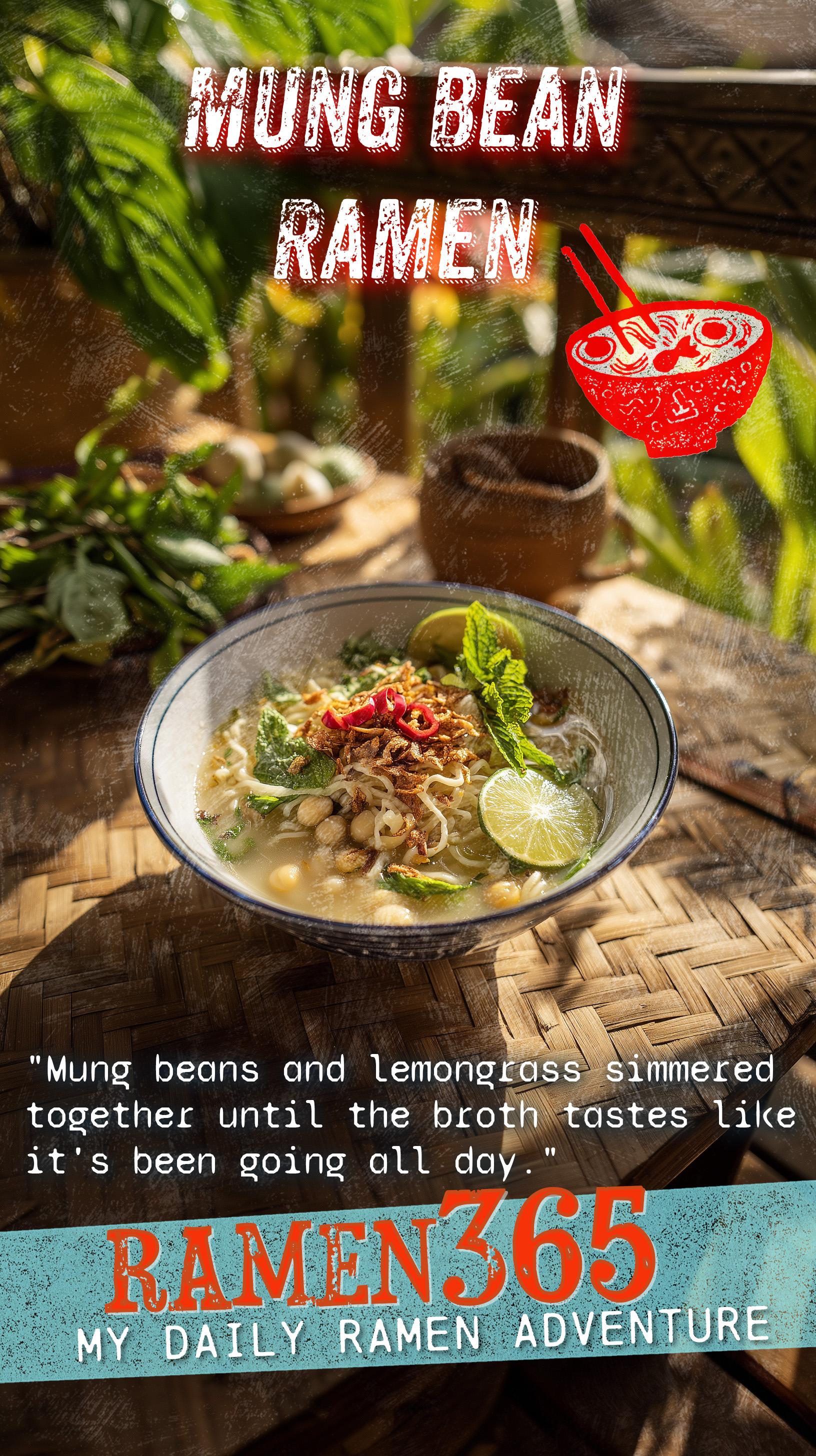
Mung beans are a quiet ingredient. They don't announce themselves the way chickpeas do, they don't have the intensity of lentils, and they don't require soaking or long cooking times the way dried beans normally do. They just get tender and slightly sweet and a little creamy, and they make a broth that tastes like it took much longer than it did. Vietnamese cooking uses mung beans in both savory and sweet preparations, and the savory versions tend to be exactly this kind of thing: simple, clean, fragrant with lemongrass and ginger, and finished with the kind of herb situation that turns a bowl of broth into something you'd order twice. This bowl is fast and genuinely restorative in the way that only simple things can be.
Mung beans go to silk—lemongrass threads through the broth—clean as river rain
Let Me Tell You...
You can tell a lot about a cuisine by what it does when you're sick.
Vietnamese cooking, when you need something restorative, gives you a clear, fragrant broth with herbs and a little rice or noodle and enough ginger to remind your body that it's capable of feeling better.
Mung bean soup in that tradition is comfort before comfort food had a marketing department.
It doesn't look like much in the pot.
Pale green beans in water with lemongrass.
But something happens around the twenty-minute mark when the beans begin to soften and the starch releases and the lemongrass starts to give up its oil into the broth.
Unlike dried beans, split or whole mung beans cook fast without pre-soaking.
The lemongrass needs to be bruised before it goes in, which means hitting it with the back of a knife or a heavy object until the stalk breaks open slightly.
This releases the aromatic oils into the broth.
If you put lemongrass in unbruised, you get almost none of its flavor, which is a waste of an ingredient that is specifically there to make the broth smell like something you want to lean over.
The same principle applies to the ginger: a few slices is all you need but they should be thin and the broth should simmer long enough to pull the heat out of them.
It's too fibrous to eat and it won't improve anyone's experience to find it in their bowl.
Fried shallots are the finishing move that makes the bowl complete.
You can buy them at any Asian grocery store and they keep forever in a jar, and a spoonful on top of this bowl goes from optional to mandatory about three seconds after you taste it.
They add fat and sweetness and crunch in a single ingredient, which is the kind of efficiency that Vietnamese cooking pulls off constantly without making a big deal about it.
They soften in the broth and lose their crunch within a few minutes of contact. This is the bowl for the night you need something and you need it quickly and you need it to be the kind of thing that makes you feel like everything is going to be fine.
That's what mung beans have always been for.
Ingredients
- 8 ounces dried ramen noodles (2 bricks, seasoning packets discarded)
- 1 cup dried whole mung beans, rinsed well
- 5 cups low-sodium vegetable broth
- 2 cups water
- 2 stalks lemongrass, bruised and cut into 3-inch pieces
- 4 slices fresh ginger (about 1/4 inch thick)
- 3 cloves garlic, smashed
- 1 tablespoon low-sodium soy sauce
- 1 teaspoon sesame oil
- 1 teaspoon kosher salt, plus more to taste
- 1/4 teaspoon white pepper
- 3 tablespoons store-bought fried shallots (plus more for serving)
- Fresh Vietnamese mint (rau ram), Thai basil, or regular mint leaves
Preparation
- Combine rinsed mung beans, vegetable broth, water, bruised lemongrass, ginger, smashed garlic, soy sauce, and white pepper in a large pot. Bring to a boil over high heat, then reduce to medium-low.
- Simmer uncovered for 25-30 minutes, stirring occasionally, until mung beans are completely tender and beginning to split. Some beans will dissolve into the broth, thickening it slightly. Remove lemongrass, ginger, and garlic. Stir in sesame oil. Taste and adjust salt.
- Bring a separate pot of salted water to a boil. Cook ramen noodles for 2-3 minutes until just tender. Drain and divide between serving bowls.
- Ladle mung bean broth generously over noodles, making sure to include plenty of softened beans.
- Top with fried shallots and fresh herbs. Add optional toppings and serve immediately with lime wedges on the side.