
Barley Miso Ramen
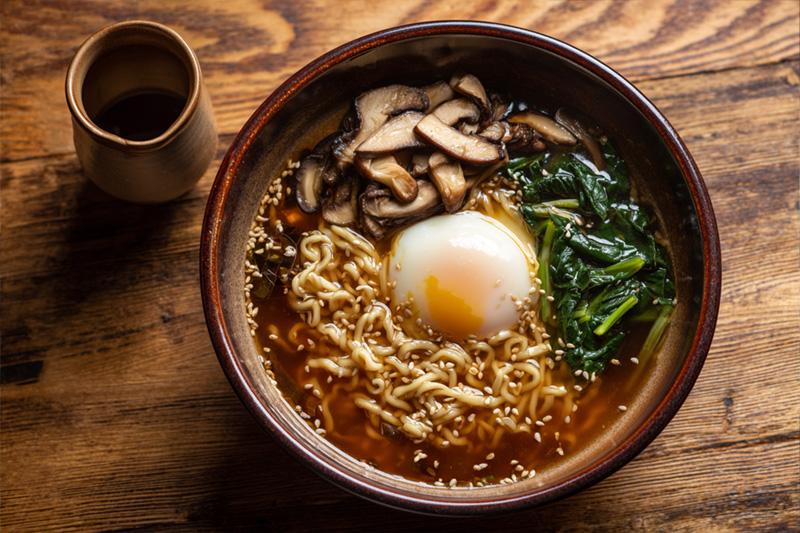
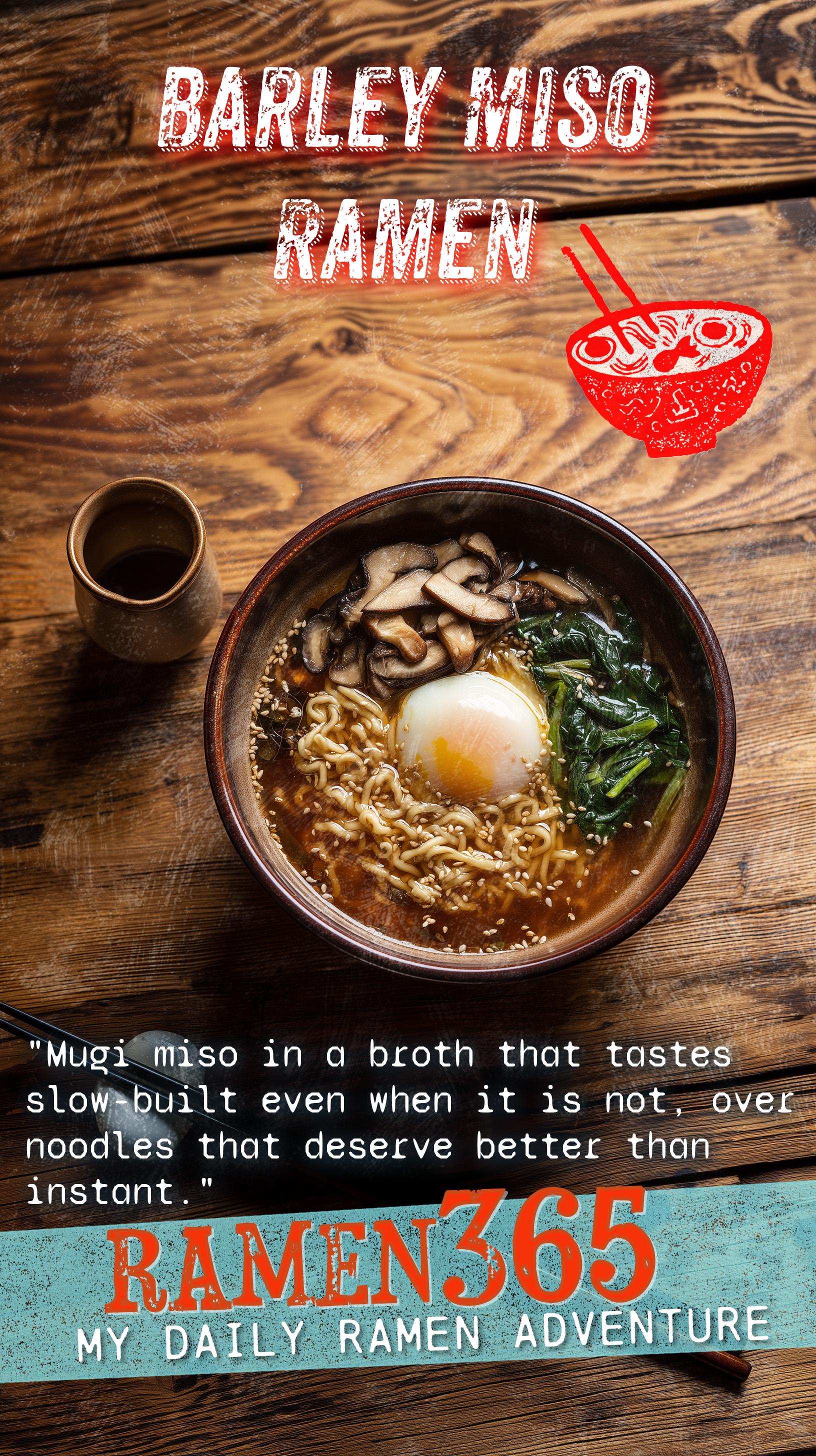
Mugi miso, the barley-based variety, is the one that gets overlooked in favor of the shinier options like white shiro or the more aggressive hatcho. This is a mistake. Mugi miso has a sweetness underneath its earthiness that the others do not, a roundness that comes from the barley fermentation process, and it makes a broth that tastes like something that has been developing flavor for a long time without requiring you to develop it yourself for a long time. A good dashi is all you need under it. The broth comes together in under ten minutes and the rest of the bowl is just arranging things correctly. Mushrooms go in because they belong in anything earthy, soft-boiled egg because it always should, and spinach wilted directly in the hot broth because it takes thirty seconds and tastes better than separately blanched. This is the kind of bowl that exists for days when you want something that feels considered without requiring the effort of something considered.
Mugi miso thins—Barley grain, sweet and dark-edged—Bowl holds winter in
Let Me Tell You...
Mugi miso was the third type of miso I tried, after white and red, and it was the one that made me understand why people argue about miso with the same intensity that other people argue about whiskey or hot sauce.
The barley fermentation gives it something extra: a slight sweetness underneath the salt, a grain character that lingers in the back of the throat, and a color that is a deep amber rather than the pale yellow of shiro or the near-black of hatcho.
When you dissolve it into hot dashi the broth turns a specific shade of burnt honey and smells like the inside of a Japanese grocery store, which is one of the best smells available.
Dissolve it off heat or over very low heat.
Boiling destroys the fermented enzymes and the broth tastes flat.
The dashi here is the instant kind, dissolved from a packet, which is not a compromise I make apologetically.
Instant dashi from a good brand is genuinely good, produces a clear, kelp-and-bonito broth in thirty seconds, and is what most ramen shops actually use for their base rather than spending six hours simmering kombu.
If you have homemade dashi around, use it.
If you do not, the packet is the correct choice and not the inferior one.
These are finishing flavors, not cooking flavors, and they change the bowl significantly.
Shiitake mushrooms are the right call here because they have actual flavor, which not all mushrooms do.
You cook them in a dry pan first until they release their liquid and start to brown at the edges, which concentrates the umami and gives them a texture that holds up in the broth rather than going limp the moment liquid hits them.
The spinach goes directly into the hot broth in the bowl, not in the pot, so it wilts just enough to become tender without going gray and sad.
Let them sit without stirring until the edges are genuinely golden.
Oil them afterward, not before.
The soft-boiled egg is what pulls this bowl into the category of things that feel luxurious even though they are not.
Six and a half minutes in boiling water, cold water bath, then peel and split lengthwise over the bowl so the yolk is visible before the first bite.
It is the oldest trick in the ramen playbook and it works every single time.
Ingredients
- 8 ounces dried ramen noodles (2 bricks, seasoning packets discarded)
- 3 tablespoons mugi (barley) miso paste
- 3 cups dashi broth (from 1 dashi packet dissolved in hot water, or homemade)
- 6 ounces fresh shiitake mushrooms, stems removed, caps thinly sliced
- 2 cups fresh baby spinach, loosely packed
- 2 large eggs
- 2 garlic cloves, minced
- 1 teaspoon freshly grated ginger
- 1 tablespoon low-sodium soy sauce
- 1 teaspoon toasted sesame oil
- 1 teaspoon neutral oil (such as grapeseed or avocado)
- 2 green onions, thinly sliced, for serving
- 1 teaspoon toasted sesame seeds, for serving
Preparation
- Bring a small saucepan of water to a boil. Gently lower eggs in and cook exactly 6.5 minutes. Transfer immediately to a bowl of ice water. Let cool for 5 minutes, then peel and set aside.
- Heat neutral oil in a skillet over medium-high heat. Add shiitake mushrooms in a single layer. Cook without stirring for 3-4 minutes until the undersides are golden. Flip, cook 2 more minutes. Add garlic and ginger and stir for 30 seconds. Remove from heat.
- Bring dashi broth to a simmer in a medium saucepan over medium heat. Do not boil. Scoop miso paste into a small bowl, ladle a few tablespoons of hot broth over it, and whisk until smooth. Pour the dissolved miso back into the saucepan. Add soy sauce. Stir and keep over very low heat.
- Bring a large pot of salted water to a boil. Cook ramen noodles for 90 seconds, pulling them 30 seconds early. Drain and divide between 2 bowls.
- Add sesame oil to the miso broth and stir. Ladle hot broth over the noodles. Add a handful of spinach directly to each bowl and let it wilt in the hot broth for 30 seconds. Arrange sauteed mushrooms over the noodles. Halve the peeled eggs lengthwise and nestle one egg per bowl yolk-side up. Top with green onions and sesame seeds. Serve immediately.