
White Bean Catalan Ramen
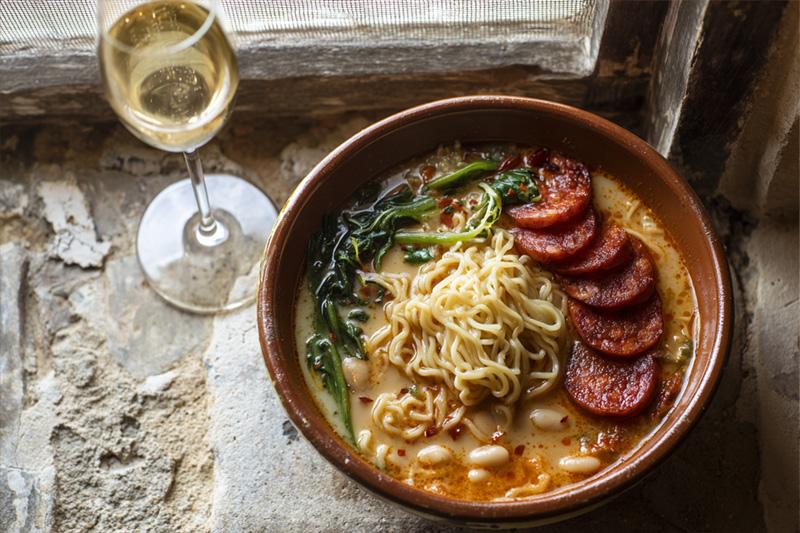
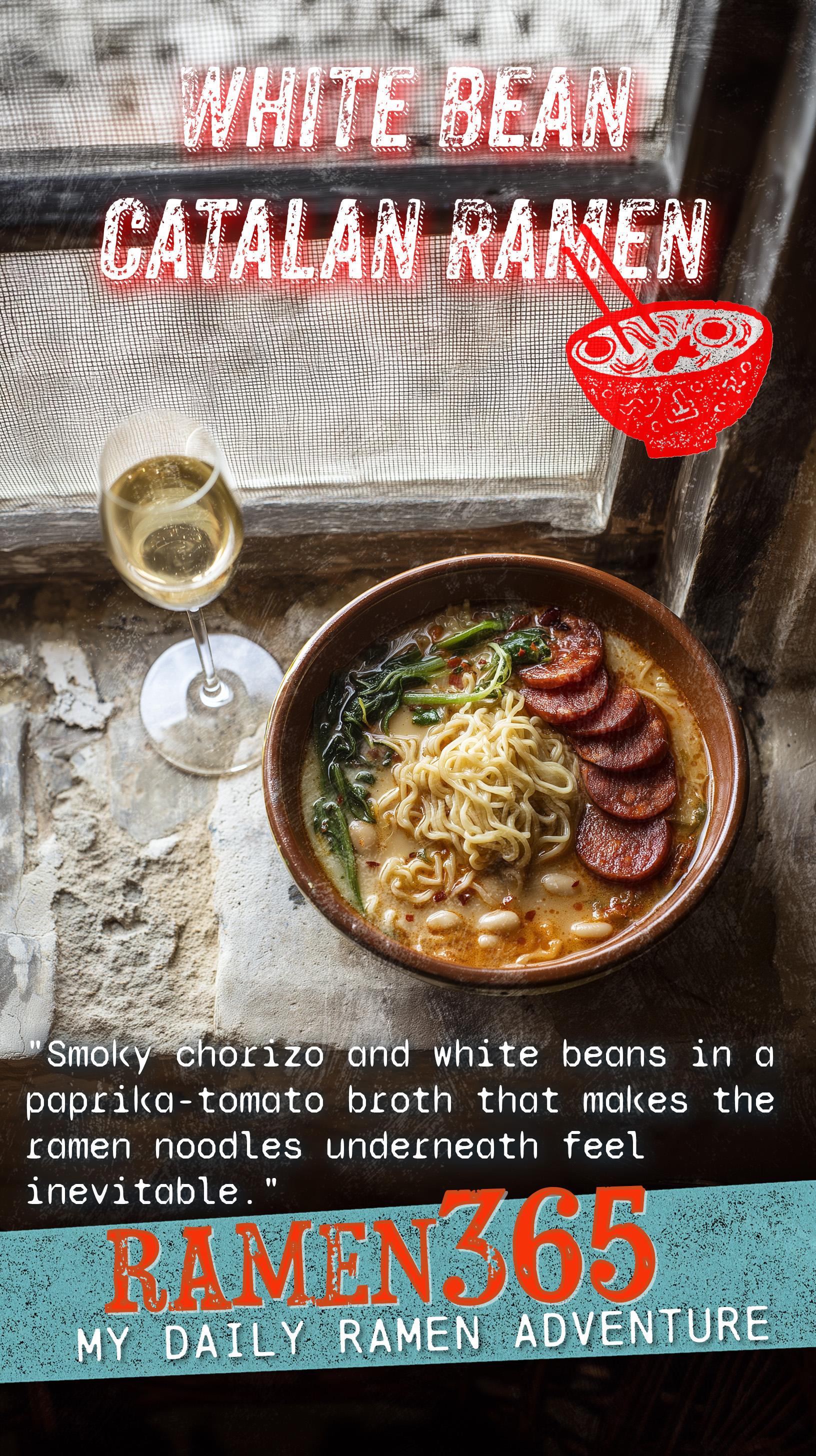
Catalan white bean dishes have a specific character that separates them from every other European bean tradition, and that character comes from the combination of smoky paprika, good olive oil, and the insistence that garlic should be present in everything, which is a position I have always found sensible. The classic preparation involves cannellini beans simmered with sofregit, the Catalan version of a sofrito base, which is tomatoes and onion cooked down very slowly until they are almost jammy. Chorizo goes in because chorizo belongs in this context and makes the broth turn a deep amber-red from its paprika fat. The ramen noodles replace the bread that usually mops up the broth, which seems like an upgrade to me even if it is not strictly traditional. This is a bowl that tastes like the inside of a good tapas bar: warm, smoky, deeply savory, with enough substance that you do not need anything else.
White beans slow in smoke—Chorizo bleeds its red oil—Catalan table
Let Me Tell You...
Sofregit is the Catalan cooking technique that produces what feels like a magic trick: you cook onion and tomato in olive oil for a very long time, far longer than feels necessary, until the whole thing collapses into a dark, sweet, concentrated paste that looks like it has nothing to do with the raw ingredients you started with.
This is the base for the broth, and the reason the broth tastes like it has been cooking for hours even when the total time is under thirty minutes.
The key is patience in the first ten minutes and not scraping the bottom of the pan when things start to darken, because those dark bits are where the flavor is.
High heat burns rather than caramelizes and you end up with bitter rather than sweet.
Patience is the actual technique.
Spanish chorizo is cured and already cooked, which means you are not cooking it so much as rendering its fat into the pan and letting it perfume everything around it.
Slice it into coins and cook it in the sofregit until it releases its deep orange paprika oil, then remove it and set it aside so it does not turn rubbery.
The oil it leaves behind is the backbone of the broth.
Smoked paprika goes in next, briefly toasted in the hot oil until it blooms, and then the beans and broth follow, and the whole thing takes on a color and a depth that is disproportionate to the work involved.
Add it back at the end.
This keeps the texture firm rather than mushy.
Cannellini beans are the right choice here for their creamy interior and the way they take on surrounding flavor without losing their shape.
You partially crush about a third of them against the side of the pot to thicken the broth, same as you would with Cuban black beans, because the starch that comes out of them is the best thickener available and it is already there.
Escarole goes in at the end because bitter greens are the traditional Catalan pairing and they balance the richness of the chorizo fat and the beans in a way that spinach does not quite achieve.
Slow-cooked escarole turns gray and loses its pleasant bitterness.
Ramen noodles in this bowl are the non-Spanish part and the part that makes it actually worth eating for dinner rather than as a side dish to something more substantial.
The noodles absorb the paprika broth and the chorizo fat and carry every element of the Catalan flavor profile into a bowl that is filling and complex in a way that bread-based mopping cannot replicate.
A generous pour of good olive oil over the top right before serving makes it taste finished.
Ingredients
- Two 15-ounce cans cannellini beans, drained and rinsed
- 8 ounces dried ramen noodles (2 bricks, seasoning packets discarded)
- 6 ounces Spanish cured chorizo, sliced into 1/4-inch coins
- One 14-ounce can crushed tomatoes
- 2 cups low-sodium chicken broth
- 1 medium yellow onion, finely diced
- 4 garlic cloves, thinly sliced
- 1 teaspoon smoked paprika
- 1/2 teaspoon sweet paprika
- 1/4 teaspoon red pepper flakes
- 2 tablespoons olive oil (plus more for finishing)
- 3 cups escarole or lacinato kale, roughly chopped
- Kosher salt and black pepper, to taste
- Fresh flat-leaf parsley, roughly chopped, for serving
Preparation
- Heat 2 tablespoons olive oil in a large pot or Dutch oven over medium heat. Add chorizo coins and cook for 3-4 minutes per side until lightly browned and the red paprika oil renders out. Remove chorizo with a slotted spoon and set aside, leaving the fat in the pot.
- Add diced onion to the pot with the chorizo fat and cook over medium-low heat for 8-10 minutes, stirring occasionally, until very soft and lightly caramelized. Add garlic, smoked paprika, sweet paprika, and red pepper flakes. Stir for 1 minute until fragrant.
- Add crushed tomatoes. Increase heat to medium and cook for 6-8 minutes, stirring frequently, until the tomato mixture darkens and thickens into a jammy paste. Season with salt and pepper.
- Add drained cannellini beans and chicken broth. Stir to combine. Bring to a simmer and cook for 10 minutes. Use the back of a spoon to partially crush about one-third of the beans against the side of the pot, then stir to thicken the broth.
- Return chorizo to the pot. Add chopped escarole and stir over medium heat for 2 minutes until wilted. Taste and adjust seasoning.
- Bring a large pot of salted water to a boil. Cook ramen noodles for 90 seconds, pulling them 30 seconds early. Drain and divide between 2-4 bowls. Ladle hot bean and chorizo broth generously over the noodles. Top with fresh parsley and a drizzle of good olive oil. Serve immediately.