
Walnut Meat Ramen
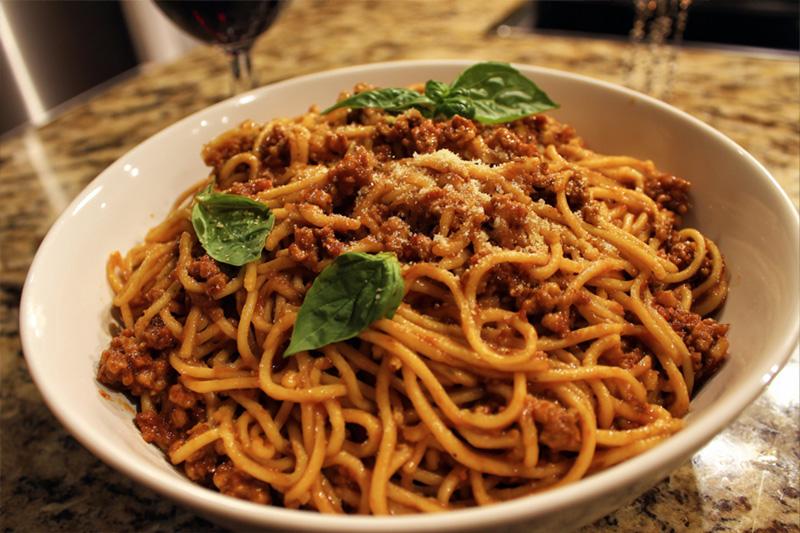
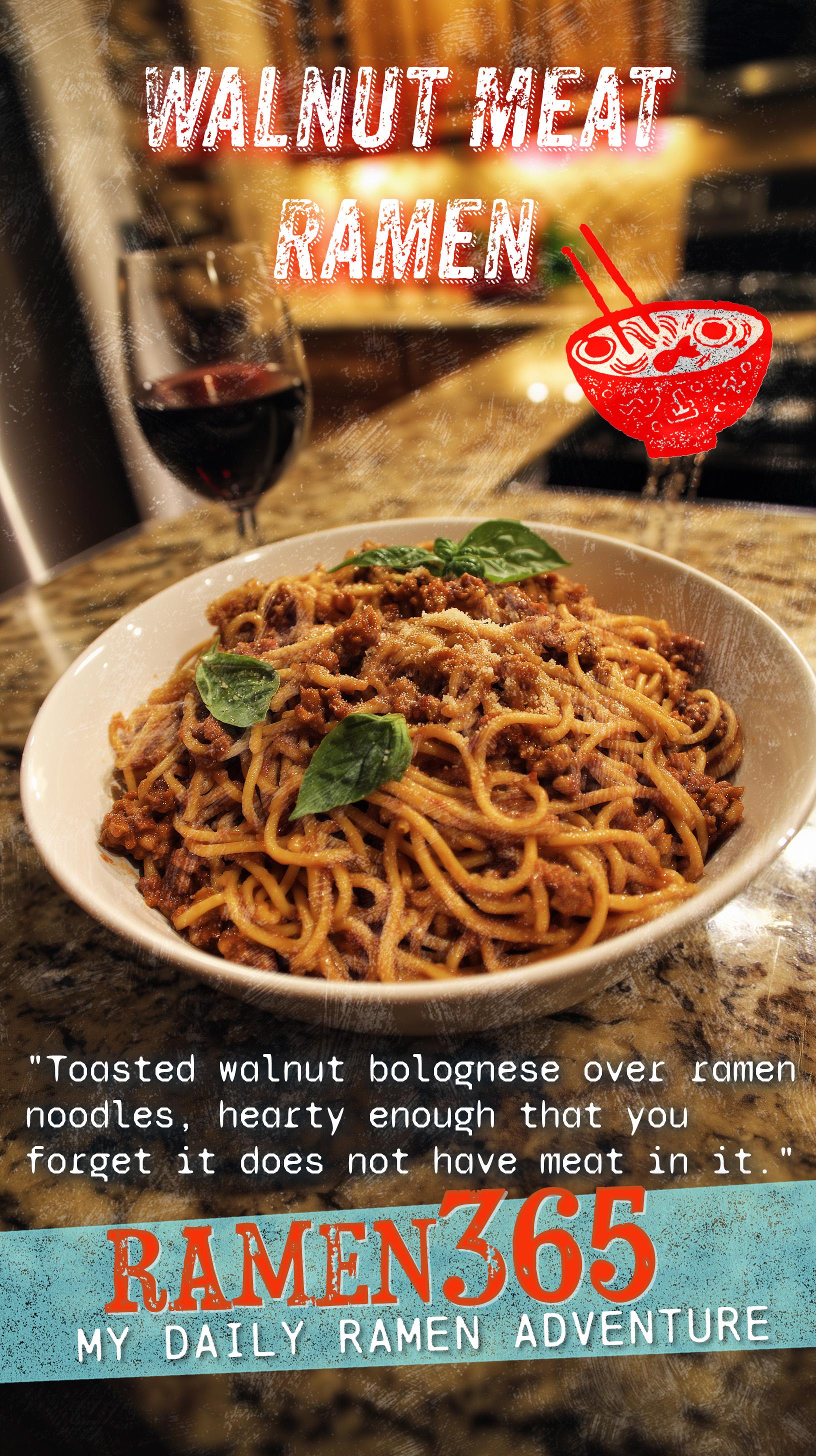
Walnut meat is what happens when you take walnuts, pulse them in a food processor with a few other things, and cook the result in a pan the same way you would cook ground beef, and the result is so convincingly textured and rich that it stops being interesting as a substitution and starts being interesting on its own terms. The fat in walnuts is real fat, the kind that browns and renders and coats things, and when you toast the ground walnut mixture in olive oil with onion and garlic and tomato paste you get something that smells and acts and eats like a bolognese without being one. This is an Italian-inflected bowl in the sense that it borrows the technique and the flavor profile of a long-cooked meat sauce but produces it in thirty minutes with no meat involved. The ramen noodles are the non-Italian part and probably the most honest part of the name, since noodles in a bolognese-style sauce is basically what pasta bolognese already is.
Walnuts take the pan—Fat and roast smell fill the room—Bolognese lies
Let Me Tell You...
The first time someone told me to try walnut meat I was skeptical in the way that I am always skeptical when someone describes a plant-based thing as tasting just like the real thing, because it usually does not and the disappointment is worse than not having tried it.
But walnut meat is not trying to be beef.
The walnuts get pulsed just short of paste, coarse and rough rather than smooth, and when they hit a hot pan with olive oil they do something that ground walnuts should not logically do: they brown.
The edges get dark and nutty and the whole kitchen smells like something is caramelizing, which it is.
Some larger pieces should remain.
The texture variety is what makes the finished sauce interesting.
The technique from here is straight Italian-grandmother bolognese process, minus the meat and minus the two-hour simmer time because walnuts do not need two hours to become tender.
Onion and garlic in olive oil, then tomato paste cooked until it darkens and sticks to the bottom of the pan, then crushed tomatoes and a splash of red wine and a pinch of nutmeg, which is the thing that most American bolognese recipes leave out and should not.
Nutmeg in a meat sauce sounds strange until you taste it, at which point it sounds obvious and you feel slightly embarrassed for not knowing earlier.
This step builds depth that the rest of the recipe builds on.
The walnut mixture goes back into the sauce toward the end rather than at the beginning, because cooking it too long in liquid makes it soft and the texture is the point.
You want it to stay rough and present in the sauce, something to bite against, not something that disappears into the tomato.
The ramen noodles get tossed directly in the sauce rather than having sauce ladled over them, which is how you would treat pasta and works exactly the same way here.
Adding a splash to the walnut sauce before tossing in the noodles creates a creamier, more cohesive sauce.
Parmigiano-Reggiano goes over the top in a generous snowfall and fresh basil gets torn rather than cut because torn basil releases more aroma and also looks better, which is a real consideration when you are going to eat something with your eyes before you eat it with your mouth.
This is a bowl that converts people.
Not because it pretends to be something it is not, but because it is actually good at being exactly what it is.
Ingredients
- 8 ounces dried ramen noodles (2 bricks, seasoning packets discarded)
- 2 cups raw walnut halves
- One 14-ounce can crushed San Marzano tomatoes
- 1 medium yellow onion, finely diced
- 4 garlic cloves, minced
- 3 tablespoons tomato paste
- 1/4 cup dry red wine (such as Chianti or Barbera)
- 1/4 teaspoon freshly grated nutmeg
- 1/2 teaspoon dried oregano
- 1/4 teaspoon red pepper flakes
- 3 tablespoons olive oil, divided
- Kosher salt and black pepper, to taste
- Fresh basil leaves, torn, for serving
- Parmigiano-Reggiano, finely grated, for serving (or vegan Parmesan)
Preparation
- Pulse walnuts in a food processor 8-10 times until coarsely ground with some pieces still visible. Do not over-process. Set aside.
- Heat 2 tablespoons olive oil in a large skillet over medium-high heat. Add ground walnuts and spread in a single layer. Cook without stirring for 3-4 minutes until the undersides begin to brown. Stir and cook for 2 more minutes. Remove from pan and set aside.
- Add remaining tablespoon olive oil to the skillet over medium heat. Add onion and cook for 6-7 minutes until softened. Add garlic, red pepper flakes, and oregano and cook for 1 minute. Add tomato paste and stir constantly for 2 minutes until the paste darkens.
- Add red wine and scrape up any bits stuck to the bottom. Simmer for 1 minute. Add crushed tomatoes, nutmeg, salt, and pepper. Stir to combine and simmer over medium-low heat for 12-15 minutes until the sauce thickens.
- Bring a large pot of salted water to a boil. Cook ramen noodles for 90 seconds, pulling them 30 seconds early. Reserve 1 cup of cooking water before draining.
- Return browned walnuts to the tomato sauce and stir to combine. Add a splash of pasta water to loosen. Add drained noodles directly to the skillet and toss over medium heat for 1-2 minutes until noodles are coated and the sauce clings. Divide into bowls, top generously with torn basil and Parmigiano. Serve immediately.