
Kimchi Fried Rice Ramen
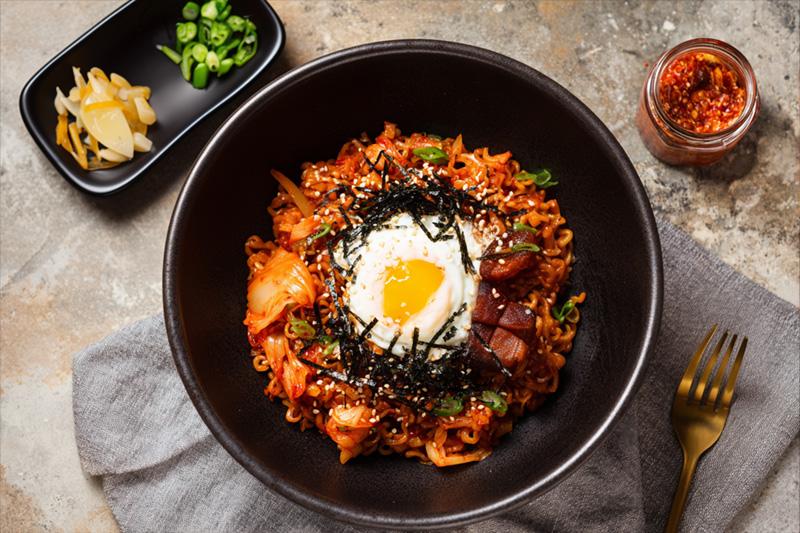
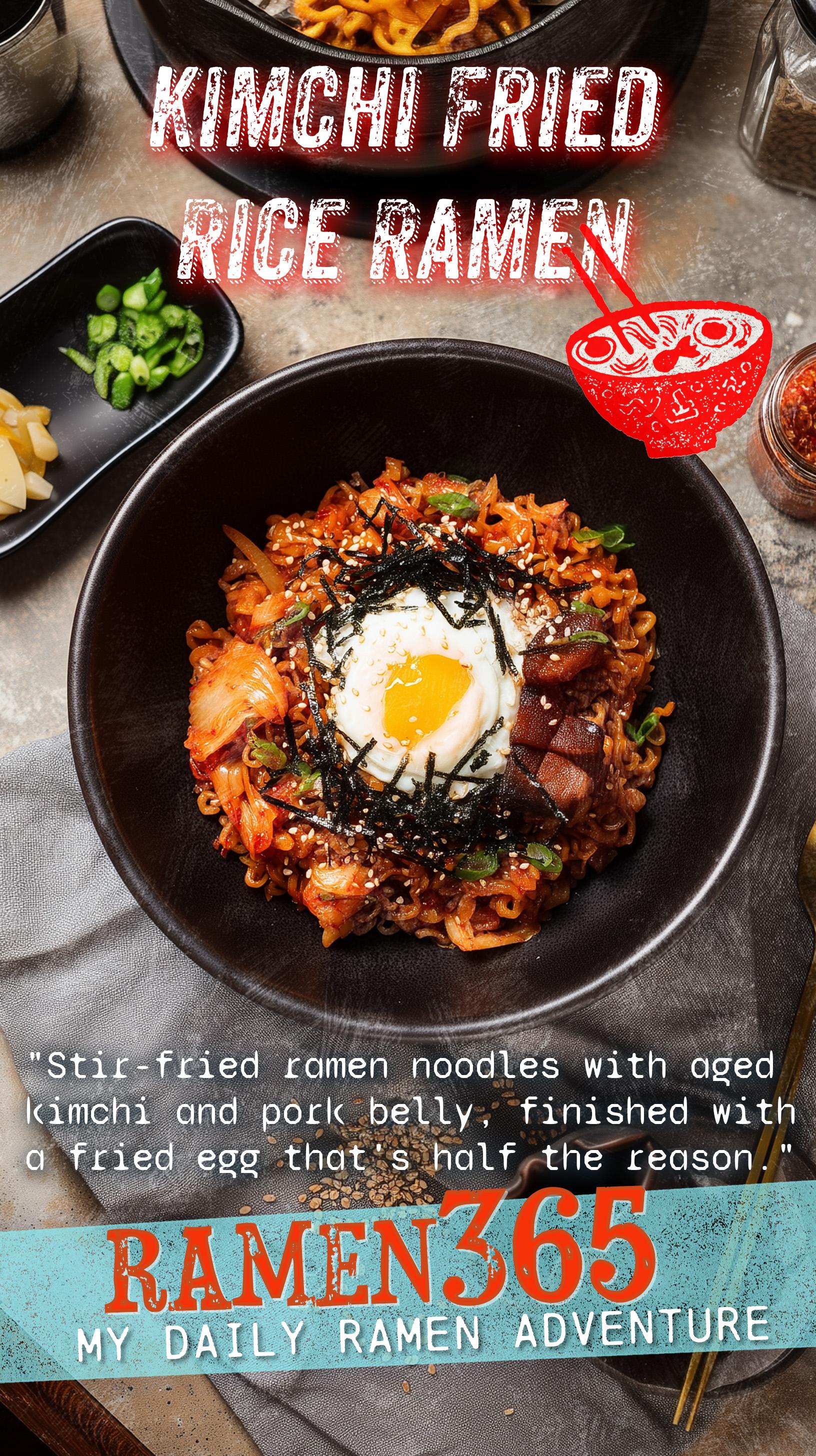
Kimchi fried rice is the dish that happens when the kimchi in the back of the fridge is too sour to eat raw and too good to throw away. It's one of the most practical culinary inventions in existence: you fry leftover rice with aged kimchi until the rice gets crispy and the kimchi caramelizes slightly and the whole pan smells aggressively correct. This version swaps the rice for ramen noodles in the tradition of Japanese stir-fried noodles, which is not a traditional Korean move but is very much a practical one. The noodles handle the high heat differently from rice, getting slightly crispy on the parts that hit the pan directly, and the kimchi coats them in a way that makes every bite funky and a little fiery and very hard to stop at a reasonable amount.
Kimchi hits the wok—pork crisps and everything smells right—egg breaks, yolk runs gold
Let Me Tell You...
The secret to kimchi fried rice, and by extension this dish, is that it is better when the kimchi is old.
Fresh kimchi is crisp and mildly tangy and good in its own way.
Kimchi that has been fermenting in the back of the fridge for three months is deeply sour, funky, almost alcoholic, and it caramelizes in a hot pan in a way that fresh kimchi doesn't.
If your kimchi is fresh, it will still work, but the person who made this with properly aged kimchi is eating a different bowl.
The patience is the ingredient.
The older the kimchi, the more complex and caramelized it gets in the pan.
Pork belly here does exactly what it's supposed to do, which is render its fat into the pan and then crisp up in that fat, and everything else in the bowl gets cooked in what remains.
This is the Japanese approach to stir-frying, using the fat from the protein as the cooking medium for everything else, and it produces a depth of flavor that adding oil never quite matches.
If pork belly isn't available, thick-cut bacon works almost as well.
Don't drain it.
That fat is the flavor base for the whole dish.
The fried egg goes on last and it goes on top and the yolk should be fully runny when it arrives at the table, because breaking that yolk across the noodles and kimchi is the final step in the recipe and one of the more satisfying small actions available in food.
If you prefer a set yolk, make a different bowl.
Timing matters here.
You want both ready at the same moment.
This is the bowl that Tuesday nights were made for.
Ingredients
- 8 ounces dried ramen noodles (2 bricks, seasoning packets discarded)
- 6 ounces pork belly, sliced into 1/4-inch pieces
- 1 cup well-fermented kimchi, roughly chopped, plus 2 tablespoons kimchi juice
- 2 large eggs
- 3 cloves garlic, minced
- 1 tablespoon gochujang
- 1 tablespoon low-sodium soy sauce
- 1 teaspoon toasted sesame oil
- 1 teaspoon sugar
- 2 green onions, thinly sliced (white and green parts separated)
- 1 sheet nori, cut into thin strips
- 1 tablespoon toasted sesame seeds
- Kosher salt, to taste
Preparation
- Cook ramen noodles in boiling salted water for 2 minutes (slightly undercooked). Drain and rinse briefly under cold water to stop cooking. Set aside.
- Heat a large wok or cast iron skillet over medium-high heat. Add pork belly pieces in a single layer. Cook for 3-4 minutes until fat has rendered and pieces are golden and slightly crispy. Remove pork to a plate, leaving fat in the pan.
- Add white parts of green onion and garlic to the fat in the pan. Stir-fry for 30 seconds. Add chopped kimchi and kimchi juice. Stir-fry for 2 minutes until kimchi begins to caramelize and darken slightly.
- Stir in gochujang, soy sauce, and sugar. Cook for 1 minute. Add cooked noodles and return pork belly to the pan. Toss vigorously to coat everything in the kimchi mixture. Stir-fry for 2-3 minutes, letting some noodles crisp slightly against the pan. Drizzle sesame oil over and toss once more.
- Simultaneously, fry eggs in a separate small pan over medium heat until whites are set and yolks are still runny.
- Divide noodles between bowls. Top with the fried egg, green parts of green onion, nori strips, sesame seeds, and any optional toppings. Serve immediately.