
Picanha Beef Ramen
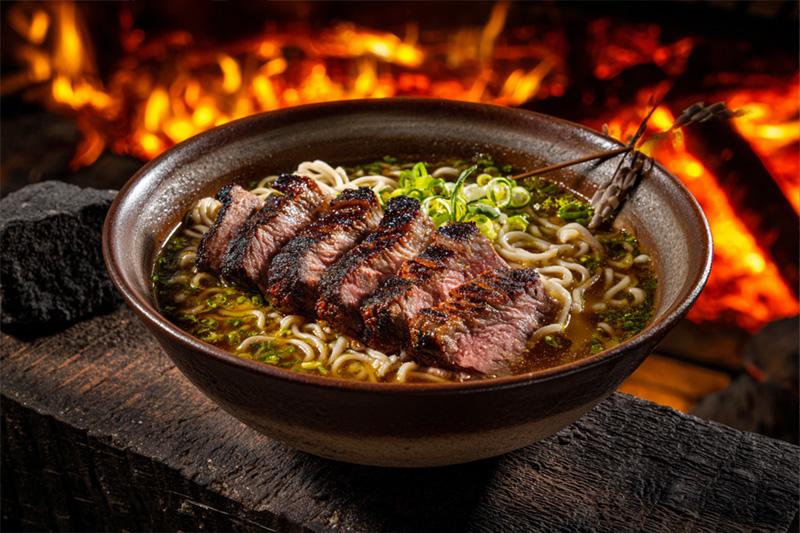
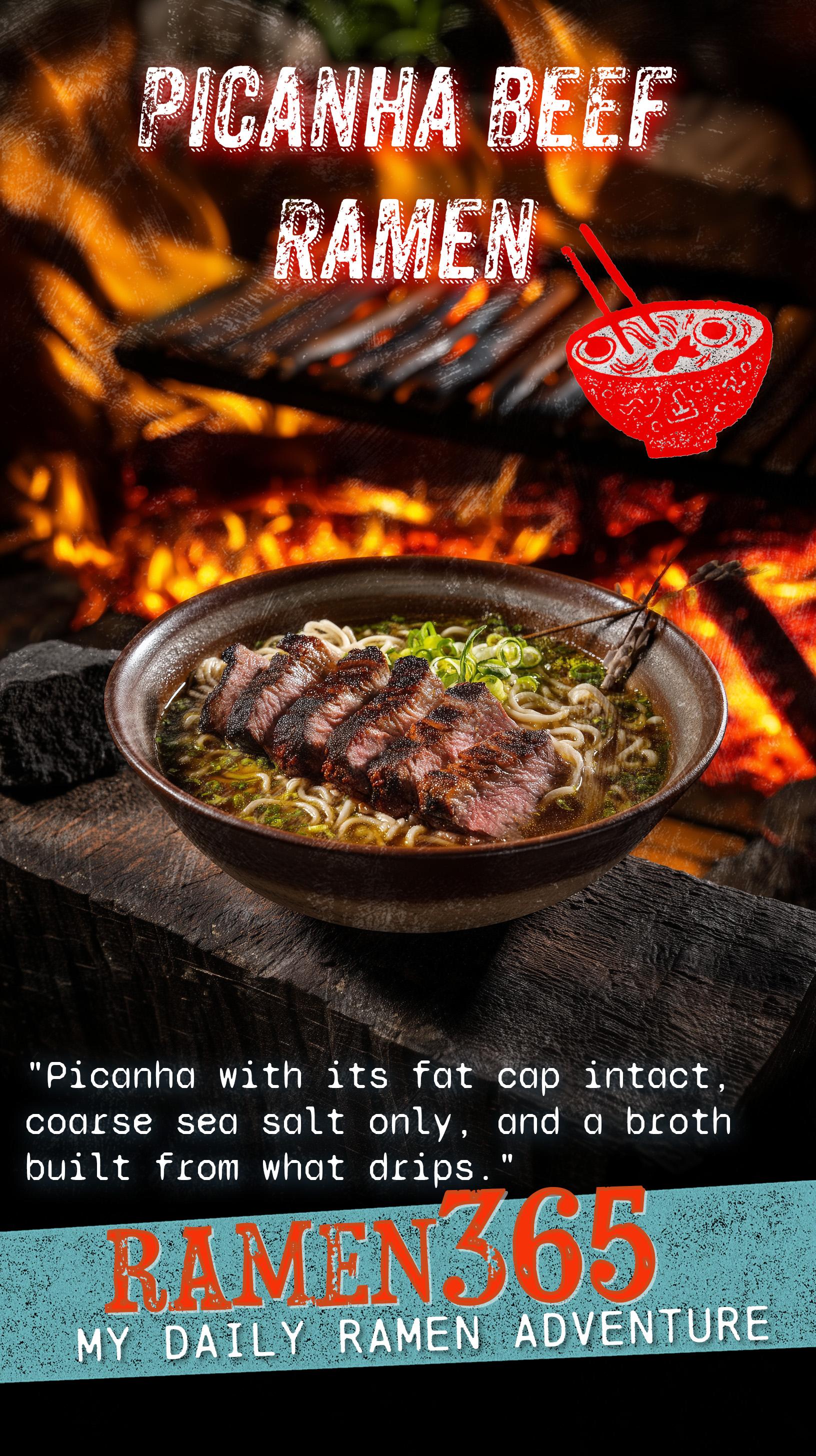
Picanha is the cut of beef that Brazil built its churrascaria culture around, and if you've eaten at a Brazilian steakhouse, you've had it even if you didn't know the name. It's the top sirloin cap, a muscle that doesn't work very hard and stays tender, covered by a thick layer of fat that renders during cooking and continuously bastes the meat from the outside. The seasoning is coarse sea salt and nothing else, which sounds like restraint until you taste it and realize that restraint was always the point. The fat renders into the pan and creates a dripping situation that's essentially its own sauce, and the broth for this bowl is built directly from those drippings.
Fat cap faces fire—picanha needs nothing else—the rest is just heat
Let Me Tell You...
Brazilians will tell you that picanha is the best cut of beef, and the evidence supports them.
It combines the tenderness of a sirloin with a fat cap that no other common cut has, and that fat cap is the entire argument.
It melts slowly during cooking and coats the meat in its own rendered fat, which is both the basting mechanism and the flavor delivery system.
You don't need anything to make picanha good.
You need heat and salt and the patience to let the fat do what it's going to do anyway.
This helps the fat render evenly and prevents the cap from buckling and pulling the meat as it contracts.
The reverse-sear method here, oven first at low temperature and then a screaming-hot sear at the end, gives you edge-to-edge doneness with a proper crust. This is the same logic that good steakhouses use for thick cuts.
Starting in the oven brings the internal temperature up gradually without drying the exterior, and the final high-heat sear creates the crust that slow cooking can't produce.
The drippings that accumulate during the oven phase get poured directly into the broth, carrying all the rendered picanha fat into the liquid.
The fat emulsifies slightly into the broth and adds body and a glossiness that stock alone won't provide.
The broth is built from those drippings, deglazed with red wine, and enriched with stock.
It doesn't need much time because the drippings have already done the flavor work.
Ten minutes of simmering and you have a liquid that tastes like it came from hours of reduction, because picanha fat is exactly that efficient.
Slicing too soon loses the juices into the bowl.
You want them in the meat.
The slice goes on thick, fat cap up, because that's the correct presentation for a cut this good.
This bowl is not humble about what it is.
Ingredients
- 8 ounces dried ramen noodles (2 bricks, seasoning packets discarded)
- 1.5 lbs picanha (top sirloin cap), fat cap scored in crosshatch
- 1.5 tablespoons coarse sea salt
- 1/2 teaspoon coarse black pepper
- 1/2 cup dry red wine
- 3 cups low-sodium beef broth
- 3 cloves garlic, smashed
- 1 sprig fresh rosemary
- Neutral oil for high-heat sear
Preparation
- Preheat oven to 275F. Score fat cap of picanha in a crosshatch pattern, cutting through to but not into the meat. Rub coarse sea salt and pepper generously over all surfaces, pressing into the scored fat.
- Place picanha fat-side up on a wire rack set over a rimmed baking sheet. Roast for 35-45 minutes until internal temperature reaches 120F for medium-rare. Remove from oven and pour all drippings from the baking sheet into a small bowl. Reserve.
- Heat a cast iron skillet over highest possible heat until smoking. Add a thin film of neutral oil. Sear picanha fat-side down first for 2-3 minutes until the fat cap is deeply browned and crackling. Flip and sear each side 1-2 minutes. Transfer to a cutting board and rest 10 minutes.
- Build the broth: Return cast iron to medium-high heat. Add smashed garlic and rosemary, cook 30 seconds. Pour in red wine and scrape up any browned bits. Reduce by half. Add beef broth and reserved drippings. Simmer 10 minutes. Strain and season with salt.
- Bring a separate pot of salted water to a boil. Cook ramen noodles for 2-3 minutes until just tender. Drain and divide between serving bowls.
- Ladle broth over noodles. Slice picanha against the grain in thick pieces and arrange fat-side up over the noodles. Add optional toppings and serve immediately.