
Lamb Ghormeh Sabzi Ramen
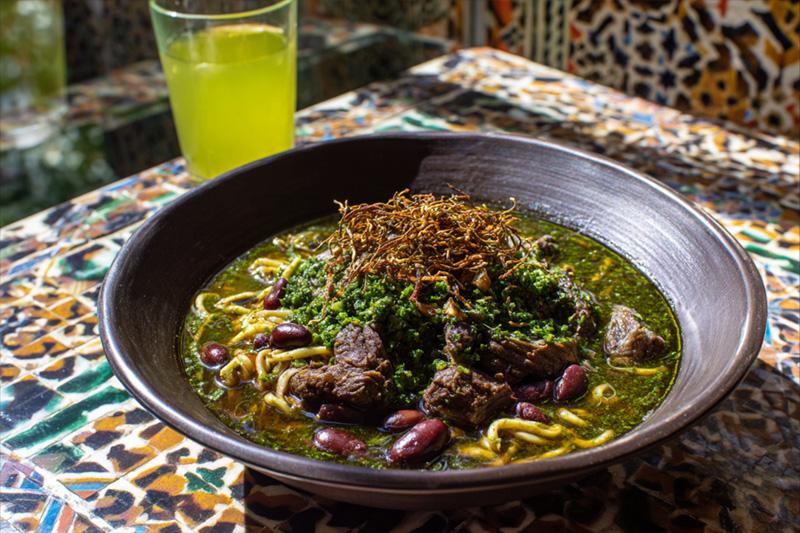
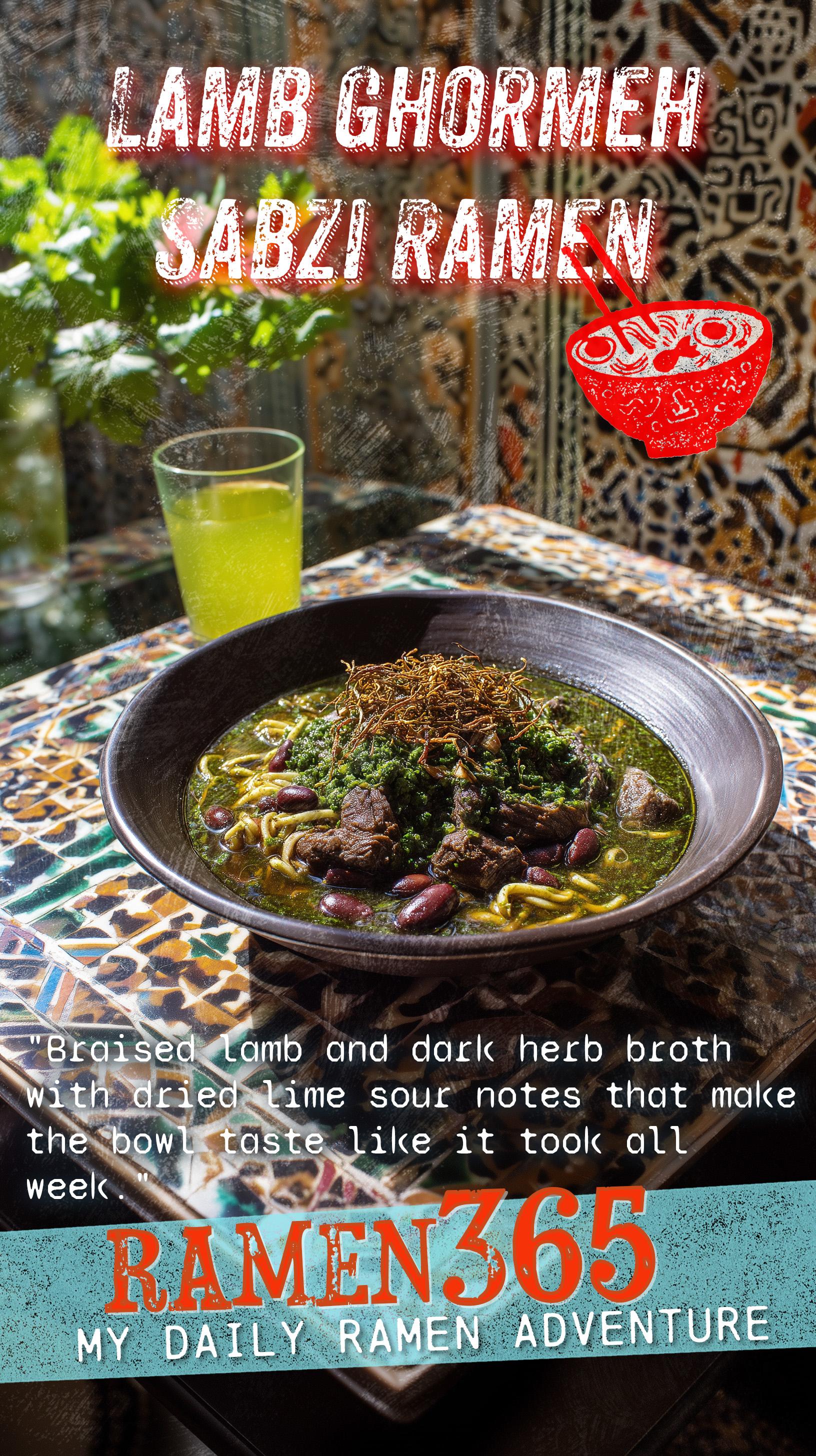
Ghormeh sabzi is the national dish of Iran, or at least the one that Iranians will tell you is the national dish, and it has the kind of depth that only comes from cooking a large amount of herbs down to almost nothing and then cooking them further. The base is a mixture of fresh fenugreek, parsley, and chives cooked in oil until they are dark and concentrated, which sounds like a mistake the first time you do it but is actually the technique. Dried limes, limu omani, go in and give the broth a sour, bitter citrus character that is not available from any other ingredient. Kidney beans make it substantial. Lamb shoulder does the heavy lifting. The whole thing braises for two hours and gets better the next day, which is the case with most things that are genuinely worth making. The ramen noodles are not traditional but they absorb the dark herb broth in a way that rice does not, and the result is a bowl that tastes like a very long afternoon in a very good kitchen.
Dried lime splits open—Green herb broth, deep and bitter—Lamb comes undone
Let Me Tell You...
The first time I made ghormeh sabzi I did not cook the herbs long enough and the broth tasted like a very good vegetable soup, which is not what ghormeh sabzi should taste like.
Ghormeh sabzi should taste like the herbs have been cooked so long they have become something else entirely: dark and concentrated and slightly bitter in the back of the throat, with the dried lime adding a sour-bitter citrus layer that sits underneath the herbal character like a foundation.
The color should be nearly black-green.
If it is bright green you have not cooked it long enough.
This is not burning.
This is the technique.
Lamb shoulder is the right cut here because it has enough connective tissue and fat to braise for two hours and arrive at the other end tender and falling apart rather than dry and stringy.
You sear it first in the same pot you will use for the braise, which builds color on the meat and also leaves behind the brown fond that the herb mixture will incorporate when it goes in.
The dried limes go in whole, pierced with a knife so the souring liquid can escape into the broth.
They look strange and smell stranger before the braise, and they look and smell like the most important ingredient in the bowl by the time the two hours are up.
Without puncturing them they just float in the broth and do not release their character into the liquid.
Kidney beans are traditionally added about halfway through the braise, which gives them time to absorb the herb broth without going mushy.
If you are using canned beans, add them in the last 30 minutes rather than halfway, since they are already cooked.
The beans add starch to the broth and make it more substantial, and their mild flavor is a good counterpoint to the aggressive herb and sour lime situation going on around them.
They hold their texture better in a long braise than canned beans and absorb the ghormeh sabzi flavor all the way through.
The ramen noodles go into the bowl and the ghormeh sabzi broth gets ladled over them, bringing the lamb and beans with it.
This is not how ghormeh sabzi is traditionally served, obviously, but it is a better delivery mechanism than rice for a broth this dark and complex.
The noodles coil into the herb-sour broth and the lamb comes apart over the top and you get a bowl that takes most of a day to build and tastes like exactly that.
Ingredients
- 1.5 lbs bone-in lamb shoulder, cut into 2-inch chunks
- 8 ounces dried ramen noodles (2 bricks, seasoning packets discarded)
- One 15-ounce can kidney beans, drained and rinsed
- 3 cups low-sodium beef or lamb broth
- 2 cups fresh flat-leaf parsley, packed, finely chopped
- 1 cup fresh fenugreek leaves (or 2 tablespoons dried fenugreek)
- 1 cup fresh chives or green onion tops, finely chopped
- 3 dried Persian limes (limu omani), pierced with a knife
- 1 large yellow onion, finely diced
- 4 garlic cloves, minced
- 1 teaspoon ground turmeric
- 1/2 teaspoon ground black pepper
- 3 tablespoons neutral oil, divided
- Kosher salt, to taste
- Fresh parsley or fenugreek, for garnish
Preparation
- Heat 1 tablespoon oil in a large Dutch oven over medium-high heat. Season lamb pieces generously with salt, pepper, and turmeric. Sear in batches for 3-4 minutes per side until deeply browned. Remove and set aside.
- Add remaining oil to the pot and reduce heat to medium. Add onion and cook for 8-10 minutes until softened and golden. Add garlic and stir for 1 minute.
- Add chopped parsley, fenugreek, and chives to the pot. Cook over medium heat, stirring frequently, for 20-25 minutes until the herbs go from bright green to a very dark, concentrated paste. This is essential for correct flavor.
- Return lamb to the pot. Add broth, pierced dried limes, and a generous pinch of salt. Bring to a simmer, cover, and braise over low heat for 1 hour 30 minutes.
- Add drained kidney beans. Continue simmering uncovered for 30 more minutes until the lamb is very tender and falling from the bone and the broth has darkened and thickened. Taste and adjust salt.
- Bring a large pot of salted water to a boil. Cook ramen noodles for 90 seconds, pulling 30 seconds early. Drain and divide between 2-4 bowls. Ladle ghormeh sabzi broth generously over the noodles, distributing lamb and beans. Garnish with fresh herbs. Serve immediately.