
Pollo Guisado Ramen
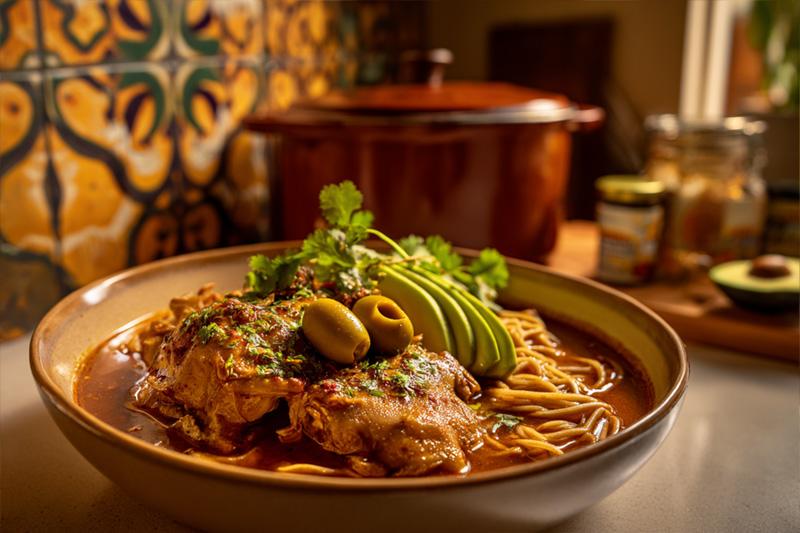
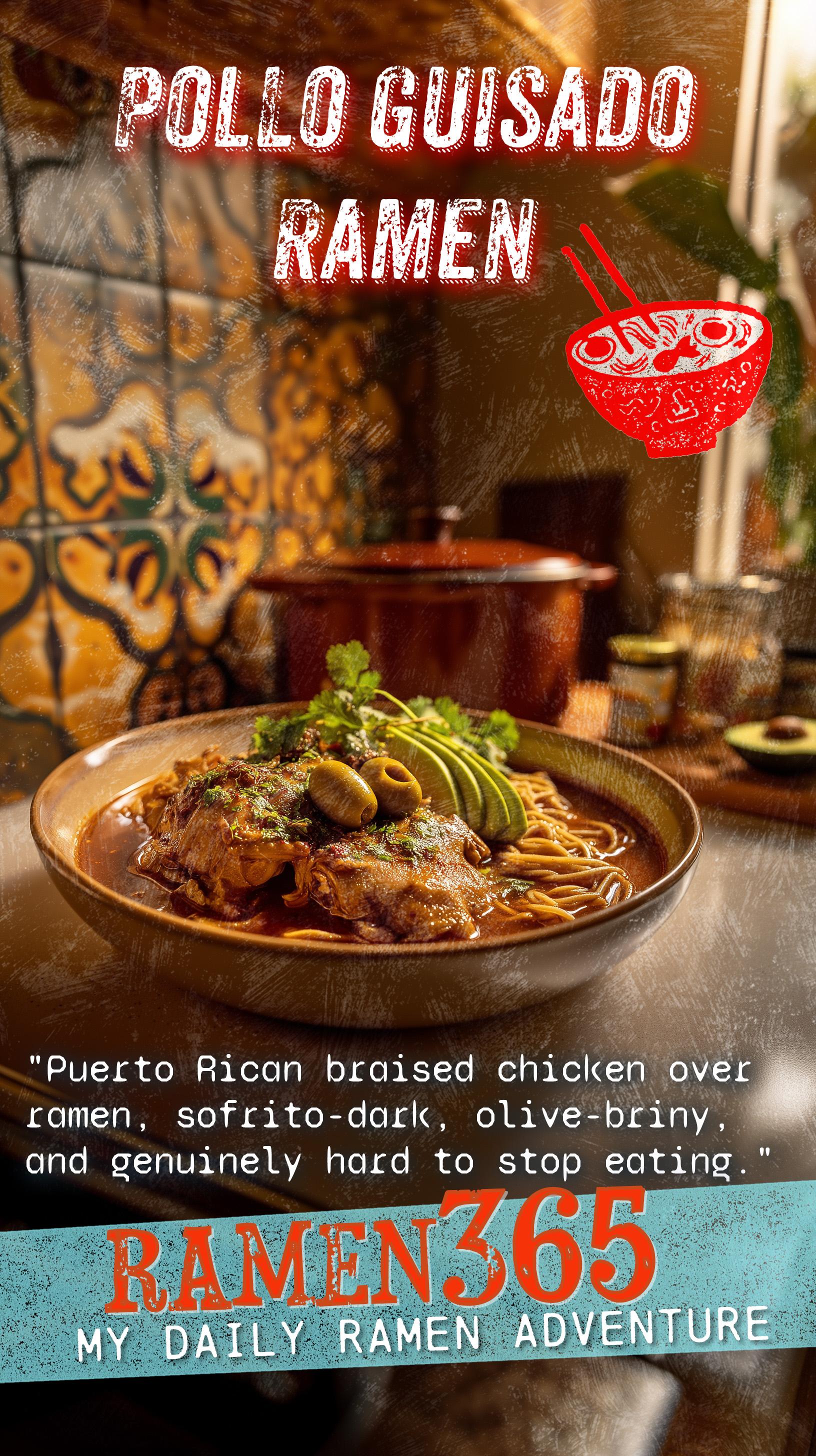
Pollo guisado is the Puerto Rican braised chicken that everyone's grandmother makes differently and everyone's version is the correct one, which is the universal property of all dishes that exist primarily in home kitchens. The foundation is sofrito, that aromatic paste of peppers, onions, garlic, cilantro, and recao that is essentially the backbone of Puerto Rican cooking, cooked down in oil until it's dark and fragrant and the kitchen smells like somewhere you want to be. Then the chicken, then the tomatoes and sazon and olives, then the long slow braise until everything falls apart the way braised chicken should. The ramen noodles absorb the rust-colored broth the way rice does, which is to say completely and enthusiastically.
Sofrito darkens first—chicken pulls from the bone slow—olives hold the brine
Let Me Tell You...
Sofrito is the kind of ingredient that becomes invisible once you understand it, meaning you start to taste its absence in food that doesn't have it rather than its presence in food that does.
It's aromatics blended together and cooked down until they're almost a paste, and the entire point is that they form the flavor base for everything else.
Puerto Rican cooking uses it the way French cooking uses mirepoix and Italian cooking uses soffritto, as the layer you build on before you add the things that get the credit.
Undercooked sofrito tastes raw and defeats the purpose.
Sazon is the seasoning blend that turns the broth that particular rust-orange color you see in Puerto Rican cooking.
It contains annatto (achiote), which is a natural colorant from a tropical plant, along with cumin, coriander, garlic, and oregano.
It comes in small foil packets and it is irreplaceable if you want the dish to look and taste the way it should.
Substituting with generic seasoning salt is not the same thing and you will know it immediately.
More than one can make the dish taste medicinal.
The green olives are not optional even though they look like they are.
They dissolve slowly into the braise and contribute a brine that no other ingredient can replicate, and they appear in almost every Puerto Rican stew because whoever figured this out first was right and nobody has found a reason to stop since.
The capers, if you add them, do the same work but more aggressively.
Together they turn a braised chicken into something that tastes specifically like this dish and not any other braised chicken.
The pimento adds a gentle sweetness inside the brine hit.
The bowl is the kind of thing you make on a Sunday when you want Tuesday to take care of itself, because pollo guisado improves over two or three days and the broth gets better each time you reheat it.
Ingredients
- 8 ounces dried ramen noodles (2 bricks, seasoning packets discarded)
- 1.5 lbs bone-in skin-on chicken thighs (about 4 pieces)
- 1/2 cup sofrito (homemade or store-bought jar, such as Goya)
- 1 packet sazon with annatto (about 1.5 teaspoons)
- 2 tablespoons tomato paste
- 3 cups low-sodium chicken broth
- 1 cup water
- 1/3 cup manzanilla olives (or any pimento-stuffed green olives)
- 2 tablespoons capers, drained
- 1/2 teaspoon dried oregano
- 1 tablespoon neutral oil
- Kosher salt and black pepper, to taste
Preparation
- Pat chicken thighs dry and season with salt and black pepper. Heat oil in a large Dutch oven over medium-high heat. Sear chicken skin-side down for 4-5 minutes until golden. Flip and sear 2 more minutes. Transfer to a plate.
- Reduce heat to medium. Add sofrito to the pot and cook, stirring constantly, for 5-7 minutes until it darkens and reduces significantly.
- Stir in tomato paste and sazon. Cook for 2 minutes, pressing into the sofrito. Add dried oregano.
- Return chicken to the pot. Add chicken broth and water, scraping up any browned bits. Add olives and capers. Bring to a boil, then reduce heat to low. Cover and simmer for 35-40 minutes until chicken is very tender and falling off the bone.
- Remove chicken from broth. When cool enough to handle, remove skin and pull meat from bones in large pieces. Return chicken meat to the broth. Taste and adjust salt.
- Bring a separate pot of salted water to a boil. Cook ramen noodles for 2-3 minutes until just tender. Drain and divide between serving bowls.
- Ladle broth and chicken generously over noodles, making sure each bowl gets olives and capers. Add optional toppings and serve immediately.