
Ramen Congee
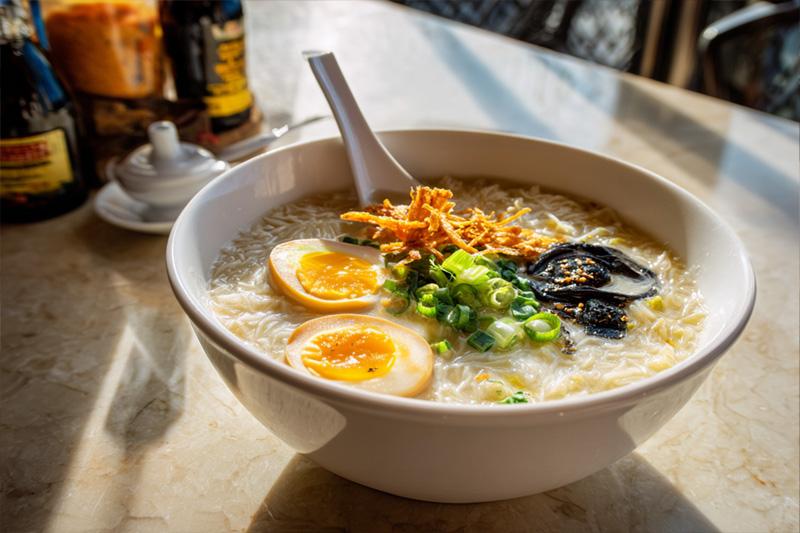
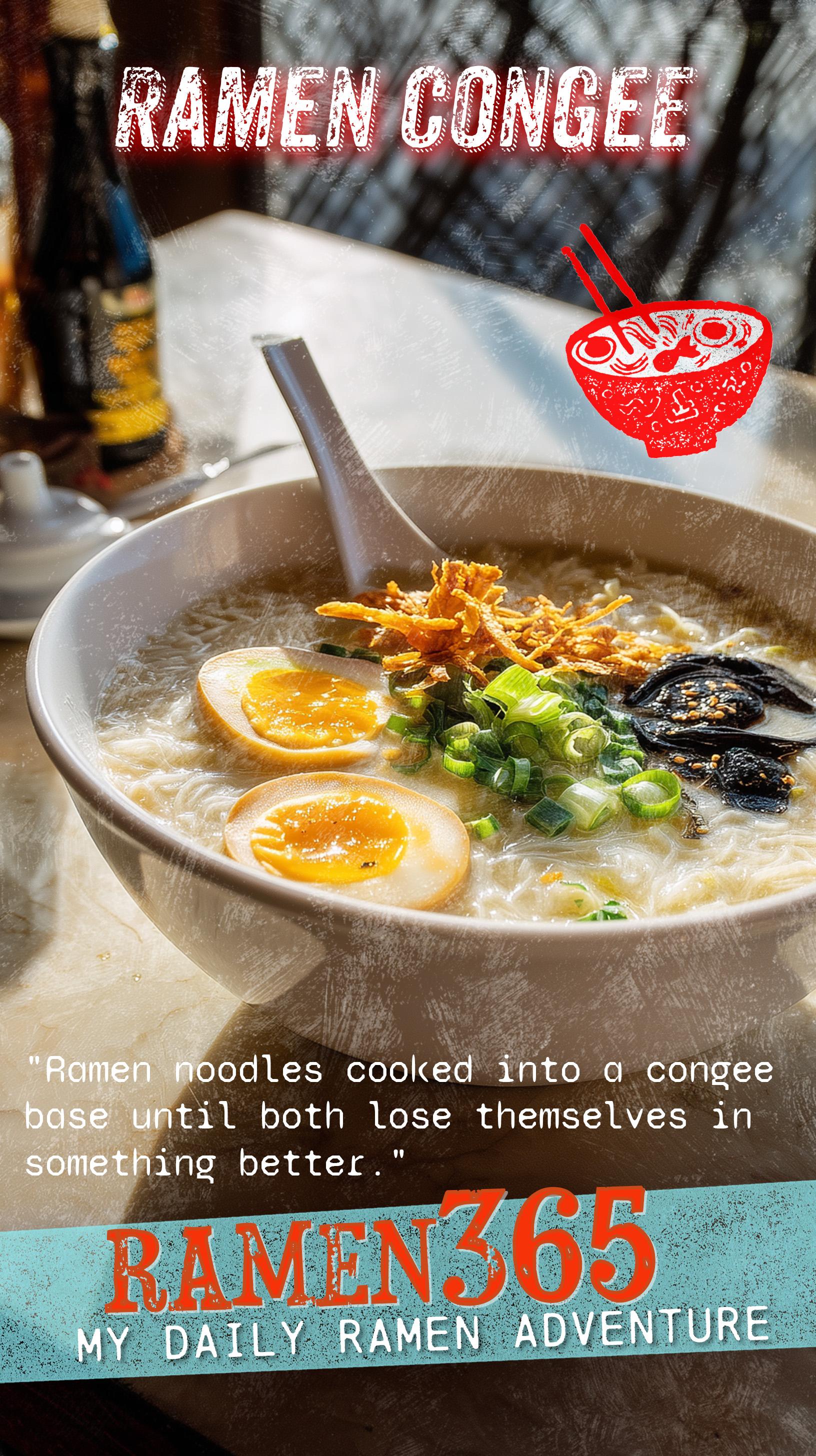
Congee is Chinese rice porridge cooked long past the point where rice maintains any structure, until the starch blooms into the broth and the whole pot becomes a single silky entity that is neither liquid nor solid. It's one of the great restorative foods in the world, eaten for breakfast across most of East and Southeast Asia and treated as both medicine and comfort depending on the day. This version cooks ramen noodles directly into a congee base, where they swell and soften beyond their usual texture into something that bridges the two preparations. The result is thicker than ramen broth and thinner than plain congee, a middle state that turns out to be exactly right.
Rice gives up its shape—noodles dissolve into silk—the bowl holds both things
Let Me Tell You...
The logic of congee is patience.
You put rice in water, you apply low heat, and you wait.
The longer you wait, the more the starch releases and the more the broth becomes the rice and the rice becomes the broth, until the distinction between them is academic.
This version runs that same logic with ramen noodles added in the last twenty minutes, which gives the noodles time to absorb the starch-thick broth and lose their individual texture without fully dissolving.
You end up with something that is identifiably congee with identifiable noodles, which is the correct outcome.
It will look like too much liquid at first. It's not too much liquid.
Trust the ratio.
Century egg is the topping that makes this bowl specifically Chinese in flavor and specifically worth the cultural adventure of tracking one down.
Century eggs are duck or chicken eggs preserved in a mixture of clay, ash, salt, quicklime, and rice hulls over weeks or months, resulting in a dark, gelatinous egg with a briny, sulfurous, umami-forward flavor that sounds alarming and tastes revelatory with plain congee.
Halved and placed on the silky porridge, the dark jade center against the pale congee is also visually arresting in a way that most breakfast foods aren't.
They don't need cooking.
Peel, halve, and place directly on the congee before serving.
The sesame oil drizzle at the end is not optional.
It is the finish that transforms the bowl from hospital food to something you'd seek out voluntarily, carrying aroma and fat and a specific nuttiness that plain congee broth cannot provide.
Drizzle it right before serving so the heat of the bowl carries the aroma upward when you bring the bowl to the table.
Toasted sesame oil has the roasted aroma that the bowl needs.
Light sesame oil has almost no flavor.
This bowl is what you eat when you need something that will not ask anything of you in return.
Ingredients
- 4 ounces dried ramen noodles (1 brick, seasoning packet discarded)
- 1/3 cup short-grain white rice, rinsed
- 6 cups low-sodium chicken or vegetable broth
- 2 cups water
- 3 slices fresh ginger (about 1/4 inch thick)
- 2 cloves garlic, smashed
- 1 tablespoon low-sodium soy sauce
- 1 teaspoon toasted sesame oil (for finishing)
- Kosher salt, to taste
- 2 century eggs, peeled and halved (or soft-boiled eggs)
- 3 green onions, thinly sliced
- 3 tablespoons store-bought fried shallots
Preparation
- Combine rinsed rice, broth, water, ginger slices, and smashed garlic in a large pot. Bring to a boil over high heat, stirring to prevent sticking. Reduce heat to low.
- Simmer uncovered for 25 minutes, stirring occasionally, until the rice has broken down and the mixture is creamy and thick. The congee should coat the back of a spoon.
- Break ramen noodle brick into rough pieces. Add to the congee along with soy sauce. Continue simmering for 15-20 minutes, stirring frequently, until the noodles have swelled and become very soft and fully integrated into the congee. Remove ginger and garlic. Season with salt.
- Divide into serving bowls. Drizzle sesame oil over each bowl. Add halved century eggs, sliced green onions, and fried shallots. Add optional toppings and serve immediately.