
Sichuan Sesame Ramen
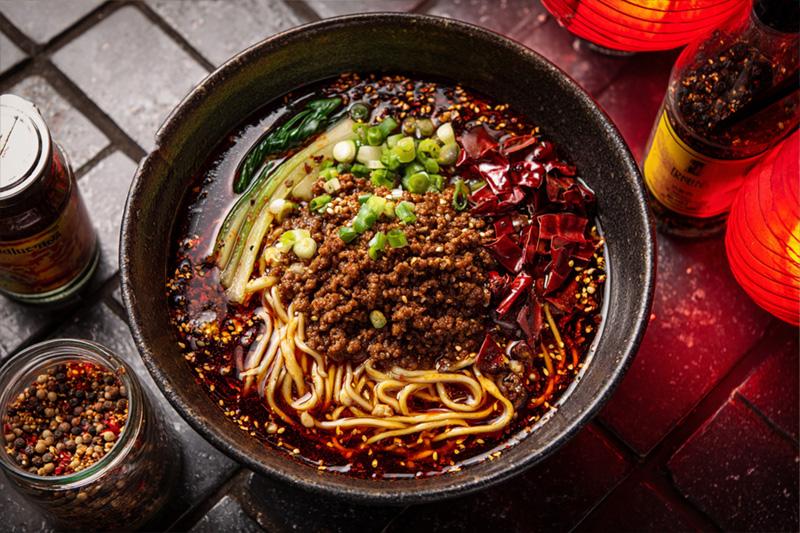
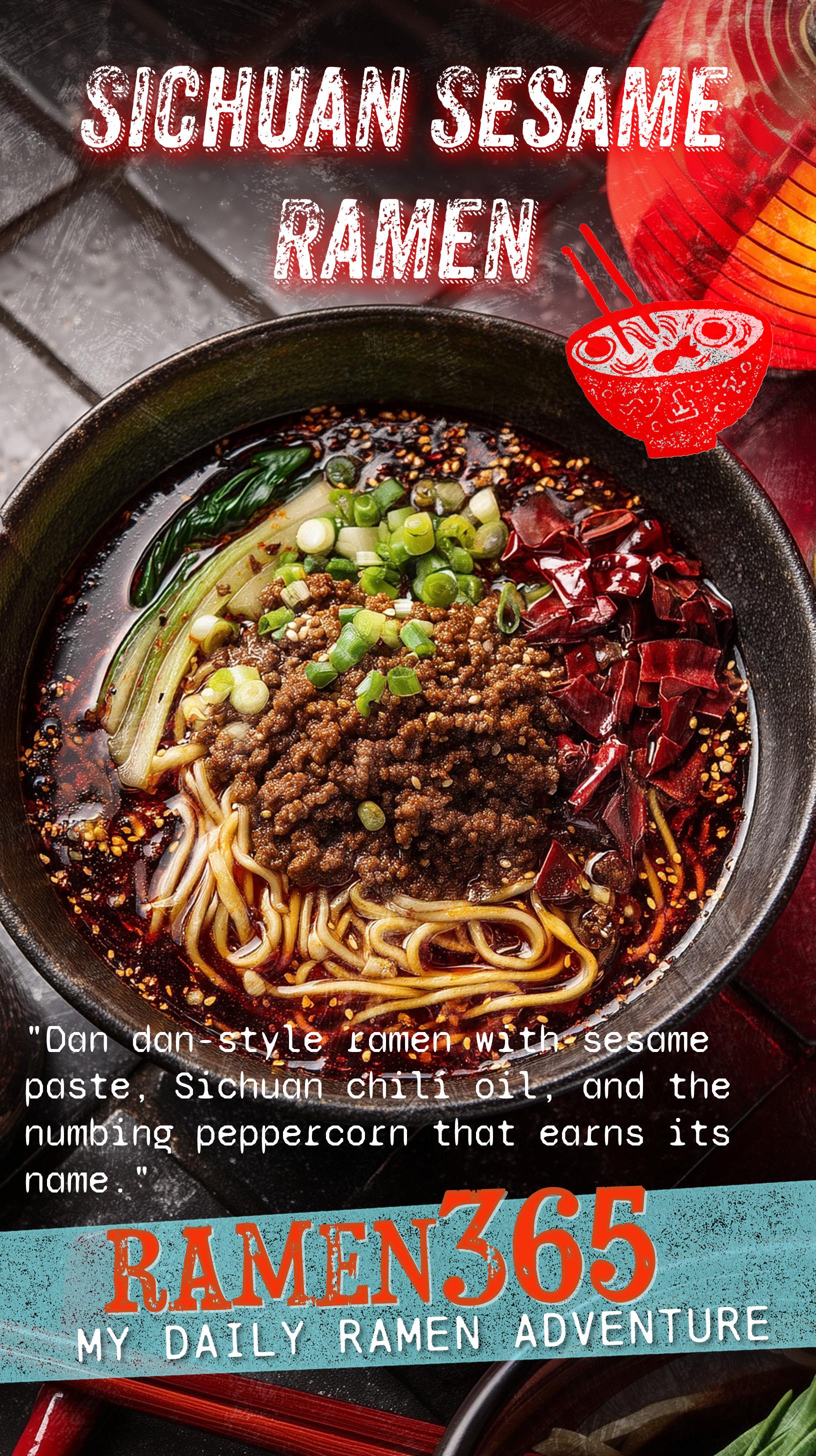
Dan dan noodles are the Sichuan dish that introduced most of the Western world to the numbing-spicy combination that Sichuan cooking calls mala, which translates literally to numbing and spicy and describes exactly what Sichuan peppercorns do to the inside of your mouth. They're not hot in the capsaicin sense. They create a tingling, buzzing sensation that makes everything that follows taste more vivid and more present, and paired with chili oil and sesame paste and ground pork, the effect is one of the most distinctive flavor experiences in Chinese regional cooking. This version uses ramen noodles in the dan dan tradition, which is a Japanese-Sichuan crossover that turns out to have always been logical.
Peppercorn makes mouths go numb—sesame holds the heat steady—Chengdu doesn't care
Let Me Tell You...
My first encounter with Sichuan peppercorn happened at a restaurant where I ate one thinking it was a black peppercorn and then spent the next forty-five seconds experiencing the inside of my face in a way I had not previously considered possible.
This is almost everyone's first Sichuan peppercorn story.
The tingling starts about ten seconds after you bite into one and then it spreads and everything tastes slightly electrified and the food around it tastes completely different as a result. In small quantities, incorporated into a sauce, it's one of the most interesting and impossible-to-replicate flavors in cooking.
Untoasted Sichuan peppercorns have about half the aroma and numbing power of toasted ones.
The sesame paste is Chinese sesame paste, which is made from roasted sesame seeds and tastes more assertive and less smooth than tahini.
They're not interchangeable, but if you can't find Chinese sesame paste, tahini plus a tablespoon of peanut butter gets close.
The paste is the fat-and-body of the sauce, the thing that coats the noodles and carries everything else.
Without it, you have chili oil noodles.
With it, you have dan dan noodles, which is a different category of bowl.
Cold water seizes sesame paste and you end up with a clumped, gritty sauce instead of a smooth one.
Ya cai is the Yibin preserved mustard greens that traditional dan dan noodles use as a topping, adding a salty, slightly funky, slightly crunchy element that nothing else provides.
It's available at Chinese grocery stores and is worth finding because the bowl has a particular hole in it without ya cai that pickled anything else only partially fills.
Don't skip the pickled element entirely.
You eat this bowl and feel it in your lips for twenty minutes afterward, which is either a feature or a warning depending on your relationship with Sichuan peppercorn.
Ingredients
- 8 ounces dried ramen noodles (2 bricks, seasoning packets discarded)
- 8 ounces ground pork
- 3 tablespoons Chinese sesame paste (or tahini plus 1 tbsp peanut butter)
- 2 tablespoons Sichuan chili oil (plus more for serving)
- 1.5 tablespoons soy sauce
- 1 tablespoon rice vinegar
- 1 tablespoon low-sodium chicken broth or warm water (to thin sauce)
- 1 teaspoon toasted sesame oil
- 1 teaspoon sugar
- 1 teaspoon Sichuan peppercorns, toasted and ground
- 3 cloves garlic, minced
- 1 teaspoon fresh ginger, grated
- 1 tablespoon neutral oil
- 1 tablespoon soy sauce (for pork)
- 1/4 cup ya cai (Yibin preserved mustard greens), rinsed
- 3 green onions, thinly sliced
- 2 tablespoons toasted sesame seeds
Preparation
- Toast Sichuan peppercorns in a dry skillet over medium heat for 1 minute. Grind in a spice grinder or with a mortar and pestle.
- Make the sauce: Whisk together sesame paste, Sichuan chili oil, soy sauce, rice vinegar, sesame oil, sugar, half the ground Sichuan pepper, and warm broth or water until smooth. Set aside.
- Cook the pork: Heat neutral oil in a skillet over medium-high heat. Add ground pork and cook, breaking it up, for 5-6 minutes until browned and slightly crispy. Add garlic, ginger, and soy sauce. Cook 1 more minute. Set aside.
- Bring a pot of salted water to a boil. Cook ramen noodles for 2-3 minutes until just tender. Drain, reserving 3 tablespoons noodle cooking water.
- Thin sauce with reserved noodle water if needed. Divide noodles between serving bowls. Spoon sauce over noodles and toss to coat.
- Top each bowl with spiced pork, ya cai, sliced green onions, sesame seeds, remaining ground Sichuan pepper, and a drizzle of extra chili oil. Serve immediately.