
Venison Bulgogi Ramen
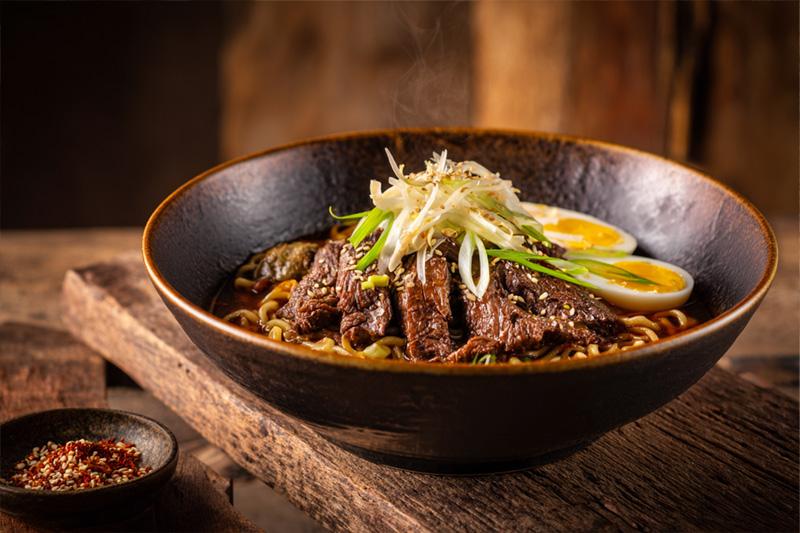
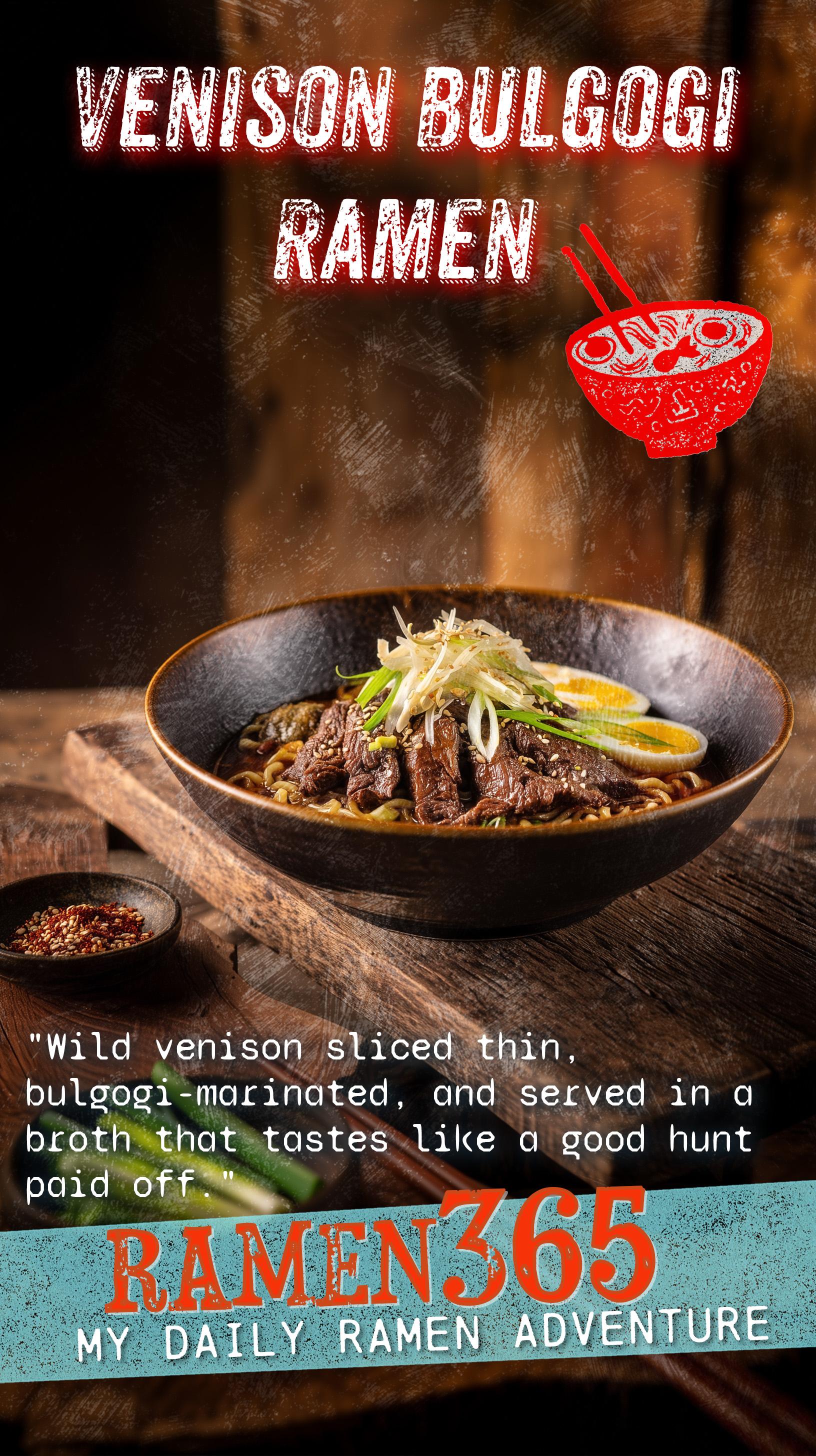
Bulgogi marinade is one of the most transferable sauces in Korean cooking: soy sauce, sesame oil, garlic, ginger, grated Asian pear, and sugar, and the pear is the part that matters most, because its natural enzymes tenderize the meat in a way that no other fruit quite replicates at the same gentleness. Venison is a leaner and wilder-tasting protein than the beef that traditional bulgogi uses, and those qualities actually work in its favor here. The pear marinade does important work on the tougher muscle fibers, and the soy and sesame create a caramelized crust when the meat hits a hot pan that is genuinely beautiful in both appearance and flavor. The broth builds from the pan drippings and a Korean-seasoned stock, dark and savory and carrying just enough heat from gochugaru to keep things interesting. The ramen noodles sit underneath all of this and absorb the broth slowly as you eat.
Wild deer meets the grill—Gochujang and soy conspire—Seoul finds the forest
Let Me Tell You...
I got the venison from someone who had more of it than they knew what to do with, which is how most people get venison, and the first batch I cooked I overhandled.
Venison is lean and develops a gamy, dry quality if you cook it past medium, which is a lesson that sounds simple and turns out to require at least one ruined batch to fully understand.
The second batch I made into bulgogi, which is an interesting choice for game meat because the pear-based marinade is specifically designed to break down muscle fibers gently rather than aggressively, and the result is something that sits between domesticated and wild in a way that is more interesting than either extreme.
Partially frozen meat slices cleanly without shredding, and thin slices cook fast enough to stay medium-rare throughout.
The marinade is the thing that makes this Korean rather than just grilled venison.
Soy sauce, sesame oil, garlic, ginger, sugar, and grated Asian pear: you combine everything, submerge the sliced venison, and let it sit for at least 30 minutes.
The pear enzymes called calpain and papain work at room temperature, so an hour at room temperature achieves more than an overnight cold marinade.
If you are using a particularly tough cut, grate a little more pear into the marinade and give it the full hour.
The sugar and soy will caramelize on the hot grill pan into something that looks like a proper char but tastes sweet and savory at the same time.
The texture of grated pear helps the marinade cling to the meat better and the enzymes have more surface contact with the protein.
The broth borrows from the marinade's flavor profile: doenjang, gochugaru, soy, sesame, a little garlic, and beef or venison stock.
You deglaze the pan with the broth after searing the venison and pick up all the caramelized bits, which are the best part of the whole operation and the thing that ties the broth to the meat rather than having two separate things happening in the same bowl.
The gochugaru gives it a gentle warmth that grows as you eat rather than hitting you immediately, which is the kind of heat that keeps the bowl interesting from beginning to end.
The caramelized drippings from the bulgogi marinade dissolve into the broth and add a depth that stock alone cannot provide.
Do not wash the pan first. Venison bulgogi ramen is a bowl that will not exist at any restaurant you walk into, which means you have to make it, which means you have to know someone with venison or find a butcher who carries it, which is a small amount of effort for a result that is large enough to justify the trouble.
The wild flavor of the deer and the deeply civilized flavor of the Korean marinade are in a productive argument the entire time you are eating it, and neither one wins, which is the right outcome.
Ingredients
- 1 lb venison loin or backstrap, sliced 1/8-inch thin against the grain (partially freeze for 30 min for easier slicing)
- 8 ounces dried ramen noodles (2 bricks, seasoning packets discarded)
- 1/2 Asian pear, peeled and grated (about 1/4 cup)
- 3 tablespoons low-sodium soy sauce, divided
- 1 tablespoon toasted sesame oil, divided
- 1 tablespoon brown sugar
- 4 garlic cloves, minced, divided
- 1 teaspoon fresh ginger, grated
- 1 tablespoon doenjang (Korean fermented soybean paste)
- 1 teaspoon gochugaru (Korean red pepper flakes)
- 2.5 cups low-sodium beef broth
- 1 tablespoon neutral oil, for searing
- 3 green onions, thinly sliced, plus more for garnish
- Toasted sesame seeds, for garnish
Preparation
- In a medium bowl, combine the grated Asian pear, 2 tablespoons soy sauce, 2 teaspoons sesame oil, brown sugar, half the minced garlic, and the grated ginger. Whisk to combine. Add the sliced venison and toss to coat thoroughly. Let marinate at room temperature for 30 minutes minimum, or up to 1 hour for better tenderization.
- While the venison marinates, make the broth: heat 1 teaspoon sesame oil in a medium saucepan over medium heat. Add the remaining garlic and cook for 30 seconds. Add the doenjang and gochugaru and stir for 1 minute. Add the beef broth and remaining 1 tablespoon soy sauce. Bring to a simmer and cook for 10 minutes. Taste and adjust salt. Keep warm.
- Heat 1 tablespoon neutral oil in a large skillet or grill pan over high heat until just smoking. Working in two batches to avoid crowding, add the marinated venison in a single layer and cook for 1 to 2 minutes per side until caramelized and just cooked through to medium. Transfer to a plate and tent with foil. Do not wash the pan.
- Pour 1/2 cup of the prepared broth into the hot skillet used for the venison. Scrape up all the caramelized bits from the bottom. Pour this into the remaining broth and stir to combine. Keep warm.
- Bring a large pot of salted water to a boil. Cook ramen noodles for 2 to 3 minutes until just tender. Drain and divide between 2 to 4 bowls.
- Ladle the hot broth over the noodles in each bowl. Arrange the bulgogi venison slices on top. Finish with sliced green onions, toasted sesame seeds, and any optional toppings. Serve immediately.