
Vindaloo Pork Ramen
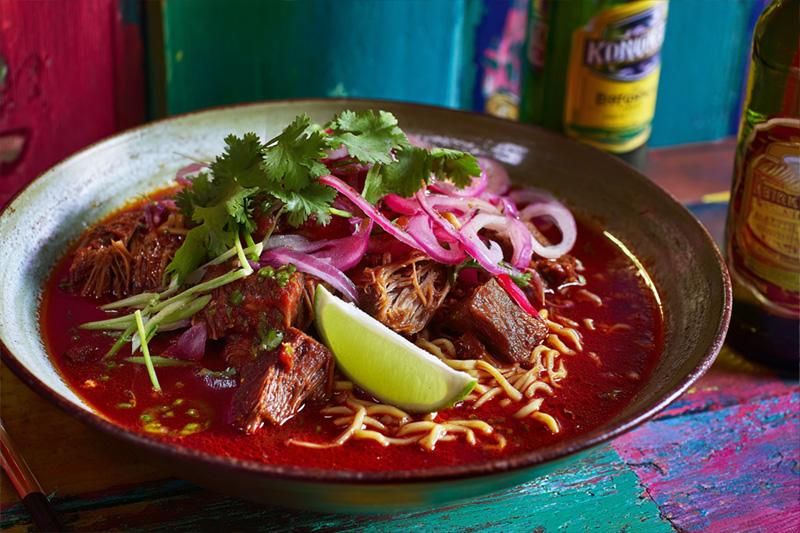
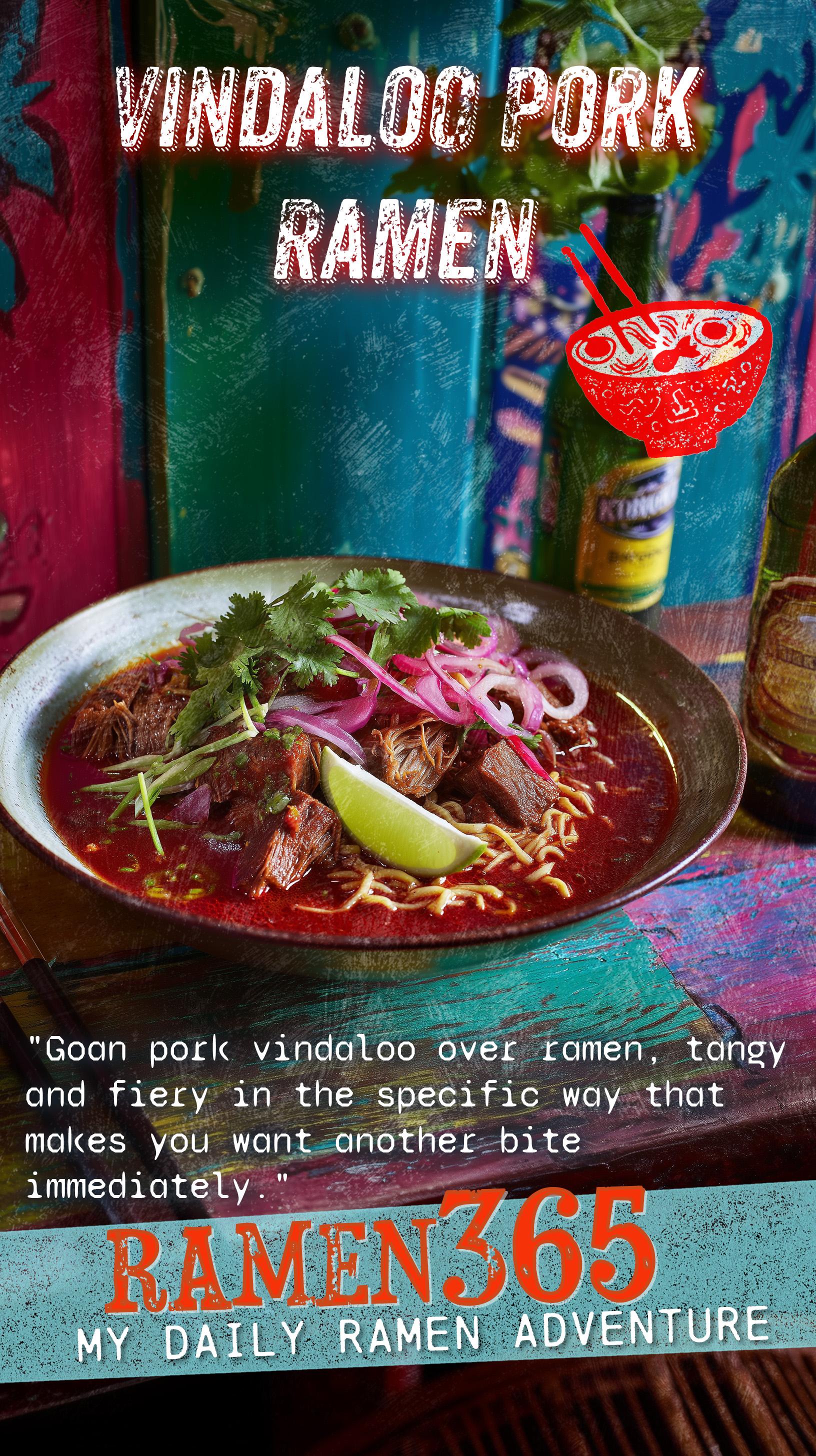
Vindaloo is a Goan dish with Portuguese roots, which makes it unusual in the Indian culinary landscape and explains why it does not taste like anything else from the subcontinent. The vinegar is the tell: it came from the Portuguese vinha d'alhos, a wine-and-garlic marinade, and it survived the translation into Indian cooking as the acid backbone of what became one of the fiercer regional curries. Real vindaloo is tangy before it is spicy, and the heat comes from the dried Kashmiri chilies rather than from generic chili powder, which matters because Kashmiri chilies have a fruity depth behind their heat that makes the spice complex rather than just loud. Pork shoulder is the traditional protein here, because Goa has a large Catholic community with no religious restriction on pork, and it braises into the vinegar-spice sauce in a way that makes the fat and the chilies and the acid into something unified. The ramen noodles absorb this broth and turn fiery red and you should probably have something cold to drink nearby.
Vinegar bites first—Then the chilies find their lane—Goa takes the bowl
Let Me Tell You...
Vindaloo gets misrepresented constantly in the way that all dishes with a reputation for heat get misrepresented, which is to say that people treat it as a challenge or a joke rather than as a food that has a specific flavor profile worth understanding.
The vinegar is the part that gets lost in the heat conversation.
It goes into the spice paste as the grinding liquid, not just as an afterthought, so the whole marinade is built on acid from the start.
This means the pork marinates in something tart and spice-laden rather than just spicy, and the acid does work on the meat before it even hits the pan.
The vinegar tenderizes the meat and the spices penetrate deeper with more time.
The spice paste for vindaloo is a specific collection: Kashmiri dried chilies, cumin, black pepper, cloves, cinnamon, mustard seeds, and ginger and garlic and the vinegar.
You blend it to a smooth paste and coat the pork in it and the result looks alarming, this deep brick-red slick on the meat, and then you cook it and the whole kitchen smells like somewhere you would want to live.
The browning of the vindaloo-coated pork in hot oil is important and takes patience because the paste has a tendency to burn before the meat browns properly.
Medium heat and attention.
The spice paste burns faster than bare meat.
You want a crust, not char.
The braise that follows is relatively straightforward: a little more broth, a little more vinegar, the lid goes on, and the pork sits in the sauce for an hour until it is completely tender.
The broth turns deep red and becomes concentrated and sour-hot in a way that is specific to vindaloo and not replicated by any other preparation.
You taste it toward the end and adjust: more vinegar if it needs more acid, more salt, and if you want more heat you add chili powder rather than more Kashmiri chilies because at this stage the color is already set.
Vindaloo should be tangy, not puckering.
The ramen noodles are the non-Goan part of this bowl and probably the part that would confuse someone from Goa, who would expect this over rice or with bread.
But the noodles carry the vindaloo broth in their coils and every bite brings both the spice and the acid together in a way that requires no explanation once you have tried it.
Ingredients
- 1.5 lbs boneless pork shoulder, cut into 2-inch chunks
- 8 ounces dried ramen noodles (2 bricks, seasoning packets discarded)
- 1 cup low-sodium chicken broth
- 6 dried Kashmiri chilies, stemmed and seeded (or 2 teaspoons Kashmiri chili powder)
- 1 teaspoon cumin seeds
- 1/2 teaspoon black peppercorns
- 4 whole cloves
- 1/2 teaspoon ground cinnamon
- 1 teaspoon brown mustard seeds
- 6 garlic cloves, roughly chopped
- 1-inch knob fresh ginger, roughly chopped
- 3 tablespoons apple cider vinegar, divided (plus more to taste)
- 1 large yellow onion, thinly sliced
- 2 tablespoons neutral oil
- 1 teaspoon sugar (optional, to balance acid)
- Kosher salt, to taste
- Fresh cilantro, roughly chopped, for serving
- Lime wedges, for serving
Preparation
- Make vindaloo paste: Soak dried Kashmiri chilies in 2 tablespoons warm water for 15 minutes. Drain. Combine chilies, cumin, peppercorns, cloves, cinnamon, mustard seeds, garlic, ginger, and 2 tablespoons apple cider vinegar in a blender. Blend to a smooth, thick paste, adding water one tablespoon at a time if needed.
- Toss pork chunks with vindaloo paste and 1/2 teaspoon salt. Marinate for at least 2 hours (overnight preferred) in the refrigerator.
- Heat oil in a large Dutch oven over medium heat. Add sliced onion and cook for 10-12 minutes until deeply golden and caramelized. Remove and set aside.
- Add marinated pork to the same pot over medium heat. Brown on all sides, 3-4 minutes per side, watching closely so the paste does not burn. Work in batches if necessary.
- Return caramelized onion to the pot. Add chicken broth and remaining tablespoon of vinegar. Stir to combine, scraping up any stuck bits. Bring to a simmer, cover, and braise over low heat for 1 hour until pork is very tender. Remove lid and simmer 15 minutes more to concentrate the broth. Taste and adjust with salt, vinegar, or sugar.
- Bring a large pot of salted water to a boil. Cook ramen noodles for 90 seconds, pulling 30 seconds early. Drain and divide between 2-4 bowls. Ladle vindaloo broth and pork over noodles. Top with fresh cilantro and serve with lime wedges.