
Adobo Pork Ramen
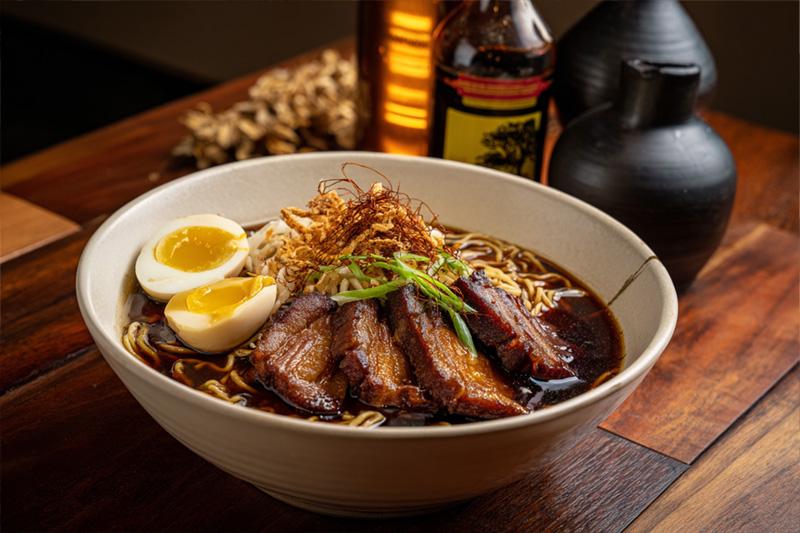
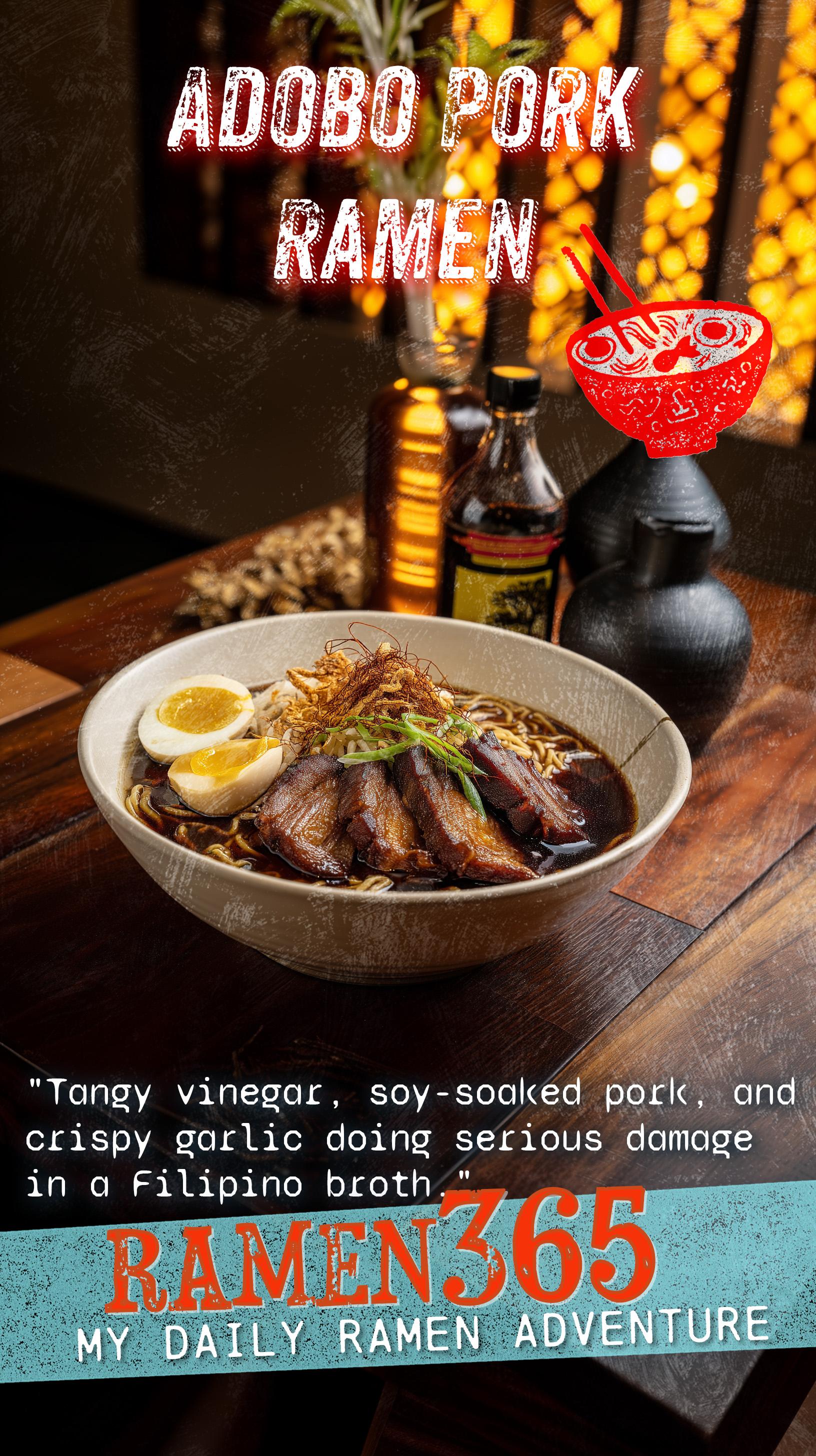
Filipino adobo is one of those dishes that sounds like it should be complicated but is really just a matter of having the right vinegar and enough patience to let the pork do its thing. The whole genius of it is the acid: you braise the pork in a mixture of vinegar and soy that tenderizes the meat and builds this glossy, dark sauce that clings to everything it touches. When you add ramen noodles to that equation, you get a bowl that is simultaneously more familiar and more interesting than either dish on its own. The acid holds up against the fat in a way that is satisfying in a deep, structural sense, not just as a flavor but as a counterweight. The bay leaves are not a suggestion. The garlic is non-negotiable. This is the kind of food that smells better than almost anything else you will make in your kitchen, and it earns that reputation over a long braise that you will not regret starting.
Vinegar and bay—Pork surrenders to the pot—Soy holds everything
Let Me Tell You...
There is a version of this story where I learned Filipino adobo from a grandmother with a perfectly seasoned wok and a measuring cup she never used, but that version is not true.
The real version is that I had adobo at a potluck in someone's apartment in the Sunset District, served in a foil catering tray, which should have been a problem but was not, because the dish had been braised long enough that the container did not matter.
It was the best thing at the table by so much that it was almost rude to the other food there.
I ate three servings and then asked the host if I could have the recipe, and she looked at me like that was a strange question, because it is not a recipe so much as a ratio: vinegar, soy, garlic, bay, black pepper, time.
It is sharper and less sweet than rice vinegar and makes the broth noticeably better.
The pork belly is where this version becomes ramen instead of just adobo.
You braise the pork in the classic way, the vinegar-soy mixture doing its slow and irreversible work, and then you pull the meat out and reduce the braising liquid until it coats a spoon.
That concentrated liquid is your broth base: you loosen it with chicken stock and you have something so deeply savory and tangy that it needs nothing else.
The pork slices go back in the bowl on top of the noodles, each piece carrying a little of the glossy sauce on its surface, and the broth handles everything else.
The sauce needs to be thick enough to coat a spoon before you add stock to thin it.
A pale, watery broth means you pulled it too early.
The crispy garlic is not traditional in the strict adobo sense, but it is very Filipino in a broader one, and it adds something the soft-braised garlic inside the pot cannot give you: texture.
You fry thin-sliced garlic in neutral oil over medium heat, watching closely because the window between golden and burned is narrow and closes without warning.
Pull it out when it reaches the color of pale straw.
It continues cooking from residual heat even on the paper towel, and that final bit of color is exactly where you want it to land.
Wet pork steams instead of browning and you lose the caramelized crust that flavors the entire braising liquid.
This bowl does not pretend to be delicate.
It is assertive in the way Filipino food often is, built around contrasts that do not shy away from each other: sharp vinegar, salty soy, fatty pork, crisp garlic, fresh scallions.
If you have only ever had adobo over steamed rice, the ramen format will feel slightly unusual at first, and then it will feel right, and then you will probably wonder why it took this long to occur to you.
Ingredients
- 1 lb pork belly, cut into 2-inch pieces
- 8 ounces dried ramen noodles (2 bricks, seasoning packets discarded)
- 1/3 cup cane vinegar (or white distilled vinegar)
- 1/4 cup low-sodium soy sauce
- 1 cup low-sodium chicken broth, plus more as needed
- 1 head garlic, divided: half smashed for braising, half thinly sliced for frying
- 4 dried bay leaves
- 1 teaspoon whole black peppercorns
- 1 tablespoon neutral oil, for searing
- 2 tablespoons neutral oil, for frying garlic
- 3 green onions, thinly sliced, plus more for garnish
- Kosher salt, to taste
Preparation
- Pat pork belly pieces completely dry with paper towels and season lightly with kosher salt. Heat 1 tablespoon neutral oil in a wide, heavy-bottomed pot over medium-high heat. Working in batches to avoid crowding, sear pork pieces on two sides until deep golden brown, about 3 to 4 minutes per side. Transfer to a plate and set aside.
- Pour off excess fat from the pot, leaving about 1 tablespoon behind. Reduce heat to medium and add the smashed garlic cloves. Cook, stirring, for 1 minute until fragrant and just beginning to turn golden. Add the vinegar, soy sauce, bay leaves, and black peppercorns. Stir to combine, scraping any browned bits from the bottom of the pot.
- Return the seared pork belly to the pot. The liquid should come about halfway up the pork; add a splash of water if not. Bring to a boil over high heat, then reduce to low, cover, and braise for 30 minutes until the pork is fork-tender and the fat is beginning to turn silky.
- Remove the pork from the pot and set aside on a cutting board. Discard bay leaves. Increase heat to medium-high and simmer the braising liquid uncovered for 5 to 8 minutes until it reduces by about one-third and coats the back of a spoon. Add 1 cup chicken broth, stir to combine, and reduce heat to low. Taste and adjust salt if needed. Keep broth warm.
- While broth simmers, heat 2 tablespoons neutral oil in a small skillet over medium heat. Add the thinly sliced garlic in a single layer and cook, stirring frequently, for 3 to 4 minutes until pale golden and crispy. Transfer immediately to a paper towel-lined plate and spread out to cool. They will darken slightly as they rest.
- Bring a large pot of salted water to a boil. Cook ramen noodles for 2 to 3 minutes until just tender. Drain and divide evenly between 2 to 4 bowls.
- Slice the braised pork belly into 1/2-inch pieces. Ladle hot broth generously over the noodles in each bowl. Arrange pork slices on top, then scatter green onions and crispy garlic chips over everything. Add optional toppings as desired and serve immediately.