
Black Bean Cuban Ramen
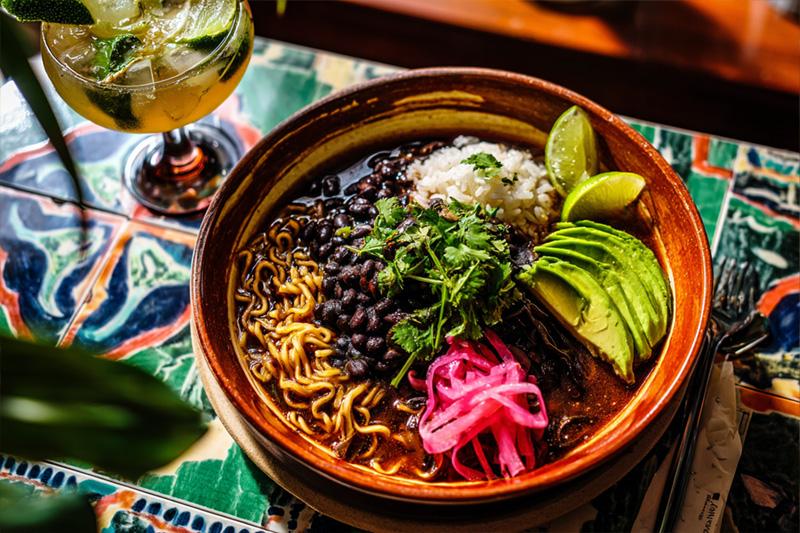
Cuban black beans are one of the most quietly satisfying things in the world, which is not a controversial statement if you have eaten them the way they are supposed to be made, which is with a sofrito base, a long simmer, and enough garlic that you smell it from the other room. The sofrito is the key part, the part that gets skipped when people make rushed versions and then wonder why the result tastes flat. It is just diced onion, bell pepper, garlic, and tomato paste cooked down until fragrant and slightly caramelized, but it is the foundation on which the entire bowl stands. The ramen noodles make this a meal in a way that just serving the beans over rice does not quite achieve, because the noodles take up the broth in a different and arguably better way. This is a vegan bowl that holds its own against every other bowl in this collection without needing to announce that fact.
Black beans find their heat—Cumin haze, bay leaf, garlic—Havana inhales
Let Me Tell You...
My first real Cuban black beans came from a plastic container at a Cuban lunch counter in Miami, and I ate them standing up at a counter with a plastic spoon because that was the situation.
They were better than they had any right to be under those circumstances: dark, almost glossy, deeply savory, with that unmistakable cumin signature running through every bite.
I asked what was in the sofrito and the woman at the counter gave me the same look I have received before when asking questions with obvious answers, which is the look of someone who cannot believe they are being asked to explain that sofrito contains what sofrito contains.
Sofrito is the foundation, and it rewards patience.
You cook the onion and bell pepper down until they are soft and sweet, then add the garlic and tomato paste and let those go until the paste darkens slightly.
This whole process takes about eight to ten minutes and makes the kitchen smell better than most other things you will do in it.
The beans go in with broth and bay leaves and cumin and then the whole thing simmers until the beans are soft enough to partially crush against the side of the pot with a spoon, which thickens the broth and gives it a body that you would not get if you just heated the beans and called it done.
This thickens the broth naturally without adding any starch or cornstarch.
The ramen noodles are the non-traditional part of this recipe and the part that requires the most mental flexibility if you grew up eating Cuban food.
The traditional pairing is rice, and specifically white rice, and the combination of rice and beans is so foundational to Cuban cuisine that suggesting ramen instead feels slightly audacious.
But the noodles pull the dense, dark bean broth into their coils in a way that rice cannot do, and the result is something that tastes Cuban and also tastes like something slightly new.
They will absorb flavor and end up with a better texture than if you cook them to done and then ladle broth on top.
Avocado and pickled red onion are the right toppings here.
The avocado is cool and creamy against the hot, dark broth.
The pickled onion is sharp and faintly sweet and cuts through the richness in a way that fresh onion cannot.
A squeeze of lime at the end ties everything together.
This is the kind of bowl that costs almost nothing to make and tastes like it cost considerably more.
Ingredients
- Two 15-ounce cans black beans, drained and rinsed
- 8 ounces dried ramen noodles (2 bricks, seasoning packets discarded)
- 1 small yellow onion, finely diced
- 1/2 green bell pepper, finely diced
- 5 garlic cloves, minced
- 2 tablespoons tomato paste
- 2 teaspoons ground cumin
- 1 teaspoon dried oregano
- 2 dried bay leaves
- 2 cups low-sodium vegetable broth
- 2 tablespoons olive oil
- 1 tablespoon red wine vinegar
- Kosher salt and black pepper, to taste
- Fresh cilantro, roughly chopped, for serving
- Lime wedges, for serving
Preparation
- Heat 2 tablespoons olive oil in a medium saucepan over medium heat. Add the diced onion and bell pepper and cook, stirring occasionally, for 6 to 7 minutes until softened and just beginning to brown at the edges. Add the garlic, cumin, and dried oregano and cook for 1 minute until fragrant. Add the tomato paste and stir constantly for 2 minutes until the paste darkens slightly and begins to stick to the bottom of the pot.
- Add the drained black beans, vegetable broth, bay leaves, red wine vinegar, and a generous pinch of salt. Stir to combine. Bring to a boil, then reduce heat to medium-low and simmer uncovered for 12 to 15 minutes until the broth has thickened slightly and the beans are very tender.
- Using the back of a spoon or a potato masher, partially crush about a quarter of the beans directly in the pot against the side. Stir to incorporate. The broth should thicken noticeably. Remove bay leaves. Taste and adjust seasoning with salt, pepper, and more vinegar if needed.
- Bring a separate large pot of salted water to a boil. Cook ramen noodles for 90 seconds, pulling them out 30 seconds early. They will finish cooking in the hot bean broth. Drain and divide between 2 to 4 bowls.
- Ladle the hot black bean broth and beans generously over the noodles in each bowl. Top with fresh cilantro and a squeeze of lime. Add optional toppings as desired and serve immediately with additional lime on the side.