
Tamagoyaki Ramen
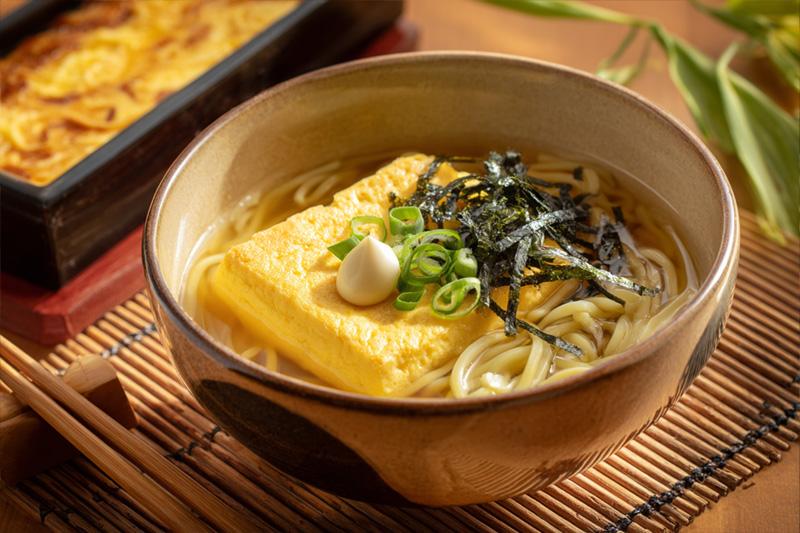
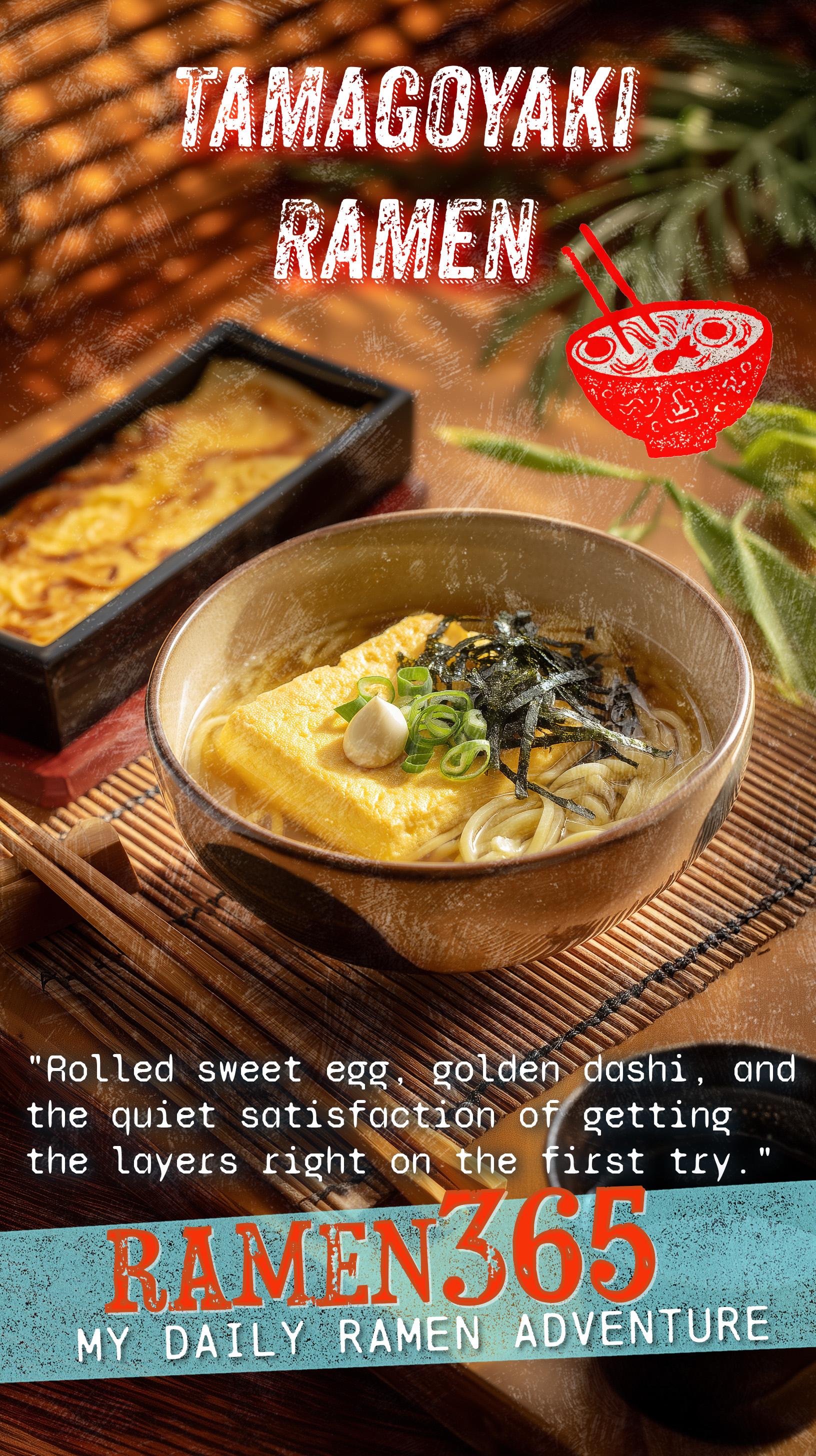
Tamagoyaki is the kind of thing that looks simple until you try it for the first time and realize that rolling a thin egg sheet in a rectangular pan without breaking it requires patience and possibly a different pan than the one you already own. It is a Japanese rolled omelette, sweetened lightly with mirin and seasoned with dashi and soy, and the result is something that is savory and sweet simultaneously in a way that does not feel like a compromise. Served over ramen, it becomes a full meal that also works for breakfast, which is a category of food that does not get enough respect. The broth for this bowl is a simple dashi base, clear and golden, letting the tamagoyaki do the heavy lifting in terms of both flavor and visual interest. The layers you see in the cross-section of the sliced egg are not decorative: they are proof of technique, and they hold moisture between the folds in a way that a flat omelette does not.
Sweet egg rolls slowly—Mirin in every layer—Morning, translated
Let Me Tell You...
I have made tamagoyaki badly more times than I have made it well, and the bad versions taught me more than the good ones did.
The first disaster involved a regular round pan, which is a fundamental error because the round sides make it impossible to roll the egg cleanly.
You need a rectangular tamagoyaki pan, and no, a square one is not the same thing, and no, a regular skillet does not work, and I know that is annoying to hear but it is just true.
The pan is the technique.
Buy the pan.
If it sizzles and sets within a few seconds, the temperature is right.
Too hot and the egg browns; too cool and it does not set fast enough to roll.
The egg mixture goes together quickly: beaten eggs, a tablespoon of dashi, mirin, soy sauce, and a pinch of sugar.
The mirin adds sweetness that is not cloying because it is balanced by the savory soy and the umami of the dashi, and the whole thing tastes like something from a very good Japanese breakfast set.
You pour a thin layer into the oiled pan, let it set at the edges while the center is still slightly wet, then roll it toward you from the far end.
Then you push the roll to the far side of the pan, oil again, pour another layer, lift the first roll and let the new egg flow underneath it, and roll again.
This continues for three or four layers until the roll is thick enough to slice.
Too much oil makes the egg slippery and hard to roll; too little causes sticking.
A thin, even coat is what you want.
The broth is deliberately simple: dashi seasoned with soy and mirin, clear enough that the golden tamagoyaki can be the visual centerpiece of the bowl.
You do not want a dark, complex broth competing with an egg roll that took you actual effort to produce.
The noodles should be thin, and if you can find fresh rather than dried ramen, the texture is noticeably better in a bowl this delicate.
Sawing causes the layers to compress and the roll to lose its shape.
One firm, confident cut per slice.
This is the kind of bowl that you make on a slow Saturday morning when you have nowhere to be and you want to prove something to yourself, possibly about eggs, possibly about patience.
The tamagoyaki will not cooperate the first time.
It will cooperate the third time.
It will be very good by the fifth time.
Keep the bad ones.
Eat them anyway.
They still taste like mirin and dashi and a decent effort.
Ingredients
- 4 large eggs
- 8 ounces dried thin ramen noodles (2 bricks, seasoning packets discarded)
- 3 cups prepared dashi (kombu-bonito or store-bought)
- 1 tablespoon dashi, for egg mixture
- 1 tablespoon mirin, divided (2 teaspoons for egg mixture, 1 teaspoon for broth)
- 1 teaspoon low-sodium soy sauce, for egg mixture
- 1 tablespoon low-sodium soy sauce, for broth
- 1/2 teaspoon granulated sugar
- Neutral oil, for brushing the pan (about 1 tablespoon total)
- 2 green onions, thinly sliced
- Kosher salt, to taste
Preparation
- In a small bowl, whisk together the eggs, 1 tablespoon dashi, 2 teaspoons mirin, 1 teaspoon soy sauce, and 1/2 teaspoon sugar until fully combined and slightly frothy. Do not overwhisk or it will become too airy to roll cleanly.
- Heat a tamagoyaki pan (rectangular Japanese egg pan) over medium-low heat. Lightly brush with neutral oil using a silicone brush. Pour in about one-quarter of the egg mixture and tilt the pan so it covers the surface evenly in a thin layer. When the edges are just set and the center is still slightly glossy, use a spatula or chopsticks to roll the egg from the far end toward you. Push the rolled egg to the far end of the pan.
- Brush the empty portion of the pan with more oil. Pour in another quarter of the egg mixture, lifting the existing roll slightly to allow the new egg to flow underneath it. Let the new layer set at the edges, then roll the whole thing toward you again. Repeat this process two more times until all the egg is used and you have a thick, layered roll. Transfer to a cutting board and let rest for 2 minutes.
- While the tamagoyaki rests, combine the dashi, 1 tablespoon soy sauce, and 1 teaspoon mirin in a small saucepan. Bring to a gentle simmer over medium heat and taste for seasoning. Add a small pinch of salt if needed. Keep warm.
- Bring a large pot of salted water to a boil. Cook ramen noodles for 2 to 3 minutes until just tender. Drain and divide between 2 bowls.
- Slice the tamagoyaki crosswise into 4 to 6 rounds using a single clean cut per slice. Ladle the hot dashi broth over the noodles in each bowl. Arrange the tamagoyaki slices on top of the noodles, cut-side facing up to show the layers. Garnish with sliced green onions and any optional toppings. Serve immediately.