
Chimichurri Beef Ramen
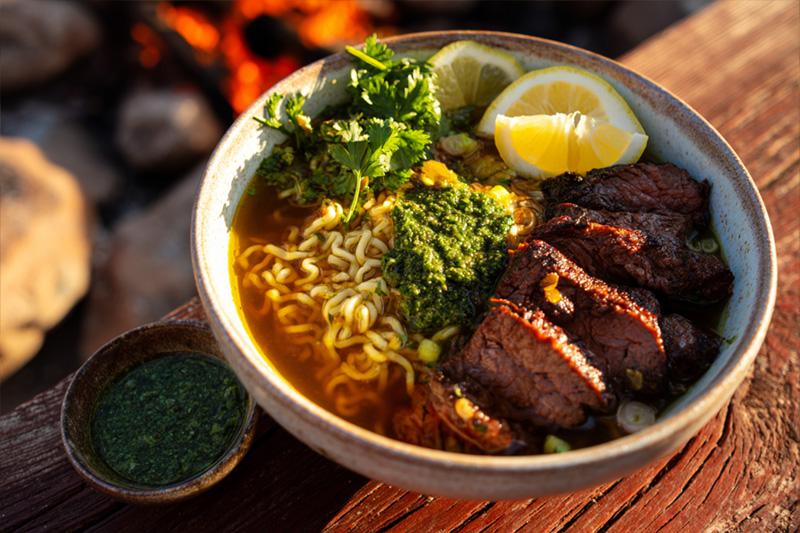
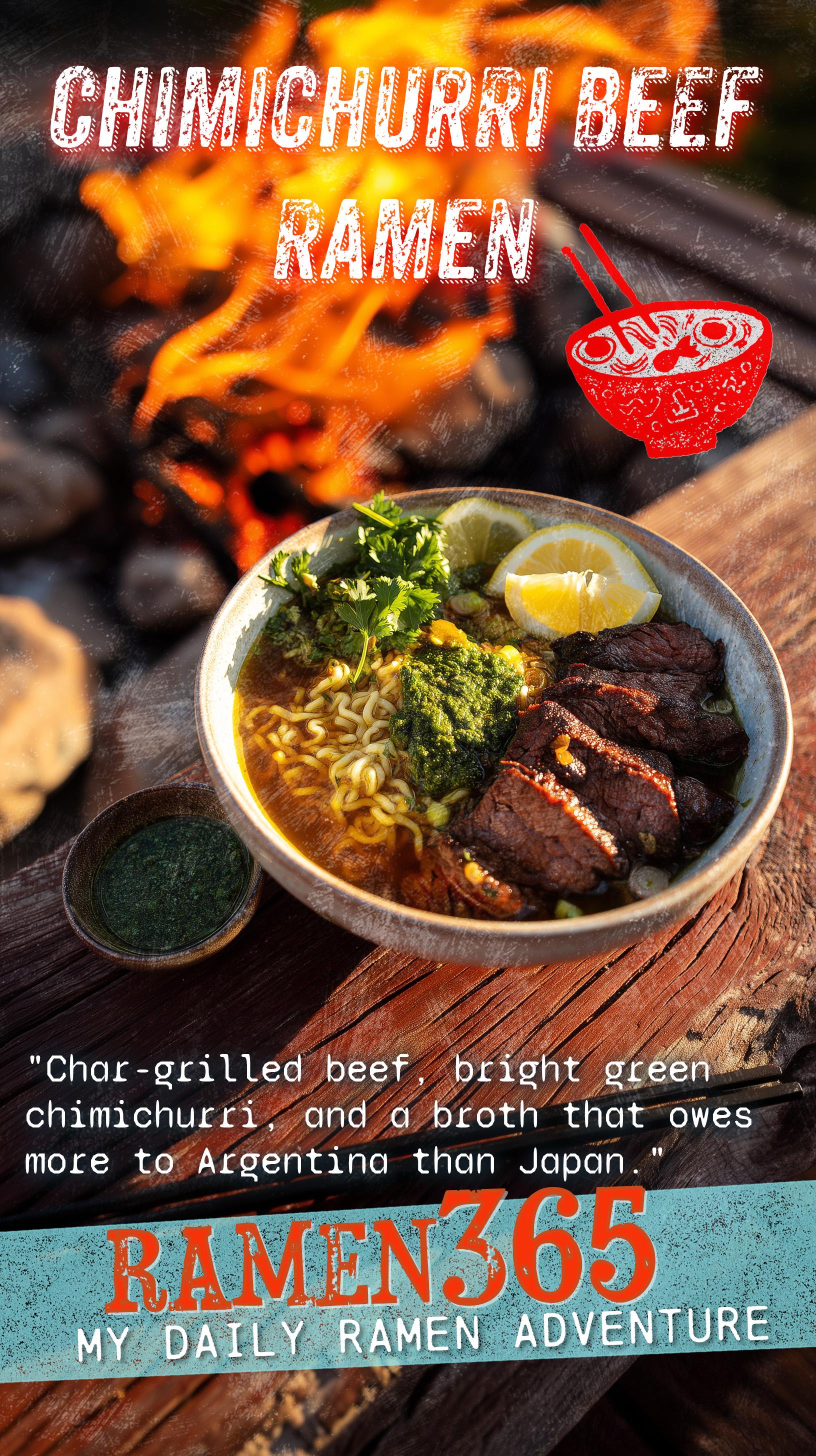
Chimichurri is the sauce that makes you understand why Argentinians think they have solved beef. It is just parsley, garlic, red wine vinegar, oregano, and olive oil, but together those things produce something so bright and herbal and acidic that it can cut through the fattiest piece of grilled meat and make it feel lighter than it has any right to be. The Argentinian approach to beef is to treat it simply: season with salt, cook over high heat, rest properly, and then let the chimichurri do the rest. The ramen in this recipe is the part that would confuse an Argentinian asado cook, and understandably so, because asado does not traditionally involve noodles. But the broth, which is built from the beef drippings and a quick reduction, carries the fat and char from the steak in a way that a side dish cannot, and the chimichurri pooling at the surface of the hot broth creates something that is recognizably both things at once.
Chimichurri sharp—Steak rests on the cutting board—Argentina grins
Let Me Tell You...
Chimichurri exists in two versions: the one you make and eat immediately, which is sharp and pungent and bright green, and the one you make and let sit overnight in the refrigerator, which deepens and mellows and develops a kind of rounded complexity that the fresh version does not have. I have opinions about which one is better that I will not share here because this is a recipe and not an argument, but I will say that for this particular bowl, the rested version gives you a slightly more integrated flavor that works better against the richness of the beef broth.
You can make the chimichurri the night before and use it the next day, which also means one less thing to do when you are trying to grill steak and cook noodles at the same time.
Cold chimichurri straight from the fridge does not have the same aromatic presence; the volatile compounds in the herbs need warmth to activate.
Skirt steak is the right cut for this recipe and most chimichurri situations: it is thin, it has good fat marbling, it takes a rub or marinade quickly because of its loose grain, and it cooks to medium-rare in about four minutes per side over high heat.
The loose grain also means it slices well against the muscle fibers and pulls apart slightly at the edges in a way that is useful for ramen, where you want pieces that absorb broth from the inside out.
The only thing you must do correctly is rest the steak before slicing.
If you skip this step, you lose the juice onto the cutting board and into the broth instead of keeping it in the meat where it belongs.
Cutting immediately causes the juices to run out.
A well-rested skirt steak stays pink and moist through the whole slice.
The broth is a fast one: you deglaze the pan with red wine and beef stock, scraping up the charred bits from the bottom, and reduce it until it has enough body to feel like a proper broth.
The chimichurri goes on after the bowl is assembled, not stirred into the broth, because you want to preserve its bright green color and raw herb character rather than cooking it into something muted.
The vinegar in the chimichurri mixes into the hot broth as you eat and gradually acidifies the whole bowl in a way that keeps it interesting from the first bite to the last.
The fond on the bottom of the pan is concentrated beef flavor.
Scrape it up completely as the wine hits the pan.
This is a bowl about contrasts: the hot broth against the cool herb sauce, the charred steak against the silky noodles, the richness of the beef against the acid of the vinegar.
None of those things cancel each other out.
They argue, politely, and the result is a bowl that keeps your attention from beginning to end.
Ingredients
- 1 lb skirt steak, trimmed of excess fat
- 8 ounces dried ramen noodles (2 bricks, seasoning packets discarded)
- 2 cups fresh flat-leaf parsley leaves and tender stems, packed
- 4 garlic cloves, divided: 3 for chimichurri, 1 minced for broth
- 3 tablespoons red wine vinegar, divided
- 1/2 teaspoon dried oregano
- 1/2 teaspoon red pepper flakes
- 1/3 cup plus 1 tablespoon olive oil, divided
- 1/4 cup dry red wine, for deglazing
- 2 cups low-sodium beef broth
- Kosher salt and black pepper, to taste
- Flaky sea salt, for finishing
Preparation
- Make the chimichurri: combine the parsley, 3 garlic cloves, 2 tablespoons red wine vinegar, oregano, red pepper flakes, and 1/3 cup olive oil in a food processor or blender. Pulse until a rough, textured paste forms. Season with kosher salt. Transfer to a bowl and set aside. If possible, let it sit for 15 to 30 minutes before using.
- Pat the skirt steak completely dry with paper towels. Season very generously on both sides with kosher salt and black pepper. Let sit at room temperature for 10 minutes while the pan heats.
- Heat 1 tablespoon olive oil in a heavy cast-iron skillet or grill pan over high heat until just beginning to smoke. Add the skirt steak and cook for 3 to 4 minutes per side for medium-rare, pressing gently if the steak bows up. Transfer to a cutting board, tent loosely with foil, and rest for 5 minutes.
- While the steak rests, reduce heat to medium. Add the minced garlic to the same pan and stir for 30 seconds. Add the red wine and 1 tablespoon red wine vinegar, scraping up all the browned bits from the bottom. Add the beef broth and bring to a simmer. Cook for 5 to 7 minutes until slightly reduced. Taste and adjust salt.
- Bring a large pot of salted water to a boil. Cook ramen noodles for 2 to 3 minutes until just tender. Drain and divide between 2 to 4 bowls.
- Slice the rested steak against the grain into 1/4-inch strips. Ladle the hot broth over the noodles in each bowl. Arrange steak slices on top. Spoon 2 to 3 tablespoons of chimichurri over the steak and finish with a pinch of flaky sea salt. Serve immediately with remaining chimichurri on the side.