
Miso Carbonara Ramen
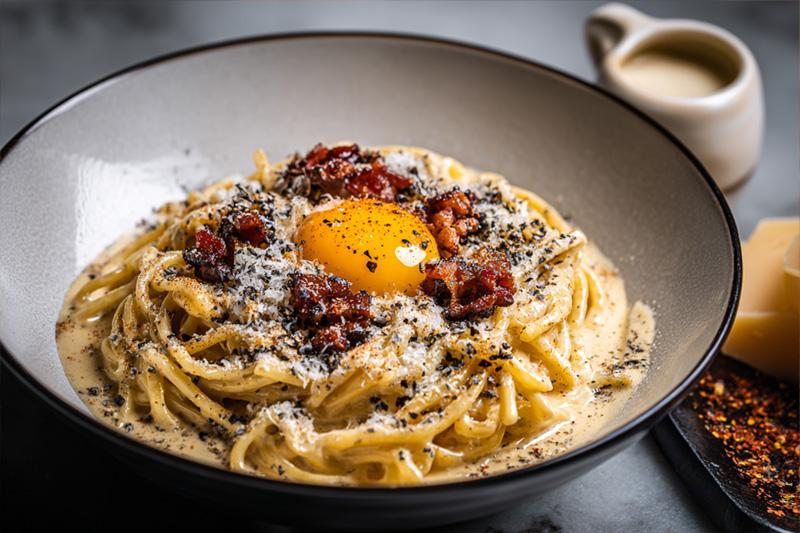
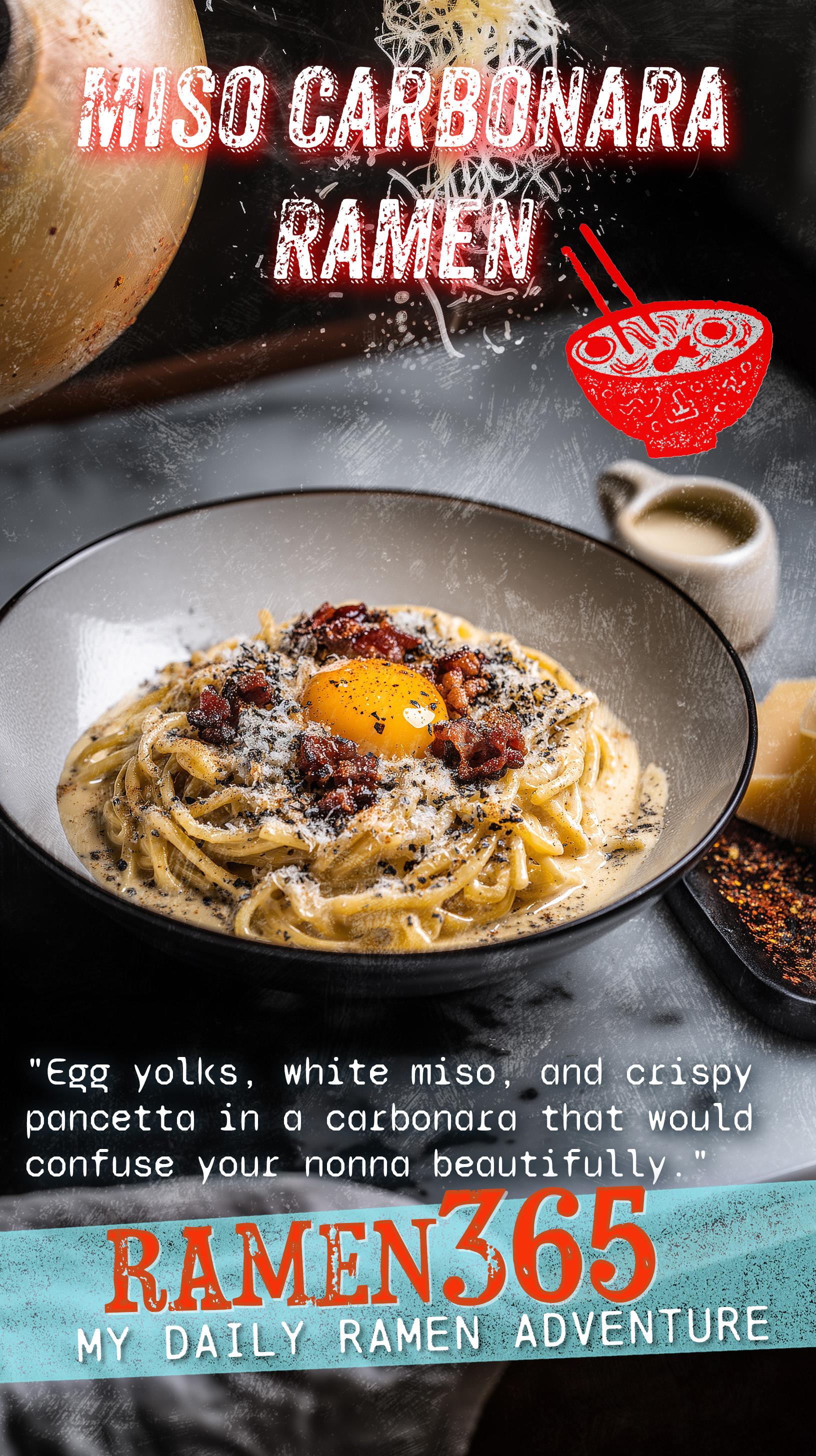
Classic carbonara is a Roman dish built on four ingredients: guanciale, eggs, Pecorino Romano, and black pepper. No cream. No garlic. No shortcuts. The technique is everything: you coat hot pasta in a mixture of egg yolks and cheese and a little of the starchy pasta water, and the heat from the noodles cooks the eggs just enough to create a sauce that is simultaneously rich and light. This version adds white miso to that egg mixture, which sounds like it should not work and then works better than you expected. The miso adds a depth and umami that normal carbonara does not have, turning what is already one of the most satisfying pasta sauces in existence into something slightly more complex and not quite identifiable, in the way that the best ingredient additions operate invisibly. The ramen noodles have more chew than spaghetti and hold the sauce in a way that rewards the choice. Your nonna would not approve. The bowl does not care.
Egg yolk, white miso—Carbonara has no shame—Rome nods from afar
Let Me Tell You...
Carbonara is the dish that separates people who cook from people who say they cook, because the technique is simple enough to explain in one sentence and difficult enough to execute that most people have at least one story about scrambled eggs that were supposed to be carbonara.
The sentence is: coat hot noodles with a mixture of egg yolks, cheese, and pasta water, using the residual heat of the noodles to temper the eggs rather than cooking them on a burner.
The scrambled egg story usually involves someone who cooked the eggs on a burner.
Work quickly but not frantically, tossing the noodles constantly while adding pasta water a tablespoon at a time until the sauce is glossy and clings without being gummy.
The miso enters at the same point as the eggs, whisked together in the bowl before the hot noodles go in.
White shiro miso is the right one: it is the mildest and sweetest of the miso varieties, and it blends into the egg sauce without turning it salty or dark.
What you get is a carbonara that tastes like it is in conversation with something, though most people cannot say exactly what.
The umami depth from the miso fills in a gap that regular carbonara does not even know it has, and once you have made this version, the one without miso will feel slightly incomplete.
Red or mixed miso is too strong and will make the sauce taste muddy rather than elevated.
Start with one tablespoon and taste before adding more.
The guanciale, which is traditional Italian cured pork cheek, is not easy to find everywhere, and pancetta is a completely acceptable substitute that most people will use.
The key in either case is rendering the fat slowly and then crisping the meat until it is genuinely crunchy rather than just browned.
The fat that renders out is the cooking medium for the finished dish, and you want it clean-tasting and fragrant rather than greasy, which means medium heat and patience and not rushing the rendering.
The starchy water is what emulsifies the sauce.
Plain tap water does not do the same thing.
This is a quick recipe, the kind you make when you want something that feels indulgent without actually taking long.
Twenty minutes from start to bowl, assuming your pancetta is already diced and your Parmesan is already grated, which they should be because mise en place is particularly important in carbonara where everything happens fast and there is no time to grate cheese while eggs are tempering.
Make it on a Tuesday when you deserve something good and do not have much time to earn it.
Ingredients
- 8 ounces dried ramen noodles (2 bricks, seasoning packets discarded)
- 4 ounces pancetta or guanciale, cut into 1/4-inch lardons
- 3 large egg yolks plus 1 whole egg
- 1 tablespoon white shiro miso
- 2 ounces Pecorino Romano or Parmesan, finely grated (about 1/2 cup), plus more for serving
- 1 teaspoon coarsely cracked black pepper, plus more for serving
- 1/2 cup reserved ramen cooking water, set aside before draining
Preparation
- In a large skillet over medium heat, add the pancetta or guanciale lardons and cook, stirring occasionally, for 8 to 10 minutes until the fat has rendered and the meat is crispy and golden. Remove the lardons with a slotted spoon and set aside on a paper towel. Leave the rendered fat in the pan and remove pan from heat.
- In a medium bowl, whisk together the egg yolks, whole egg, white miso, grated Pecorino Romano, and cracked black pepper until smooth and well combined. Set aside.
- Bring a large pot of salted water to a boil. Cook ramen noodles for 2 to 3 minutes until just tender. Before draining, scoop out 1/2 cup of the starchy cooking water and set aside. Drain the noodles.
- Working quickly, add the hot drained noodles to the skillet with the rendered fat over low heat. Toss to coat. Remove the skillet completely from heat. Pour the egg-miso mixture over the noodles and toss constantly with tongs, adding the reserved cooking water one tablespoon at a time, until the sauce is creamy and glossy and coats every strand. The residual heat from the noodles will cook the eggs. Do not return to the burner.
- Add the crispy pancetta lardons back to the pan and toss once more to distribute. Taste and adjust seasoning with salt if needed. Divide between 2 bowls.
- Finish each bowl with an additional generous grating of Pecorino Romano, several generous cracks of black pepper, and any optional toppings. Serve immediately before the sauce sets.